Athol McLachlan: Zoologist Whose Midge Studies Revealed Mating Secrets
Athol McLachlan, a distinguished zoologist who passed away at the age of 86, dedicated his career to studying chironomid midges, tiny non-biting flies that transition from aquatic larvae to brief adult lives. His fascination with these insects, explored in diverse settings from the rock pools of Malawi's Zomba plateau to British hedgerows, yielded profound insights into natural selection in fleeting environments.
Early Research and Breakthroughs
McLachlan's interest in chironomid midges began during his doctoral research in the 1960s at Lake Kariba in Zimbabwe, then known as Rhodesia. He recognized these flies as ideal models for testing ecological and evolutionary theories. While midges form massive swarms over Africa's great lakes, McLachlan focused on shallow rain pools on the Zomba plateau, which fill after rainfall and dry out periodically. He discovered that each pool hosted larvae of only one midge species, with factors like depth and stability determining species presence. Through experiments transplanting species between pools, he provided rare experimental evidence supporting niche and competition theory, showing how species adapt to predictable but transient habitats.
Mating Swarm Discoveries
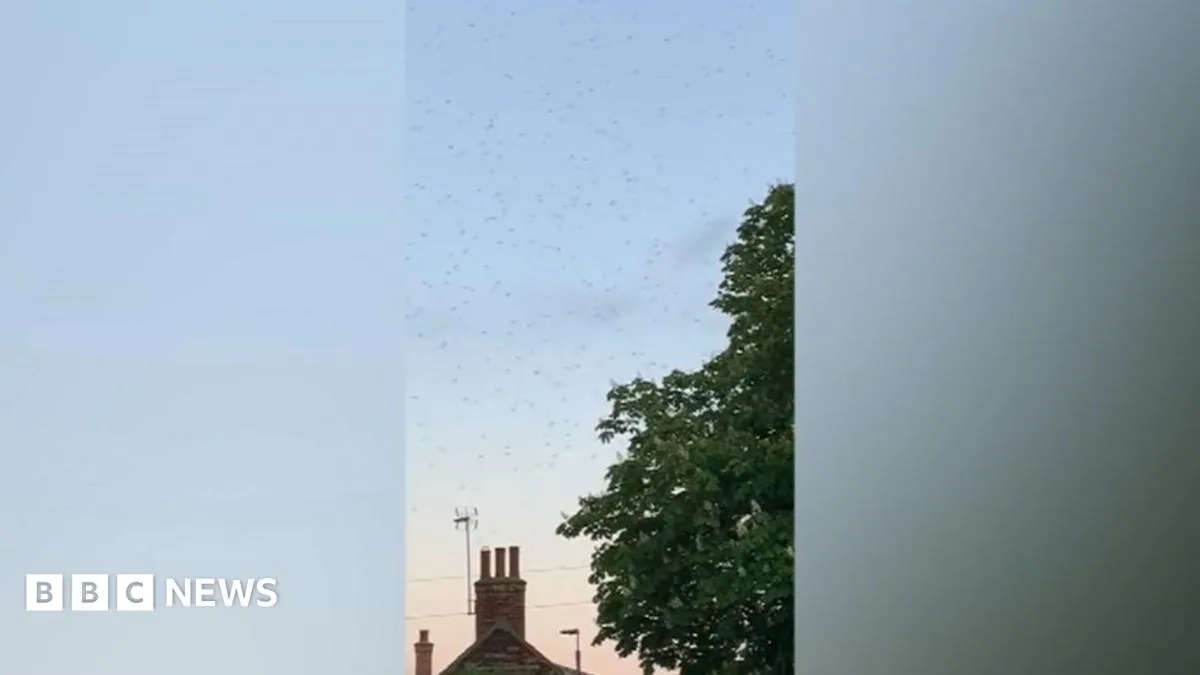
In the 1980s, based in the UK, McLachlan made a significant breakthrough while studying midge swarms near his Newcastle home. He demonstrated that, contrary to typical sexual selection favoring large males, the smallest males in these swarms achieved disproportionate mating success. His research revealed that small size conferred an aerial advantage, allowing males to intercept females more agilely in three-dimensional arenas like air or water. This finding has since been integrated into sexual selection theory, highlighting how agility can outweigh size or strength in such contexts.
Balancing Selection and Lifespan Costs
McLachlan further investigated why males did not evolve to be smaller. Collaborating with his student Rachel Neems, he found that while small size benefited mating, it carried costs during the larval stage. Smaller larvae, or bloodworms, were disadvantaged in ponds and lakes, as they were pushed out of safe refuges by larger ones, increasing predation risk. This led to a balancing selection where males of intermediate size were most successful at passing on their genes, offering a neat example of evolutionary trade-offs.
Personal Background and Career
Born in Johannesburg in 1939 to Elinor and John McLachlan, Athol developed a passion for southern Africa's wildlife early on. He attended Longwood House boarding school and Damelin College, later studying zoology and botany at the University of the Witwatersrand. After earning his PhD from the University of London in 1968, he conducted postdoctoral research at the University of Malawi before joining the University of Newcastle-upon-Tyne as a lecturer in 1970, where he remained throughout his career. In the 1980s, he established an academic link between Newcastle and Malawi, funded by the British Council, and received a DSc from the University of London in 1992 for his contributions to insect ecology and animal behavior.
Teaching and Later Life
At Newcastle, McLachlan was known as an admired, enigmatic lecturer who emphasized curiosity-driven research. He excelled on field courses, such as those on Great Cumbrae in Scotland, where he showcased his naturalist skills by exploring streams, anthills, and other natural phenomena. In his later years, he assisted with deer management on the Isle of Mull, where he met and married ceramic artist Charlotte Mellis in 1993. After retiring in 2004, they moved to Mull, restoring a former schoolhouse, and he continued publishing research and maintaining a science blog. He is survived by Charlotte.
Athol McLachlan's work not only advanced our understanding of midge ecology and evolution but also inspired generations of scientists through his dedication to uncovering the hidden puzzles of everyday nature.






