Cambridge Study Uncovers 12 New Dog Breeds Vulnerable to Severe Breathing Disorders
Experts have compiled a comprehensive list of dog breeds at significant risk of serious respiratory issues, warning that the fashionable "cute" flat faces of these animals often result in a lifetime of suffering. Researchers from the University of Cambridge have revealed that the popularised "squished" facial features in dogs come at a substantial health cost.
The Dangers of Brachycephaly in Canines
The shortened skull shape, scientifically termed brachycephaly, can cause distressing wheezing and severe breathing difficulties. While previous research has concentrated on the three most prevalent "flat-faced" dog breeds in the United Kingdom – the Bulldog, French Bulldog, and the Pug – scientists have now discovered an additional twelve breeds facing substantial health risks.
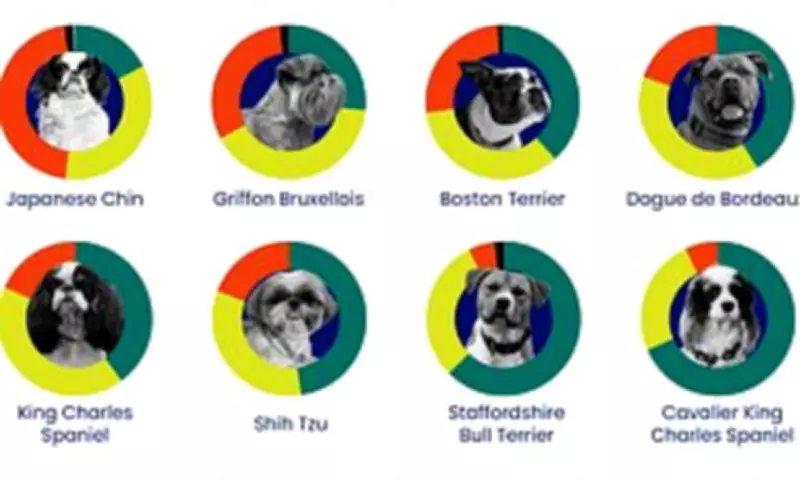
This expanded list includes the Pekingese and Japanese Chin breeds, which were identified as having the highest susceptibility to a serious breathing condition known as Brachycephalic Obstructive Airway Syndrome (BOAS). Meanwhile, the King Charles Spaniel, Shih Tzu, Griffon Bruxellois, Boston Terrier, and the Dogue de Bordeaux all demonstrate moderate risk levels for this debilitating condition.

The Staffordshire Bull Terrier, Cavalier King Charles Spaniel, Chihuahua, Boxer, and Affenpinscher were all classified as having mild risk factors for developing breathing complications.
Understanding the Spectrum of BOAS
"BOAS exists on a spectrum," explained co-lead author Dr. Fran Tomlinson from the University of Cambridge. "Some dogs are only mildly affected, but for those at the more severe end, it can significantly reduce quality of life and become a serious welfare issue."
The research team made a significant discovery regarding twelve previously unrecognised breeds vulnerable to breathing disorders. The Pekingese and Japanese Chin exhibited the highest susceptibility to BOAS, while the King Charles Spaniel, Shih Tzu, Griffon Bruxellois, Boston Terrier, and Dogue de Bordeaux all demonstrated moderate risk levels.
The Staffordshire Bull Terrier, Cavalier King Charles Spaniel, Chihuahua, Boxer, and Affenpinscher were all identified as having mild risk factors. Notably, the Pomeranian and Maltese breeds showed no clinical evidence of being affected by this condition.
Research Methodology and Findings
For their comprehensive study, the scientific team gathered data from 898 dogs representing fourteen distinct breeds. They conducted meticulous measurements of the animals' skulls, noses, bodies, and necks, while also evaluating them for BOAS symptoms following a rigorous three-minute exercise test.
The investigation focused primarily on the loudness and difficulty of the animals' breathing patterns, though other symptoms can include:
- Loud snoring and snorting
- Poor heat tolerance
- Exercise intolerance
- Vomiting episodes
Of the fourteen breeds examined, two – the Pomeranian and Maltese – showed no clinical evidence of being affected by BOAS. However, the remaining twelve breeds all exhibited problems at varying severity levels, meaning they now join Pugs and Bulldogs on a comprehensive list of breeds vulnerable to this respiratory syndrome.
Critical Risk Factors and Breed Variations
The study, published in the prestigious journal PLOS One, revealed that BOAS manifests with considerable variation within each breed. Dogs possessing extremely flat facial structures, collapsed nostrils, or a "plump physique" were identified as having particularly elevated risk levels.
Researchers established that a dog's nose should measure at least one-third the length of its skull to facilitate normal breathing patterns. Flat-faced dogs like Pugs frequently suffer from debilitating health conditions that compromise their respiratory function.
The scientific team hopes this research will encourage more comprehensive testing of "flat-faced" dogs and promote greater awareness about BOAS and other health challenges confronting these breeds.

Practical Implications for Breeders and Owners
Dr. Jane Ladlow, who co-led the groundbreaking study, emphasised: "Being aware of risk factors can be useful for both breeders and prospective owners in selecting dogs which are less likely to be affected by BOAS."
"Knowledge of these risk factors can also help to inform judges in deciding which features are detrimental to health so that factors associated with BOAS are not rewarded in the show ring, particularly as winning dogs can become popular sires."
The research team maintains that breathing assessments remain the most accurate method for determining BOAS risk, thereby identifying which dogs should be selected for breeding or which would benefit from veterinary intervention.
The Hereditary Nature of BOAS
Dr. Tomlinson added a crucial warning: "While surgery, weight management and other interventions can help affected dogs to some degree, BOAS is hereditary, and there is still much to learn about how we can reduce the risk in future generations."
In severe instances, BOAS can result in collapse or even death, presenting a serious welfare concern. Recent reports indicate that dog shelters are increasingly forced to euthanise flat-faced breeds amid a "heartbreaking" surge in abandonments.
Shelters have reported being overwhelmed by the sheer volume of dogs with "extreme conformations," with one facility documenting a 500 percent increase since 2017.
The Growing Crisis in Animal Welfare
Sarah Roser, head of operations at Hope Rescue in South Wales, revealed the distressing reality: "We're looking at a dog where nothing is functioning as it should be, and sadly, those are the animals that sometimes we have to make a euthanasia decision for. No matter what we do medically, we're never going to get them to a point where they're free of pain."
Animal welfare experts have recently identified ten extreme body traits in dogs that prospective owners should conscientiously avoid. Demand for these pets has been fuelled by social media trends and celebrity ownership, including high-profile examples like Megan Thee Stallion's French Bulldog and Kendall Jenner's Doberman.
Extreme Conformations to Avoid
Prospective dog owners should exercise caution regarding animals with:
- Merle colouration patterns
- Excessive skin folds
- Extremely short muzzles
- Eyelids that roll inwards or outwards
- Bulging eyes
- Underbites or overbites
- Excessively short tails
- Bowed or curved legs
- Inflexible spines
- Abnormally short legs
Dr. Dan O'Neil, an animal health expert from The Royal Veterinary College who contributed to developing the International Health Assessment, provides crucial perspective: "Extreme conformation means that we have crossed a boundary, and that the conformation is preventing the animal from living its life as a dog. This is so basic, but dogs that are incapable of doing this are suffering."
Understanding Brachycephaly in Canines
Brachycephaly in dogs refers to a "short-headed" anatomical structure characterised by a flattened face, pushed-in nose, and shortened skull bones, commonly observed in breeds like Pugs, Bulldogs, and French Bulldogs. This artificial breeding trait frequently leads to serious health complications, specifically Brachycephalic Obstructive Airway Syndrome (BOAS), resulting in breathing difficulties, overheating problems, and substantially reduced quality of life.
Key Characteristics and Health Issues:
Breathing Difficulties (BOAS): The shortened snout often conceals narrow nostrils, an elongated soft palate, and a constricted windpipe, causing persistent snoring, snorting, and severe respiratory distress.
Physical Limitations: These dogs demonstrate poor heat tolerance and face elevated risks of collapsing due to respiratory issues or overheating episodes.
Additional Health Complications:
- Eyes: Shallow eye sockets increase susceptibility to corneal ulcers, injuries, and prolapse
- Skin: Excessive skin folds can lead to chronic infections and dermatitis
- Dental: Misaligned teeth or overcrowding resulting from undersized jaws
- Reproduction: Frequent requirement for caesarean sections due to narrow pelvises and large puppy heads