Hybrid Visual Cells in Deep-Sea Fish Larvae Overturn Vertebrate Vision Theories
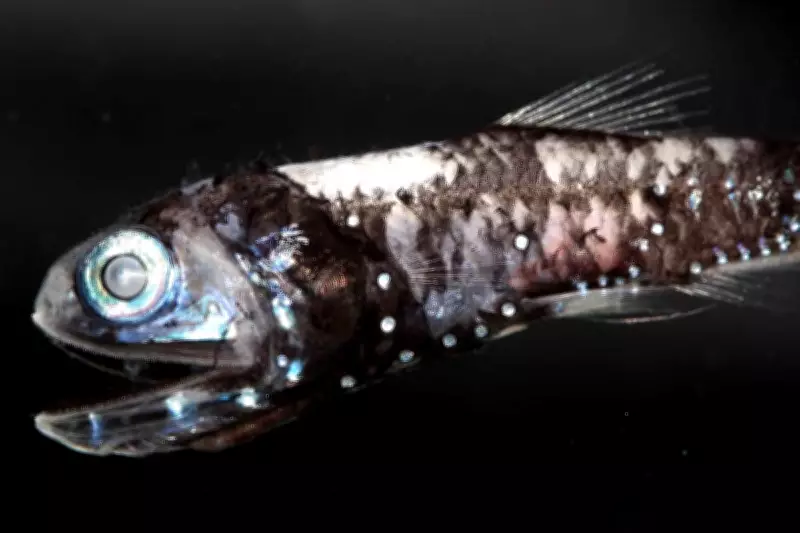
In a revolutionary discovery, scientists have uncovered a novel type of hybrid visual cell in the retinas of deep-sea fish larvae, fundamentally challenging established theories about vertebrate vision. This groundbreaking research, conducted in the Red Sea, reveals that these cells uniquely combine the structural features of rods, which are specialised for low-light conditions, with the molecular mechanisms and genetic expressions typically associated with cones, responsible for bright light and colour processing.
Discovery Across Three Distinct Species
The hybrid cells were identified in the larval stages of three different deep-sea fish species: a hatchetfish, a lightfish, and a lanternfish. Intriguingly, while the hatchetfish retains these hybrid cells into adulthood, the lightfish and lanternfish transition to conventional rod-cone vision systems as they mature. This variation suggests a complex evolutionary adaptation tailored to the extreme environments of the deep ocean, where light is scarce and survival demands innovative sensory capabilities.
Implications for Evolutionary Flexibility
This finding indicates that vertebrate visual systems are far more flexible and evolutionarily adaptable than previously assumed. It opens new avenues for understanding how vision has evolved across diverse species, potentially shedding light on visual adaptations in other animals, including humans. The research underscores the importance of studying larval stages, which may hold key insights into developmental and evolutionary processes that are not evident in adult organisms.

Future Research Directions
Scientists are now exploring the functional advantages of these hybrid cells, such as whether they enhance light sensitivity or colour discrimination in dark waters. This could lead to advancements in biomedical research, particularly in treating visual disorders or developing new optical technologies. The study also highlights the need for further investigation into deep-sea ecosystems, which remain largely unexplored and may harbour other biological mysteries.