World's Rarest Sea Turtle Rescued After Stranding on Texas Beach
In a dramatic wildlife rescue, an adult female Kemp's ridley sea turtle, the world's rarest sea turtle species, was discovered stranded on a beach in Galveston, Texas, in a critical condition. Beachgoers spotted the distressed turtle and immediately contacted Texas's dedicated sea turtle hotline, triggering an urgent response from conservation experts.
Dire Condition and Emergency Response
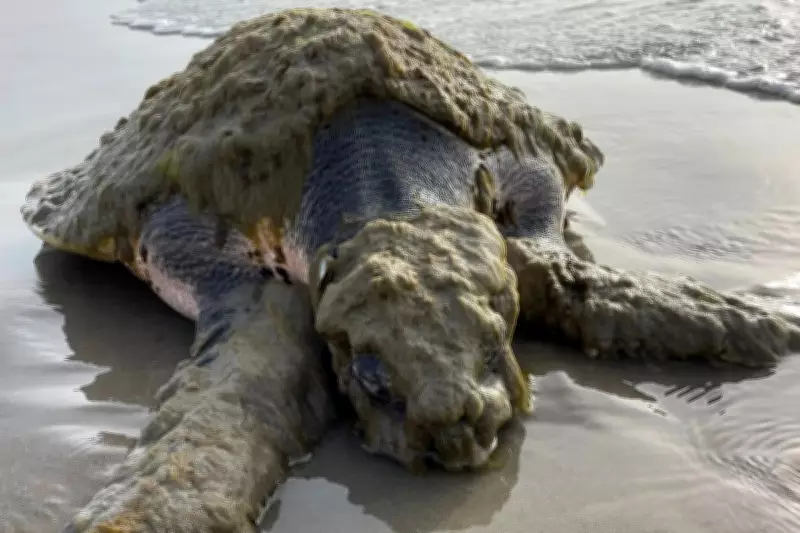
Photographs released by the Gulf Center for Sea Turtle Research revealed the turtle's body and shell heavily coated with green sludge and epibionts, including barnacles, algae, and sediment. These attachments typically accumulate when a sea turtle is too ill to swim at its normal pace, leading to lethargy and further health complications. The turtle was visibly weak and in desperate need of medical attention.
Following the discovery, the turtle was transported for an emergency veterinary assessment at the Houston Zoo. After initial treatment, it was moved to a specialised rehabilitation hospital where it is now receiving intensive care. The Gulf Center for Sea Turtle Research expressed optimism about the turtle's prospects, stating, "We are hopeful for her recuperation and eventual release back into the Gulf."

Significance of the Kemp's Ridley Species
Kemp's ridley sea turtles are not only the rarest sea turtle in the world, as confirmed by Florida wildlife officials, but also the smallest marine turtles globally. Their population faces numerous threats, including habitat loss, pollution, and accidental capture in fishing gear, making each rescue effort crucial for the species' survival.
This incident underscores the importance of public vigilance and rapid response networks in marine conservation. The successful intervention highlights the collaborative efforts between beachgoers, hotline operators, veterinary partners, and research centres in safeguarding endangered wildlife.
As the turtle continues its recovery journey, conservationists remain dedicated to monitoring its progress, with the ultimate goal of returning it to its natural habitat in the Gulf of Mexico. This rescue serves as a poignant reminder of the ongoing challenges and triumphs in protecting our planet's most vulnerable marine species.