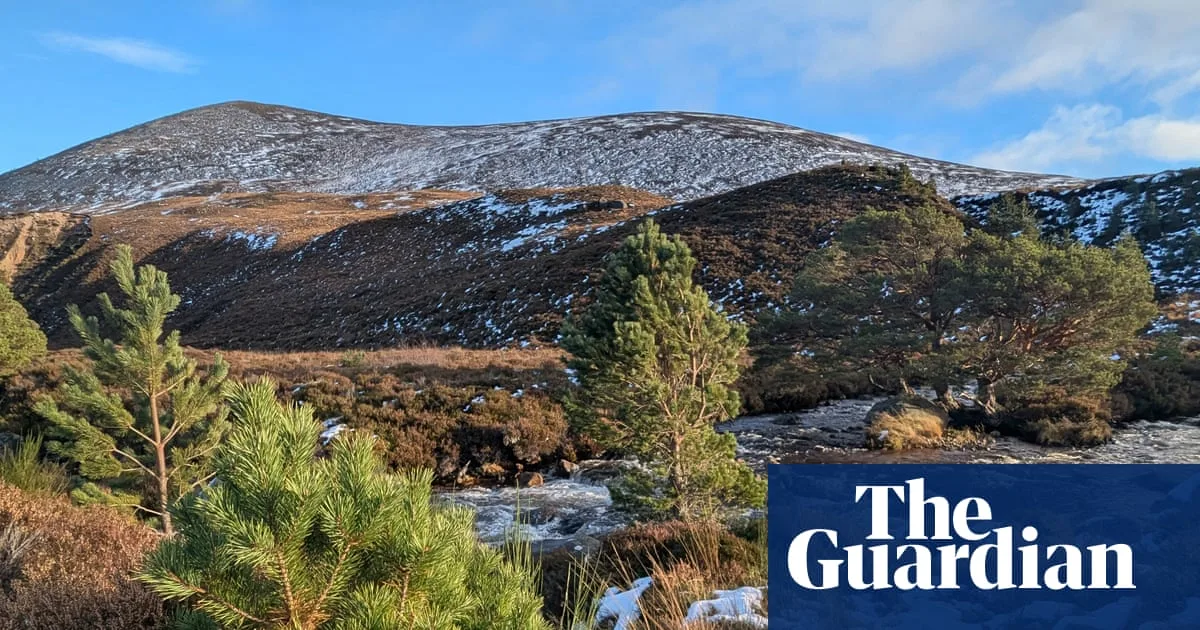
In the crisp, fading days of a Highland winter, a walk through the ancient woods of Rothiemurchus offers more than just scenic beauty; it reveals a landscape quietly healing itself. Where renowned writers once lamented devastation, new life is now pushing through the frozen earth.
A Legacy of Loss and a Walk of Hope
The author Nan Shepherd, in her seminal work The Living Mountain, reflected sadly on the remnants of the great Caledonian pine forest of Rothiemurchus. Her observations came after the extensive tree felling during both World Wars, which stripped the land to meet urgent demands for timber. This destruction was so severe that the ecologist Frank Fraser Darling remarked in 1949 that the area resembled a devastated battlefield, mourning "the wreck of … Rothiemurchus that is no more."
Walking through the same area now, one is struck by the poignant contrast. On a recent morning, with snow still dappling the high hills and nestling under clumps of heather, the air was fresh and the scenery breathtaking. Frozen puddles displayed intricate patterns, and a small lochan lay under a perfect sheet of ice. Yet, the most compelling sight was not the wintry spectacle, but the evidence of the forest's enduring spirit.
The Changing Face of Glen Einich
Starting near the Whitewell croft – a frequent retreat for Shepherd – the path winds through miles of mature woodland. This section, a rich tapestry of old Scots pine, birch, juniper and blaeberry, represents the forest's historic heart, a survivor from an earlier age.
However, as the trail turns south to face the long, deep trench of Glen Einich, the scene shifts dramatically. The dense forest thins out, replaced by banks of spiky gorse and a scattering of isolated, weather-beaten pines. Soon, it gives way entirely to a vast, open heath marked by muirburn, scree slopes, and the tracks of streams.
One central watercourse is the Am Benaidh stream, which was once dammed at Loch Einich to create surges of water for floating logged timber down to the River Spey. This area stands as a stark reminder of the industrial past that shaped the land.
A Peacetime Army Rises from the Earth
It is here, on this borderline between woodland and moor, that a subtle revolution is underway. Pause and look closely, and you will see them: pine saplings breaking defiantly through the soil. They range from tiny, fragile twigs to young trees reaching knee, waist, and even head height.
This regeneration is no accident. It is the direct result of evolved land management strategies and a deliberate reduction in deer numbers, which have historically grazed young shoots into oblivion. The forest is finally being given the breathing space it needs to reclaim its territory.
The more one scans the heath, the more seedlings come into view—a hopeful, green army advancing in peacetime. It is a living recovery story unfolding in real-time, a sight that would surely have brought immense joy to the eyes of Nan Shepherd and Frank Fraser Darling. This quiet resurgence in the Cairngorms stands as a powerful testament to the resilience of nature when given a chance.




