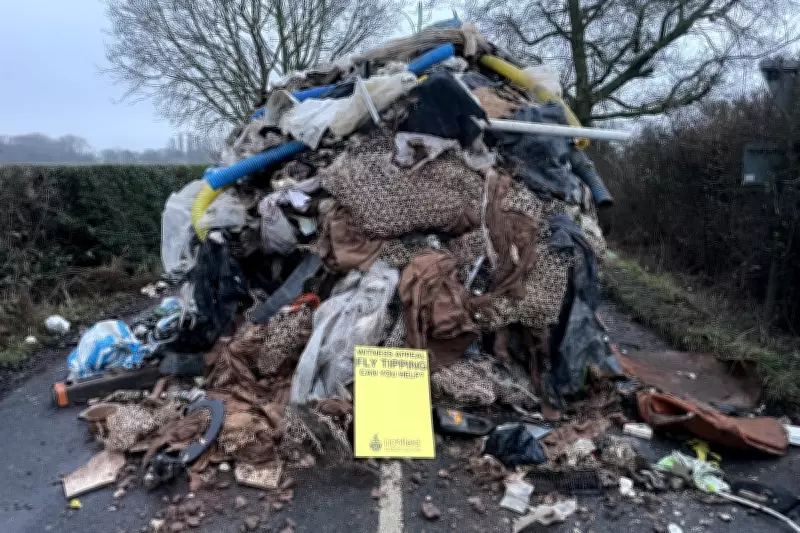
Fly-Tipping Cases in England Reach Record High with Nearly 10% Increase
Official figures from the Environment Department (Defra) have revealed a significant surge in fly-tipping incidents across England, with cases jumping nearly 10% last year to reach a new record high. Local authorities recorded approximately 1.26 million incidents of illegally dumped rubbish on public land during the 2024/2025 period, up from 1.15 million in the previous year.
Record Numbers and Rising Trends
This 9% increase marks the highest level of fly-tipping since new recording methods were introduced in 2018/2019. The data highlights a growing environmental and financial burden on councils and private landowners, who face substantial clear-up costs from this illegal activity. Nearly two-thirds of the cases, specifically 62%, involved household waste, totaling 777,000 incidents in 2024/2025, compared to 688,000 the year before.
Household waste encompasses a wide range of items, from everyday black bags of rubbish to old furniture, carpets, and miscellaneous items from loft and shed clearances. The most common locations for fly-tipping are pavements and roads, accounting for over a third of cases at 37%. In terms of scale, almost a third of incidents involved waste equivalent to a small van load, while 27% were the size of a car boot or less.

Large-Scale Dumping and Enforcement Actions
More alarmingly, 52,000 cases involved rubbish equivalent to a tipper lorry load or more, representing an 11% increase from the previous year. These larger incidents cost English councils a staggering £19.3 million to clear up in 2024/2025. In addition to council data, the Environment Agency dealt with 98 incidents of large-scale illegal dumping during the same period.
Enforcement efforts by councils saw an 8% rise to 572,000 actions, with fixed penalty notices increasing by 9% to 69,000. However, the total number of court fines decreased by 9% to 1,250, and the combined value of fines dropped from £730,000 to £673,000, despite a slight increase in average fines.
Impact on Rural Areas and Organised Crime
Countryside groups have raised concerns about farmland being targeted by organised crime gangs, who dump waste that blights landscapes and endangers wildlife, livestock, crops, and the environment. Farmers, often victims of these illegal activities, are left to bear the clean-up costs. Gavin Lane, president of the Countryside, Land and Business Association (CLA), warned that rural areas are under-policed, making them vulnerable to such crimes, which can involve hazardous materials like asbestos and chemicals.
Government Response and Calls for Action
In response to the crisis, Defra has published new guidance to help councils seize and crush vehicles used for fly-tipping or repurpose them for clean-up operations. The department is also advising on how to take cases to court and urging councils to name and shame offenders on social media. Defra Minister Mary Creagh emphasised the government's commitment to clamping down on waste crime, investing in technology, and boosting Environment Agency funding.
The Liberal Democrats have called for serious waste crime to be made a priority for the National Crime Agency, taking over investigations from the Environment Agency in severe cases. Tim Farron, the party's environment spokesman, highlighted the need for consequences for gangs profiting from illegal activities.
Council Perspectives and Recommendations
Arooj Shah, chairwoman of the Local Government Association's neighbourhoods committee, noted that councils are working tirelessly against fly-tipping but argued that penalties often fail to match the severity of offences. She urged the government to review sentencing guidelines for bigger fines and called on manufacturers to provide more take-back services for items like sofas and mattresses to reduce waste dumping.
This comprehensive data underscores the urgent need for stronger measures to combat fly-tipping, protect the environment, and alleviate the financial strain on local authorities and communities across England.