
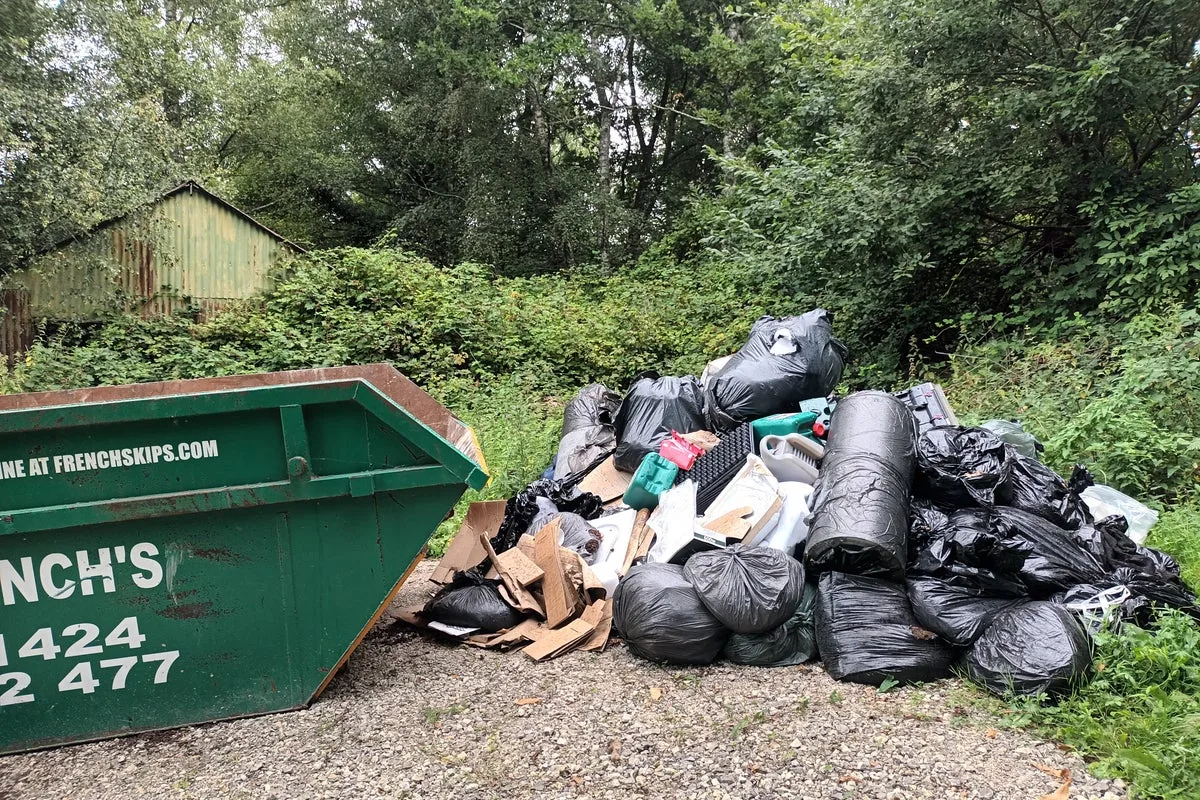
More than four tonnes of cannabis farm waste has been illegally dumped in Brede High Woods, one of the largest ancient woodlands in Sussex, according to the Woodland Trust. The charity has described the fly-tipping as “disgusting” and “relentless”, with multiple black bags of soil waste, propagation kits, tubing and cannabis production equipment discovered at the site near Hastings over the past year.
Helen Osorio, site manager at Brede High Woods, said: “The scale of cannabis farm waste and anti-social behaviour we’re dealing with is disgusting and relentless. It’s expensive, environmentally damaging and deeply frustrating for staff and visitors.” The Woodland Trust, which owns the land, has already spent more than £2,000 on skip hire and contractors to remove the waste, diverting funds from conservation projects.
The 260-hectare woodland is home to rare and protected wildlife, including nightingales, great-crested newts and water voles. It is the only known UK habitat for rare flea beetles, previously thought to be extinct, and contains brook lampreys, a primitive eel-like species. The dumped waste poses a significant threat to these species, with potential to contaminate soil and watercourses.
In addition to the cannabis waste, staff have reported an increase in poaching and illegal quad and trail biking, which damages ancient habitats. The Woodland Trust has begun blocking unauthorised access routes and installing wildlife cameras to monitor activity. The charity is working with Sussex Police and urges the public to report suspicious behaviour on 101 or 999.




