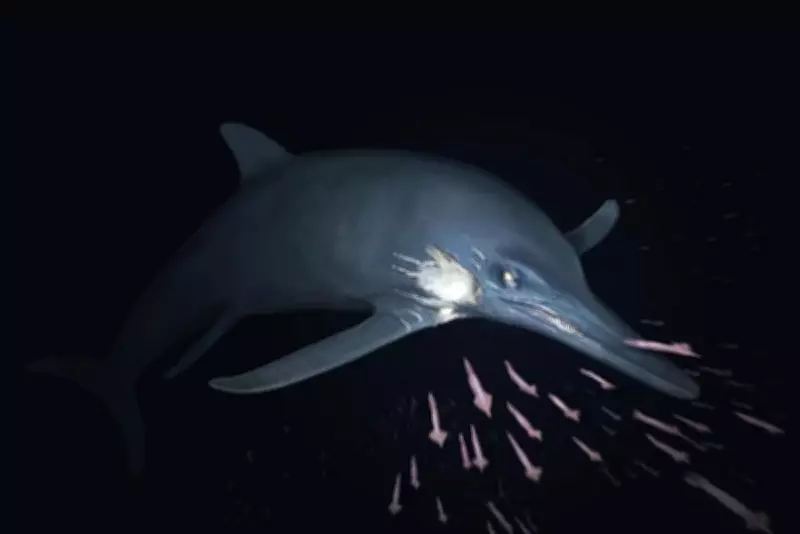
Scientists have discovered the remains of a giant marine reptile that grew up to over 20ft in length and terrorised the seas over 180 million years ago, based on the fossil of an animal that appears to have lived with multiple injuries.
The ichthyosaur, belonging to the genus Temnodontosaurus, was unearthed at the Mistelgau clay pit near Bayreuth in Germany, well known for its preserved marine fossils. It resembled modern dolphins and is estimated to have been over 6.5m (20ft) long.
In recent digs, researchers found several parts of its skeleton, including fragments of the skull and lower jaw, the shoulder girdle, forefins, the spine, and over 100 teeth, enabling detailed insights into its anatomical structures.

Significance of the Find
“Our Temnodontosaurus fossil is one of the youngest finds of this ichthyosaur genus to date. Until now, representatives of this genus have mainly been known from older geological layers,” said Ulrike Albert, an author of the study published in the journal Zitteliana.
“The discovery from Mistelgau now shows that these large marine reptiles survived longer in the Southwest German Basin than previously documented,” said Dr Albert, a palaeontologist from the Bavarian State Collections of Natural History. However, due to the absence of a complete specimen, researchers stopped short of a confident species-level assignment.
Evidence of Injuries and Survival
The fossil specimen exhibited some striking features, including modifications to the skeleton, presumably caused by injuries. Some of these may have affected the reptile’s shoulder and jaw joints and made its life difficult, researchers say.
“Pathologies primarily affecting the pectoral girdle and mandibular joint likely influenced the animal’s hunting and feeding behaviour, resulting in abraded teeth and the presence of gastroliths,” they wrote in the study. Gastroliths are small stones found in the stomachs of prehistoric reptiles, which they swallowed to aid in crushing and digesting food. They are extremely rare in ichthyosaurs such as Temnodontosaurus, scientists say.
Adaptation to Injury
Researchers speculate that the fossil animal may have had to change its diet to survive its injuries. “The injuries likely significantly limited the animal’s ability to catch prey,” said Stefan Eggmaier, another author of the study.
“The fact that it nevertheless survived is evidenced, among other things, by its heavily worn teeth and gastroliths, which we were able to identify in the abdominal region,” Dr Eggmaier said.
Future Research
The ongoing excavations are part of research to unravel the ecology of the Jurassic Sea. Scientists hope to conduct further analyses of teeth and bone structures found at the Mistelgau site to better understand the prehistoric area’s ecology.