
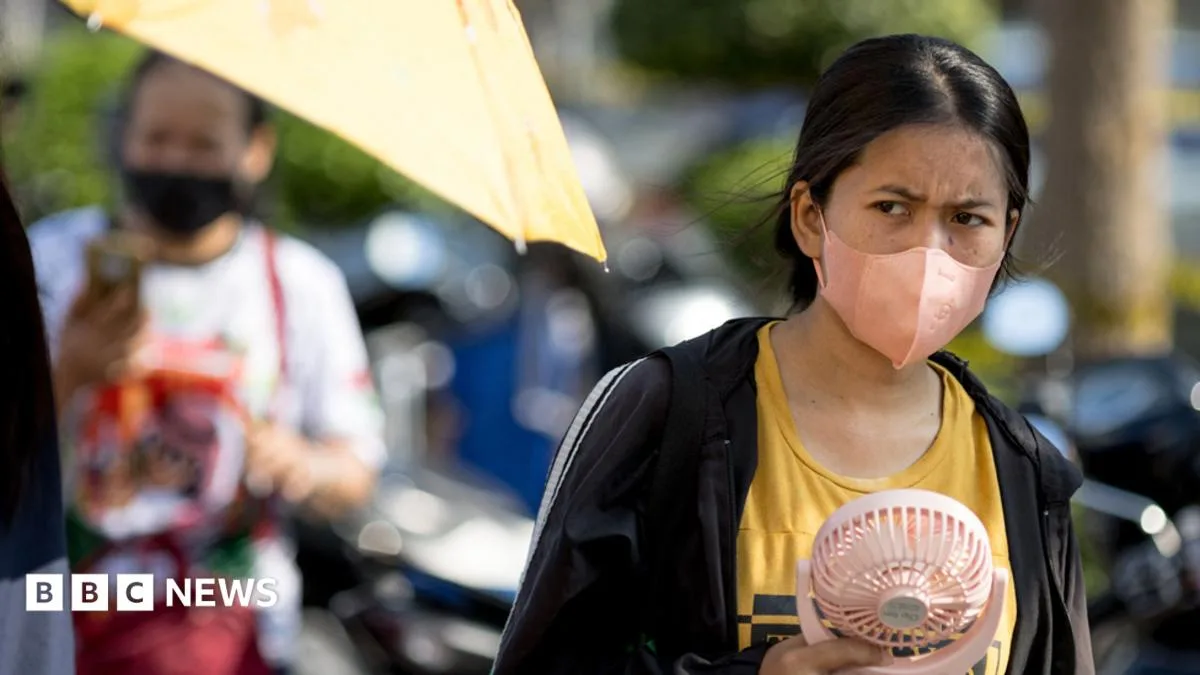
Mohammad Shukkur Ali, a 50-year-old rickshaw puller in Dhaka, continues to work under punishing conditions as Bangladesh's capital hit a record 40.6C in April. The heat is compounded by a mandatory jacket uniform to access affluent areas, and frequent power cuts due to fuel shortages linked to the Ukraine war.
Asia has experienced some of the worst of this year's global heat, with temperatures up to 2C above pre-industrial levels in many parts, according to a report by nearly two dozen climate scientists. The region is home to over 4.5 billion people.
In South Korea, at least 23 people died from heat-related causes between May and August, more than triple last year's toll, with temperatures reaching 38C. Japan issued heatstroke alerts across half the country in mid-July after Tokyo recorded 38C, 8C above average, hospitalising over 9,000 people in a week.
China saw its highest ever temperature of 52C in Xinjiang in July, while Beijing recorded its hottest June day in 60 years at 41.1C. India's capital Delhi hit 49.2C in May, and Southeast Asia also saw record temperatures in April and May.
Heatwaves are among the deadliest natural disasters, often killing more than earthquakes or floods. They can trigger pre-existing conditions and force the heart to work harder; a half-degree rise in core body temperature can increase heart rate by 10 beats per minute. Heatstroke occurs above 40C core temperature, leading to organ failure or death.
High humidity prevents sweat evaporation, making it harder for the body to cool down. A wet-bulb temperature of 35C is considered the absolute limit for human survival.




