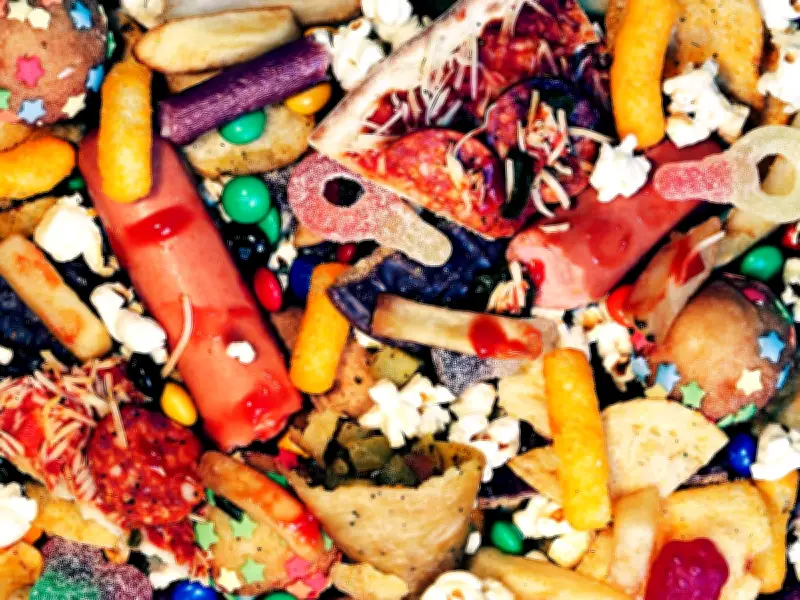
Ultra-processed foods could be responsible for around a quarter of heart disease cases and deaths, according to new research published in the American Journal of Preventive Medicine and presented at the International Congress on Obesity in Mexico. The analysis suggests thousands of cardiovascular disease-related deaths could potentially be avoided if people reduced their intake of ultra-processed foods (UPFs).
What Are Ultra-Processed Foods?
UPFs are widely consumed in the UK and include items such as ice cream, processed meats, crisps, mass-produced bread, some breakfast cereals, biscuits, many ready meals and fizzy drinks. They often contain additives and ingredients not typically used in home cooking, including preservatives, emulsifiers and artificial colours or flavours.
Researchers noted that UPFs make up a major share of diets. In the UK, an average of 56% of daily calories come from ultra-processed foods, rising to 68% among teenagers — figures higher than in comparable European countries such as France and Italy.
Study Findings: Attributable Risk
In the latest study, scientists — including researchers from the University of Montreal in Canada — used Canadian patient records and dietary data to examine cardiovascular disease, including heart attacks and strokes, along with deaths and disability. Their modelling suggested that in 2019, between 23% and 38% of cardiovascular disease events could be attributed to UPF consumption.
That equates to an estimated 58,200 to 96,000 new cases, and 10,600 to 17,400 deaths related to cardiovascular disease, alongside disability affecting thousands more people. The researchers also estimated that reducing UPF intake by 20% to 50% could have prevented 16,800 to 45,900 new cases of cardiovascular disease and 3,100 to 8,300 cardiovascular disease-related deaths.
Call for Policy Interventions
They concluded: "These findings reinforce the need for clinical and public health interventions aimed at reducing UPF intake as a key component of cardiovascular disease prevention. To drive meaningful change in dietary patterns, comprehensive structural measures are essential. These include regulations on food taxes, front-of-package labelling, marketing restrictions and reformulation targets aimed at improving food quality."
Criticism and Expert Commentary
However, the findings have been met with some criticism, with experts questioning whether the research proves ultra-processed foods themselves increase risk — or whether the issue is that many of these products are high in salt, sugar and saturated fat.
Professor Alberto Fiore, from Abertay University in Dundee, said the study had limitations. "This is a modelling study, not a clinical trial - it does not measure what actually happened to people who ate more or fewer ultra-processed foods. It takes a 2015 dietary snapshot, applies a risk multiplier borrowed from studies in France, Italy and the US, and projects how many CVD events might be attributable to UPF consumption."
"The authors' own sensitivity analysis reduces the headline figure of 96,000 avoidable CVD cases by nearly 40% depending on which risk estimate is used - that is a very wide uncertainty range for a number being put in front of the public. But the deeper problem is one this study cannot resolve: are we actually measuring the effect of industrial processing, or are we simply measuring the well-known harms of a poor diet that happens to come in a packet?"
Professor Fiore added: "The paper itself tells us the answer. It acknowledges that 'ultra-processed dietary patterns' are characterised by excess free sugars, saturated fats, and sodium, and low fibre - and it separately estimates that targeting free sugars and sodium alone could prevent thousands of CVD deaths per year in Canada. If standard nutritional harms already explain the observed risk, then the concept of 'ultra-processing' is doing no independent scientific work whatsoever."
He stated that when the CVD findings are examined by food subcategory, they are "overwhelmingly driven by sugar-sweetened beverages and processed meat products. These are foods whose harmfulness has been established for decades on purely nutritional grounds - high free sugar, high saturated fat, high sodium, low fibre - with no need to invoke the concept of industrial processing at all."
Stroke Association Response
Maeva May, director of policy for the Stroke Association, said the research adds to wider concerns about what people are eating — and the wider pressures that shape food choices. "Stroke is a leading cause of death and disability, and this research is an important reminder that the food environment around us can influence people's risk. It adds to growing evidence that diets high in ultra-processed foods may increase the risk of cardiovascular disease, including stroke."
"We still need to understand more about the role of processing itself, but we already know that too much salt, sugar and saturated fat can raise blood pressure and other major risk factors for stroke. People should not be blamed for choices shaped by price, availability and relentless marketing. Government and industry must do more to make healthier food affordable, accessible and easier to choose, so fewer people and families have to live with the impact of stroke."