
Under the UK's Road Traffic Act 1988, motorists are legally obliged to stop and report collisions involving dogs and certain livestock, including horses, cattle, sheep and pigs. Cats, however, are excluded. That means drivers who hit a cat can legally continue driving without notifying anyone.
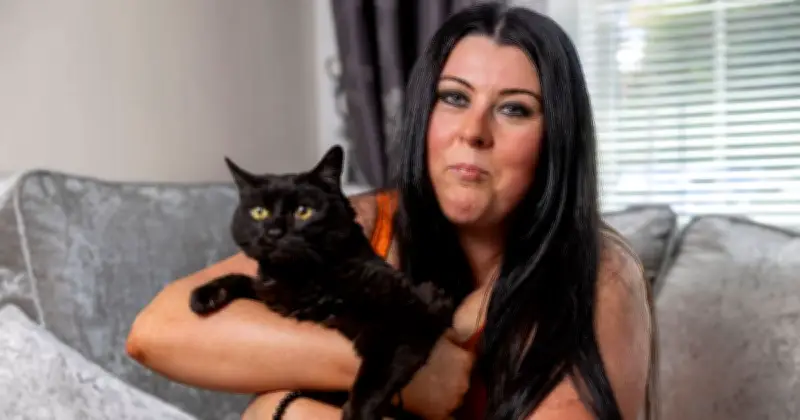
For Mandy Hobbis, Snowy wasn't "just a cat." He was the white shadow that curled up beside her every night, the companion who watched television with the family, the rescued stray who had finally found a place to belong after a difficult start in life. Then, one ordinary day in 2023, he didn't come home. Like thousands of pet owners, Mandy searched the streets, knocked on neighbours' doors and plastered the area with missing posters. Every hour that passed fuelled hope and dread in equal measure. Eventually, someone recognised Snowy from one of the flyers. They had seen his body lying by the roadside. The council had already collected him. But by then, it was too late. "They told me they didn't scan for microchips," Mandy recalls. "They just disposed of him." There was no goodbye. No final chance to hold him. No opportunity to bring him home one last time. Instead, Snowy was taken to landfill. "It was devastating," says the 42-year-old from Stourbridge. "He'd already suffered after being hit and left in the road. Then he was treated like rubbish."
Campaign Gains Momentum
Snowy's death in 2023 became the catalyst for a national campaign that has gathered extraordinary momentum. Nearly 190,000 people have signed a parliamentary petition calling for drivers to be legally required to stop and report collisions involving cats, comfortably passing the 100,000-signature threshold needed to secure a debate in Parliament.
Under the UK's Road Traffic Act 1988, motorists are legally obliged to stop and report collisions involving dogs and certain livestock, including horses, cattle, sheep and pigs. Cats, however, are excluded. That means drivers who hit a cat can legally continue driving without notifying anyone.
For Cats Matter, the distinction is increasingly difficult to justify. "The legislation dates back to the 1970s," Mandy explains. "It was written around working animals. But we're now in 2026. Cats are family members to millions of people. The law simply hasn't caught up."
Proposal for Change
The campaign is not seeking criminal records or harsh punishments for drivers involved in unavoidable accidents. Instead, campaigners want a straightforward legal duty: stop, check the animal if it is safe to do so, and report the collision so help can be provided, or owners informed through the cat's microchip.
The proposal is also closely linked to the UK's compulsory cat microchipping laws. While pet cats must now be microchipped, campaigners say there remains no legal obligation for councils or anyone recovering a deceased cat to scan those chips.
Snowy's story highlights that gap. Although his local council has since voluntarily changed its policy and now scans every cat it collects, Mandy says many councils across Britain still do not. "There is mandatory microchipping," she says. "But there's no mandatory scanning. We'd like to see both."
Personal Stories Highlight the Issue
Mandy has since welcomed a new cat into her life, Lucky. “Lucky is currently an indoor cat with secure outdoor access, but cats very easily escape,” she says. “Even though I have restricted her movements because I couldn't go through the pain of losing one to the road again, I understand there is always a chance she might escape somehow and end up by a road.”
She struggles to understand the mentality of drivers who fail to stop after hitting a cat. “What I will never understand or accept is that someone could hit Lucky while they are driving and leave her on the road in excruciating pain,” she says. “She is not rubbish. She is a sentient being who is loved by her family very much and she means the world to them. My hope is that a future law change will ensure she is helped if she ever does find herself in trouble, and I don't believe that is such a big ask.”
The campaign is also underpinned by statistics that suggest road collisions involving cats are far from rare. Pet insurance research estimates around 230,000 cats are hit by vehicles each year, with campaigners citing evidence suggesting as many as three-quarters could potentially survive if they received veterinary treatment quickly.
For supporters, every minute matters. If drivers stop, seek assistance or transport an injured cat to a nearby veterinary practice, staff can scan for a microchip free of charge, contact owners and begin emergency treatment where appropriate. Instead, many owners are left with unanswered questions.
Among them is 31-year-old Saira Khanum from Surrey, whose cat Princess Hunni disappeared during what should have been an unremarkable afternoon in December 2024. Hunni had joined the family as a tiny kitten in early 2020. Adventurous and affectionate, she loved chasing laser toys, climbing wardrobes and greeting her owners with enthusiastic head bumps. She eventually became a mother to two kittens of her own. Two days after she disappeared, a man contacted Saira after seeing posters. He explained that he'd seen a cat matching Hunni's description after she had apparently been struck by a vehicle. "She looked like she was sleeping," he told her. By the time Saira reached the location, only blood remained. Although Hunni had been microchipped, her family never recovered her body and were never able to say goodbye. "My mind is still filled with questions," Saira says. "If the driver had stopped, we could have known what happened. If she was still alive, she could have been helped." Rather than allowing Hunni's story to disappear, Saira has chosen to tell it publicly. "Hunni was not defined only by how her life ended, but by how she lived," she says. "She had a personality, relationships and a family. She mattered."
Long Months of Uncertainty
For Fern Doyle from Stevenage, the uncertainty lasted far longer. Her cat Buddy disappeared in November 2024 after climbing out of a bedroom window. For nearly a year, the family searched relentlessly. They distributed more than 1,000 leaflets, contacted vets, councils, rescue centres and local Facebook groups, chasing every possible sighting.
Buddy wasn't simply a pet, Fern says. "He loved sitting on your shoulder. He tolerated our son dressing him up. Every morning he would wait outside the bedroom window to come back inside." Nearly 11 months later, the family finally learned the truth. Buddy had survived being away from home before eventually being struck by a vehicle. The driver left without seeking help. Even now, Fern struggles to describe the impact. "What aches the most is that perhaps if that person had acted, Buddy could have been saved and be back home with us," she says. Explaining Buddy's death to her six-year-old son remains one of the hardest conversations she has ever had. "They are never 'just a cat'," she says. "They had a soul. They were part of a family. They were deeply loved."
Political Attention Grows
The campaign has attracted growing political attention as public support has increased. Cat Eccles, whose constituency includes Mandy Hobbis, believes the scale of the petition demonstrates changing public attitudes. "Cats are not just pets; they are cherished companions, part of the family, and a source of comfort, joy and friendship," she says. She argues that compulsory microchipping has strengthened the case for updating wider legislation surrounding cats involved in road traffic collisions. "The petition raises a simple but powerful point: if a cat is involved in a road traffic collision, every reasonable effort should be made to ensure the animal receives help and, where possible, that its owner can be informed." Eccles also notes that campaigners are not demanding financial penalties for motorists who do the right thing. "The petition demands a simple requirement: stop, check and report any collision so an injured cat can receive help." She welcomed Parliament's opportunity to debate the proposal, thanking campaigners who had shared deeply personal experiences of losing much-loved pets.
For Mandy, Saira, Fern and thousands of others who have backed the campaign, this debate is about more than amending a piece of road traffic legislation. It is about ensuring that injured cats are given the chance to receive help, that owners have the opportunity to learn what happened to a missing pet, and that compulsory microchipping is matched by clear procedures for identifying animals after a collision. Whether Parliament ultimately agrees to change the law remains to be seen. But after attracting one of the largest animal welfare petitions in recent years, campaigners believe the issue can no longer be dismissed as one affecting "just cats". For the families who have shared their stories, that recognition is long overdue.




