Wild forest fires in northeastern Japan have forced approximately 3,000 residents to evacuate their homes as flames advance toward residential areas. Two separate blazes in Iwate Prefecture have been burning for a fourth consecutive day, marking one of the most severe mountain wildfire disasters in decades, according to the Ministry of Agriculture, Forestry and Fisheries.
Extent of the Fires
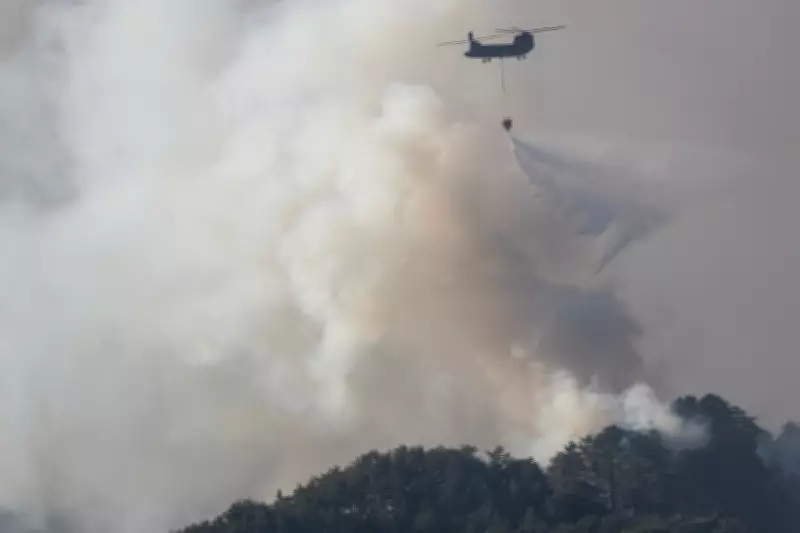
The fires have consumed more than 730 hectares (1,800 acres) since igniting on Wednesday afternoon in two districts of Otsuchi. The first fire started in a mountainous area, followed by a second blaze roughly two hours later, about 10 kilometres (6.2 miles) away, near residential neighbourhoods. Images showed a massive column of smoke rising over Otsuchi town as helicopters dropped water on the burning forest. Residents reported smelling the fire up to 30 kilometres away.
Damage and Evacuations
The flames have destroyed at least eight buildings, including one residence, and have prompted evacuation orders for more than half of Otsuchi’s population of 3,233. No casualties have been reported so far. Over 1,300 firefighters, along with troops from the Japan Self-Defence Forces, have been mobilised to combat the fires. Helicopters have been deployed to drop water on affected areas and forests near at-risk homes. “Ultimately, I do hope it’ll rain,” a local resident told public broadcaster NHK.

Historical Context
Experts attribute the recurring wildfires in Japan to seasonal dry weather combined with layers of dried fallen leaves on forest floors. The current blazes have burned the third-largest area on record in the country, trailing behind a 2025 wildfire in Ofunato that consumed about 3,370 hectares and the 1992 Kushiro fire that burned around 1,030 hectares. The Ofunato blaze last year was the worst Japan had experienced in over half a century.
Climate Change Warnings
Scientists have long cautioned that climate change, driven by the burning of fossil fuels, will intensify and prolong drought periods, creating conditions increasingly conducive to wildfires. The ongoing disaster underscores the growing threat posed by extreme weather events in the region.