In a race against time to prevent a global coastal catastrophe, glaciologists are turning to cutting-edge technology and radical new ideas, including creating 'artificial glaciers' in the lab, to slow the rapid collapse of the world's ice sheets.
The Looming Crisis: A World Underwater
Sea levels are now rising at an unprecedented rate in human history. For every foot of rise, an estimated 100 million people are displaced from their homes. Current projections suggest that by the end of the century, around 300 million people could be forced to migrate inland, triggering immense social and political upheaval. Yet, despite this looming emergency, the world lacks precise forecasts for where and when the worst impacts will hit and has invested almost nothing in exploring ways to slow the process down.
While reducing greenhouse gas emissions remains paramount, a growing consensus among scientists is that it is no longer enough. The largest contributors to sea-level rise are ocean-bound glaciers, whose undersides are melted by warm water currents—a deep-ocean process that will continue for centuries even if emissions were halted today.

The 'Doomsday Glacier' and a Point of No Return
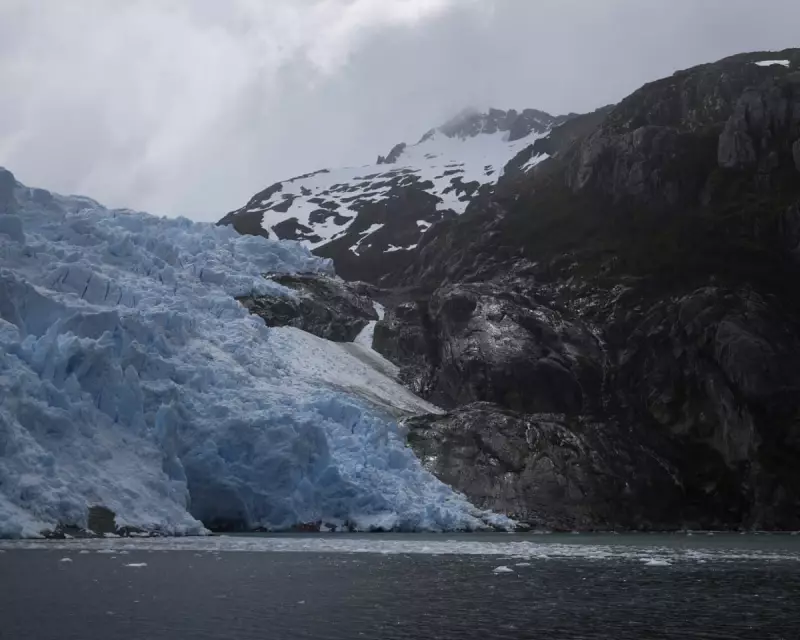
The most alarming focal point is the Thwaites glacier in West Antarctica, often dubbed the 'Doomsday Glacier'. Roughly the size of Great Britain, it acts as a keystone, holding back the vast West Antarctic Ice Sheet. Satellite data indicates it is already collapsing. If Thwaites fails completely, it could drag the entire ice sheet with it, causing a catastrophic global sea-level rise of over 6 feet (1.8 metres) within our children's lifetimes.
"Notably, while we believe reducing carbon emissions is critical for climate resilience, even bringing emissions to preindustrial levels will not slow this collapse," state scientists Dr Brent Minchew and Dr Colin Meyer, co-founders of the Arête Glacier Initiative.
From Passive Observation to Active Intervention
Instead of merely documenting the demise, a new wave of scientists is adopting a proactive stance. They are leveraging a suite of innovative technologies to understand and potentially conserve ice systems. This arsenal includes:
- Satellite-based radar for precise monitoring.
- Solar-powered drones and robotic submarines to study inaccessible areas.
- Laboratory-based 'artificial glaciers' to model ice behaviour.
- Advanced computing and AI to create accurate forecasts.
One promising avenue for intervention is inspired by nature itself. The Kamb ice stream in West Antarctica naturally froze itself to its bed about 200 years ago, effectively halting its flow. Scientists believe similar, targeted freezing under key points of the Thwaites glacier could stabilise it. One proposed method involves drilling to the glacier's base and installing passive thermosiphon heat pumps to cool and refreeze the ice.
The Urgent Need for Funding and Responsible Action
These ideas are in their infancy and require years of rigorous research and development under established engineering frameworks, such as NASA's Technology Readiness Level system. The scientists stress that while speed is essential, they cannot "move fast and break things"; environmental responsibility is paramount.
A major barrier is funding. The recent International Thwaites Glacier Collaboration (ITGC) between the US and UK, which ran from 2018 to 2025, invested an average of just $7 million per year. This is a pittance compared to the hundreds of billions lost annually to coastal flooding already. Philanthropy is currently filling gaps left by governmental inaction.
"If we fail to find new options, we will at least know that we did everything we could, while helping humanity prepare for what’s coming," say Minchew and Meyer. "And if we succeed, we will have done something once thought out of reach: we’ll have preserved the world’s coastlines, and given future generations the chance to live by stable seas."