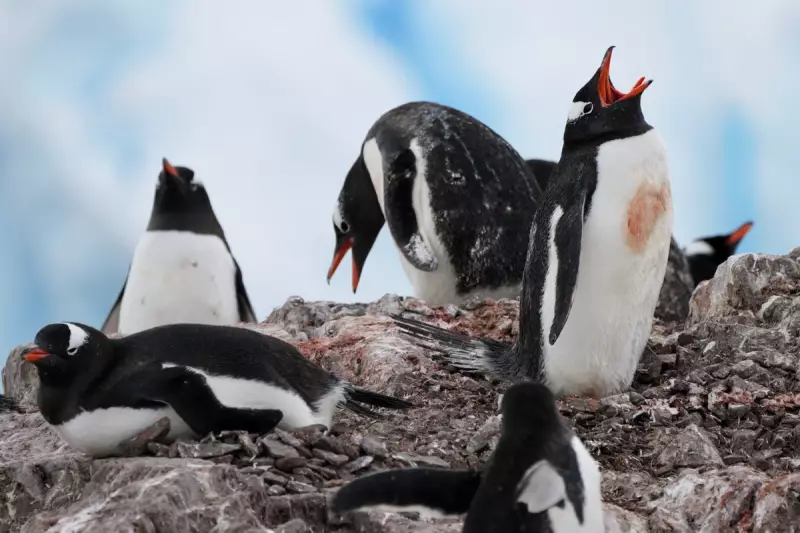
Penguins in Antarctica are beginning their breeding seasons a startling two weeks earlier than they did just a decade ago, a rapid shift driven by climate change that scientists warn could lead to the extinction of two species before the century's end.
A Record-Speed Shift in Life Cycles
According to a new study published in the Journal of Animal Ecology, breeding grounds in Antarctica have warmed by a substantial 5.4 degrees Fahrenheit (3 degrees Celsius) between 2012 and 2022. This heating is forcing three brush-tailed penguin species—the Adelie, chinstrap, and gentoo—to advance their reproductive cycles at an unprecedented pace.
"Penguins are changing the time at which they’re breeding at a record speed, faster than any other vertebrate," said lead author Ignacio Juarez Martinez, a biologist at the University of Oxford. He emphasised that this timing is critical, as it must coincide with peak food availability for chicks to survive and grow.

For perspective, co-author Fiona Suttle, also an Oxford biologist, noted that a similar two-week shift in breeding took great tits in Europe 75 years to achieve. For these Antarctic penguins, it has happened in just 10.
Winners, Losers, and a Fight for Food
The research, which used remote cameras to photograph dozens of colonies from 2011 to 2021, reveals that climate change is creating clear winners and losers. The gentoo penguins, which have a more varied diet, are adapting their breeding timing faster than the specialist krill-eaters, the Adelie and chinstrap.
This has led to a dangerous overlap in breeding seasons. Gentoos are more aggressive in securing food and nesting sites, and they don't migrate as far. Suttle reported returning to former Adelie colony sites in October and November only to find them occupied by gentoos.
"Chinstraps are declining globally," Martinez stated. "Models show that they might get extinct before the end of the century at this rate. Adelies are doing very poorly in the Antarctic Peninsula and it’s very likely that they go extinct from the Antarctic Peninsula before the end of the century."
A Warming Chain Reaction
The scientists explain that warming in the western Antarctic—the second-fastest heating region on Earth—means less sea ice. This leads to an earlier bloom of phytoplankton, the base of the food web. While this might seem beneficial, it disrupts the finely tuned synchrony between chick hatching and peak krill abundance.
Furthermore, Suttle pointed out that the changes have also encouraged earlier commercial fishing activity in the region, which further shortens the food supply for the struggling penguins.
Michelle LaRue, a professor of Antarctic marine science at the University of Canterbury in New Zealand who was not involved in the study, called the shift "an interesting signal of change" and stressed the importance of continued observation to understand the full impact on populations.
The decade-long study was aided by public participation through the Penguin Watch website, where volunteers annotated over 9 million images. "A lot of that does come down to the fact that people just love penguins so much," Suttle remarked, noting their endearing, tuxedo-like appearance.