
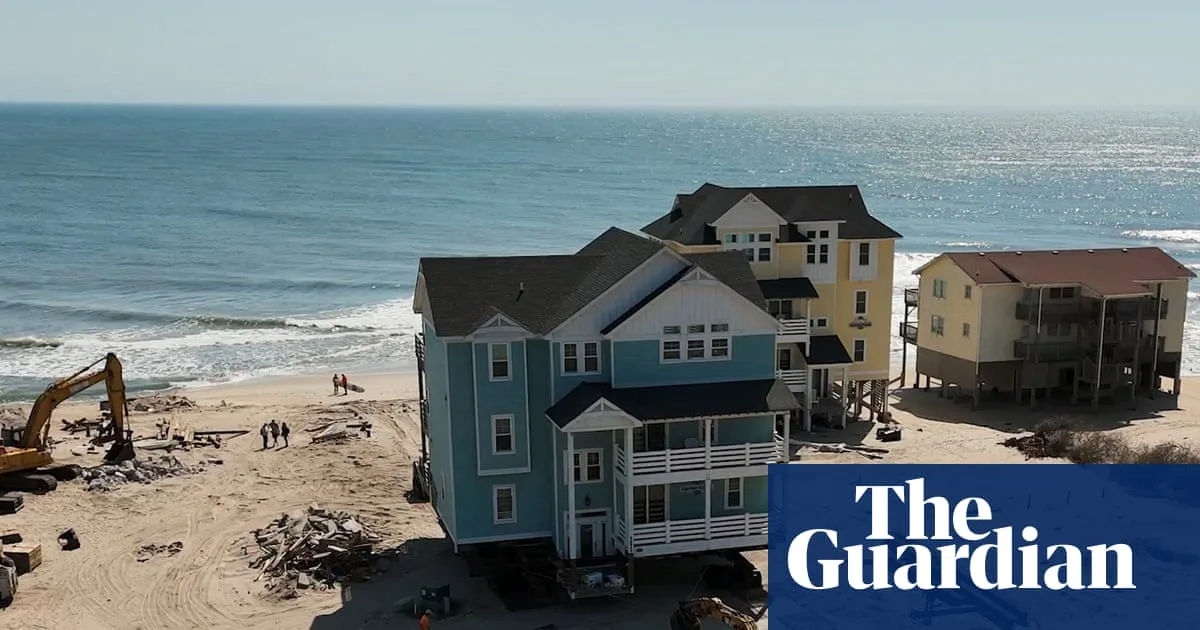
Nineteen homes have been lost to the Atlantic Ocean off North Carolina's Outer Banks since September, with entire buildings now being moved on wheels to escape the eroding coastline. The pace of sea-level rise has turned the area into a 'canary in the coalmine' for other east coast communities, experts warn.
Barry Crum, a lifelong resident of Hatteras Island and the region's main house mover, said business has never been busier. His crew has jacked up homes on to girders to be wheeled back from the waves. 'I've seen a lot but I hadn't seen this kind of erosion this quickly before,' he said.
Coastal erosion is not new to the Outer Banks—the Cape Hatteras lighthouse was moved in 1999 after losing more than 1,000ft of land. But last year's losses stunned locals, with five houses collapsing in 45 minutes on 30 September. Resident Hunter Hicks, who filmed one collapse, described the sound as like a bomb going off. 'If we don't move these houses we will probably lose 20 more by the end of the year,' he added.
Laura Moore, an expert in coastal change at the University of North Carolina, said the rising pace of sea levels means the Outer Banks are 'kind of the canaries in the coalmine' for other low-lying US east coast communities. 'There is no easy solution,' she added. 'Sea level's rising, we're on a mobile landscape, there really is no long-term way to hold things in place.'
Despite the losses, residents show resilience. The only highway, Highway 12, occasionally floods or is blocked by sand, leaving the Outer Banks cut off except by ferry. The mood remains defiant, with visitors buying T-shirts mocking the situation or coffee from the aptly named Swept Away Cafe.




