Meteorite Strike Yields Salty Secrets
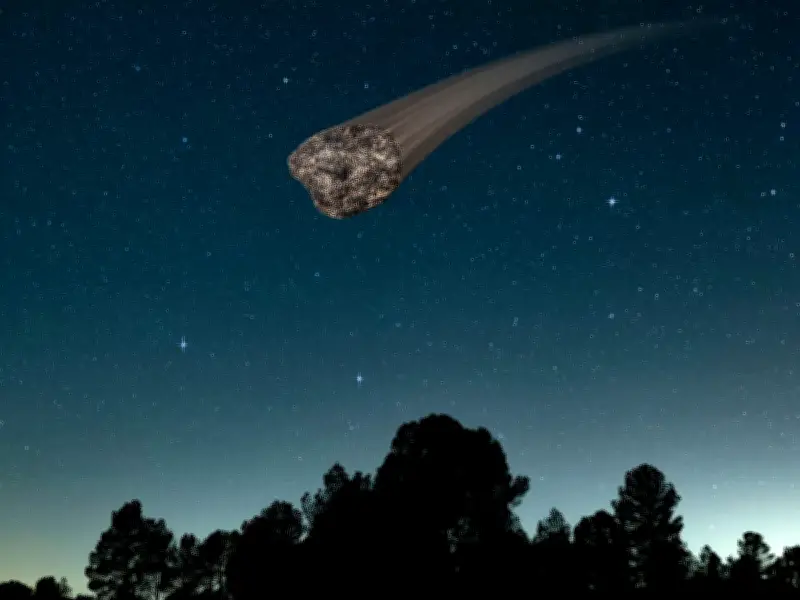
A meteorite that smashed into a house in Hillsborough, New Jersey, on July 16, 2024, contains salty fluids and organic compounds that may be crucial to understanding the building blocks of life, scientists announced. The space rock, which weighed over two pounds, crashed through the roof after a daytime meteor caused a sonic boom over New York City.
Discovery of 'Alien World' Chemistry
An international research team, including scientists from the Search for Extraterrestrial Intelligence (SETI) Institute, published their findings in the journal Science Advances. Lead author Dr. Peter Jenniskens of the SETI Institute stated, “A forensic study of the fragments revealed that they contained preserved bits from near the surface of a primitive asteroid where it experienced concentrated salty fluids—a process not previously known from this type of proto planet world.”
The meteorite entered Earth's atmosphere at a speed of 32,000 miles per hour, according to Dr. Jenniskens. It was observed by 60 people across New York, New Jersey, Connecticut, Rhode Island, and Pennsylvania, while 16 individuals in New York and New Jersey felt the shockwave. American Meteor Society operations manager Mike Hankey noted, “Our cameras in Northford, Connecticut, and Douglassville, Pennsylvania, as well as a doorbell camera in Wayne, New Jersey, captured the meteor, and from that we measured its trajectory. The path traced back to low in the asteroid belt.”

Fragile Rock Breaks Apart
The rock was fragile and broke into pieces, becoming visible at an altitude of 22 miles. After it faded, Doppler weather radar at Newark Airport detected a long cloud of falling pebbles stretching from Staten Island into New Jersey. Hillsborough, at the far end of that cloud, saw the largest rocks come down. Only one fragment was recovered because it struck a house.
The homeowner recounted, “I was at home at the time, heard a loud crash and found a hole in the ceiling of the master bedroom. I smelled a strong sulphur-like odour and saw many black fragments along with debris and black dust that covered my bed, carpet and surrounding areas.” He preserved the scene using disposable gloves and aluminum foil, placing the meteorite fragments in glass jars.
Classification and Analysis
Scientists determined the meteorite belonged to a rare type called CM-type carbonaceous chondrites, specifically a CM1/2 subtype. Study co-author Dr. Mike Zolensky of NASA explained that analysis revealed fragments more extensively altered by water on the parent asteroid than typically seen in CM2 carbonaceous chondrites. This is the 22nd observed CM-type meteorite fall but only the second witnessed fall of a CM1/2 carbonaceous chondrite, following the Kolang meteorite that fell in Indonesia in 2020.
The team is now working to identify the salt minerals for comparison with samples returned from other asteroids. Some fragments will be displayed at the American Museum of Natural History in New York City. Curator Denton Ebel said, “We are thrilled that nature delivered such a precious asteroid sample on our doorstep.”