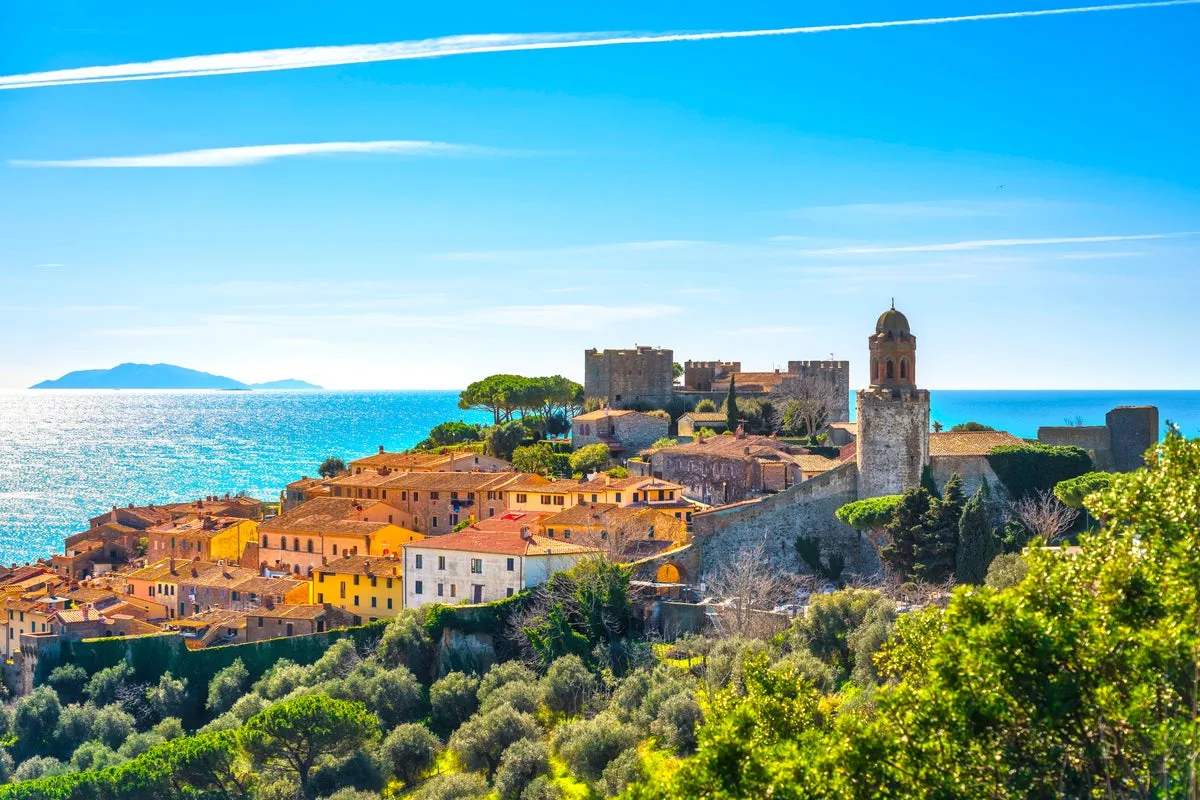
In a groundbreaking geological discovery, researchers have identified an enormous reservoir of magma buried deep beneath the picturesque landscapes of Tuscany, Italy. This vast subterranean feature contains approximately 6,000 cubic kilometres of molten and partially molten rock, a volume that rivals the magma systems beneath some of the world's most formidable supervolcanoes, including Yellowstone in the United States and Lake Taupo in New Zealand.
A Surprising Find in a Seemingly Quiet Region
The discovery, detailed in a recent publication in the prestigious journal Nature, has taken the scientific community by surprise. Tuscany exhibits almost none of the typical surface indicators that usually signal the presence of such a massive underground magma body. There are no major volcanic craters, no significant eruptions recorded in hundreds of thousands of years, and no dramatic ground deformations to hint at the fiery activity below.
The last known volcanic event in this area occurred around 300,000 years ago from Mount Amiata and was relatively minor in scale. This historical calm made the detection of such an extensive magma reservoir all the more unexpected for the international research team involved.
Advanced Seismic Imaging Reveals Hidden Depths
The reservoir was uncovered through an innovative technique known as ambient noise tomography. A collaborative team from the University of Geneva, Italy's Institute of Geosciences and Earth Resources, and the National Institute of Geophysics and Volcanology deployed a network of about 60 high-resolution seismic sensors across the region.
This method capitalises on the natural vibrations constantly coursing through the Earth's crust, generated by sources such as ocean waves, wind patterns, and even human activities. By meticulously recording these vibrations, scientists can map subsurface structures. When these seismic waves travel unusually slowly through a specific zone, it strongly indicates the presence of molten or partially molten material.
Using this data, the researchers constructed a detailed three-dimensional image of the crust down to a depth of 15 kilometres, revealing the hidden magma body.
Structure and Composition of the Magma Reservoir
The magma is situated between 8 and 15 kilometres beneath the surface. It features a core composed predominantly of liquid melt, estimated to be around 3,000 cubic kilometres in volume. This liquid core is encased within a larger shell of crystal-rich, partially molten rock, adding roughly another 5,000 cubic kilometres to the total reservoir size.
Notably, the region beneath Mount Amiata, located at the southern edge of the study area, may harbour even larger volumes of magma. However, the research team has emphasised that further detailed analysis is required to confirm this possibility.
Resolving a Longstanding Geological Puzzle
This discovery provides a compelling explanation for a persistent mystery surrounding Tuscany: why the region exhibits such extreme geothermal activity despite the apparent absence of an obvious volcanic source. The Larderello area, historically nicknamed the Devil's Valley due to its intense fumarolic activity, is home to one of the world's most productive geothermal energy systems, which has been generating electricity since the early 1900s.
The newly identified magma reservoir is now understood to be the powerful engine driving this significant geothermal activity, supplying the immense heat necessary for energy production.
No Immediate Volcanic Threat, But Scientific Value is Immense
Despite its colossal scale, the researchers have assured that the magma body poses no immediate volcanic threat to the region. The magmas in the Tuscan system are highly viscous, having formed through the melting of the surrounding crustal rocks rather than rising directly from the Earth's mantle. This high viscosity makes them far less likely to erupt explosively compared to the magmas found beneath conventional supervolcanoes like Yellowstone.
Instead, these viscous magmas tend to accumulate slowly over vast timescales. As the study authors noted, such partial melt systems are crucial for understanding the long-term evolutionary processes of volcanic systems that have experienced super-eruptions in the past, as well as regional-scale, high-enthalpy systems that have not yet erupted.
Practical Applications and Future Exploration
Beyond its profound scientific implications, the study highlights the practical potential of ambient noise tomography as an efficient and cost-effective tool for subsurface exploration. Matteo Lupi, associate professor in the Department of Earth Sciences at the University of Geneva and the lead researcher on the study, underscored the dual importance of the findings.
"These results are important both for fundamental research and for practical applications, such as locating geothermal reservoirs or deposits rich in lithium and rare earth elements," Mr Lupi explained. He further noted that the formation of such valuable mineral deposits is closely linked to deep magmatic systems of the kind now identified beneath Tuscany.
The discovery not only reshapes our understanding of the geological forces at work beneath central Italy but also opens new avenues for sustainable energy exploration and resource management, demonstrating how cutting-edge science can illuminate both the hidden workings of our planet and its practical potential for human society.






