A scientific expedition in the remote Weddell Sea of Antarctica has made an extraordinary discovery, uncovering a secret island hidden within an area officially marked as a danger zone for navigation. The remarkable find occurred when a 93-member team aboard the Alfred Wegener Institute's renowned icebreaker, Polarstern, was forced to seek refuge from severe weather conditions near Joinville Island.
An Unexpected Landmass Emerges
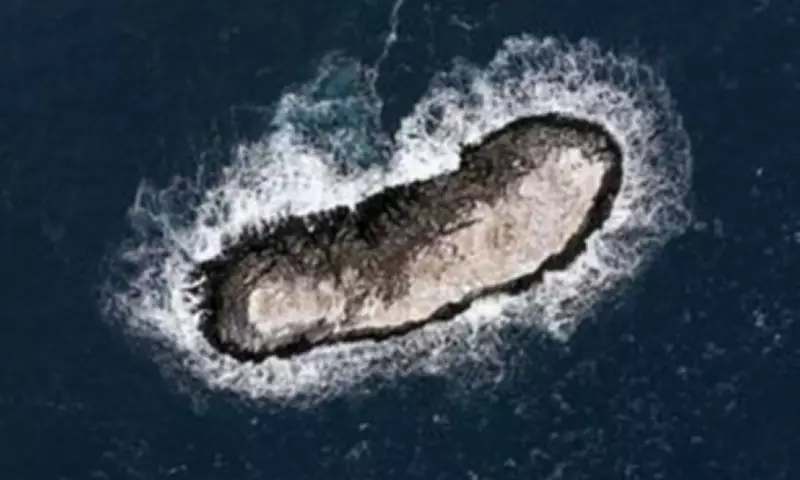
During their unscheduled stop, researchers observed an unusual brown landmass that initially appeared to be a dirty iceberg. Simon Dreutter, an underwater mapping specialist at AWI, described the moment of realisation. "On our route, the nautical chart showed an area with unexplored dangers to navigation, but it wasn't clear what it was or where the information came from," he explained. "Looking out of the window, we saw an 'iceberg' that looked kind of dirty. On closer inspection, we realised that it was probably rock."
Careful Investigation and Measurement
The team cautiously navigated the Polarstern toward the mysterious formation, eventually approaching within 150 metres. Using advanced drone technology, they conducted aerial surveys that confirmed they had indeed discovered a previously undocumented island. The newly found landmass measures approximately 130 metres in length, 50 metres in width, and rises about 16 metres above the water's surface.

To provide perspective on its scale, the island is roughly the same length as the Great Pyramid of Giza. This surprising dimension highlights how substantial geographical features can remain undetected in Earth's most remote regions.
The Mystery of the Danger Zone Designation
Scientists remain puzzled by the island's contradictory documentation. While nautical charts clearly mark the area as hazardous for navigation, other datasets fail to identify any coastline in the location. Researchers theorise that the island's ice cover made it virtually indistinguishable from surrounding icebergs in satellite imagery. "On the satellite images analysed, the island could hardly be distinguished from the numerous icebergs drifting around in the immediate vicinity due to its ice cover," the team noted.
The Naming Dilemma
Before this discovery can be officially added to maritime maps, the island requires an official name. While the research team continues to deliberate, enthusiastic observers on social media platform X have already proposed numerous suggestions. One user advocated for "Eisberg," while another referenced Michael Ende's children's literature with "Lummerland." A more humorous suggestion proposed "Bird Rendezvous Island."
Parallel Discoveries and Environmental Context
This Antarctic discovery follows recent geographical developments elsewhere, including the emergence of a permanent islet called Bacan near Venice. Previously appearing only seasonally, this sandbank has now become a stable feature thanks to new flood barriers, developing its own unique ecosystem with marsh plants and salt-resistant vegetation.
These geographical changes occur against a backdrop of significant environmental concern. Recent climate research projects that global sea levels could rise by 0.7 to 1.2 metres by 2300, even if Paris Agreement targets are met. Dr Matthias Mengel of the Potsdam Institute for Climate Impact Research emphasised the urgency: "Sea level is often communicated as a really slow process that you can't do much about ... but the next 30 years really matter."
The Antarctic island discovery underscores how much remains unknown about our planet's most inaccessible regions, even as climate change rapidly alters global geography. The Polarstern expedition's unexpected find serves as a reminder that scientific exploration continues to reveal Earth's hidden secrets, while simultaneously highlighting the pressing need to understand our changing world.