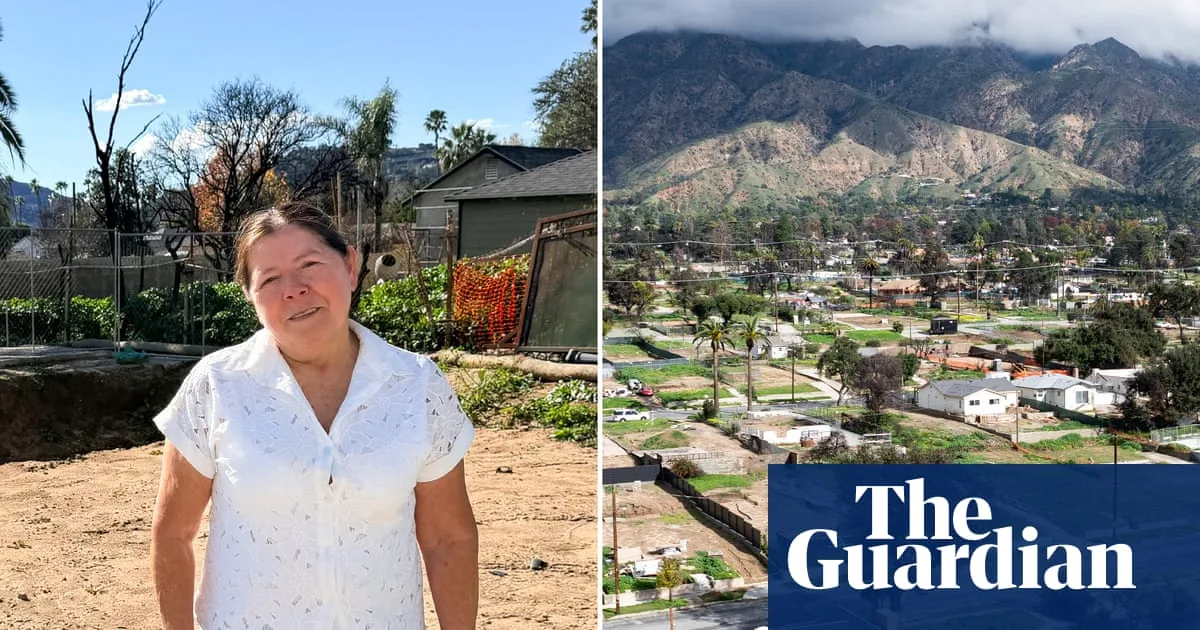
A year has passed since unprecedented wildfires tore through the hillsides and suburbs of Los Angeles, leaving a trail of death and destruction. The effort to rebuild what was lost is now underway, but progress is painfully slow, exposing deep inequities and raising urgent questions about the city's readiness for the next climate-fuelled catastrophe.
A Landscape of Loss and Slow Recovery
On a foggy December morning, the scars of the Pacific Palisades fire remain starkly visible. Melted newsstands and blackened foundations dot a landscape overrun with weeds, a silent testament to the vibrant community that once stood there. The fires, which erupted in parched conditions and were propelled by winds gusting up to 90mph, killed 31 people and reduced more than 16,000 homes, businesses, churches, and schools to ash and toxic debris.
While a mammoth cleanup operation removed over 2.5 million tons of debris—a volume compared to double that of Ground Zero—the rebuilding phase has dramatically slowed. By early January, only about 41% of the 2,600 rebuild permits applied for had been issued. Construction was visibly underway on just 511 homes in the Eaton fire footprint and 370 in the Palisades, leaving thousands of displaced residents in limbo.
"It is predominantly the wealthy who are rebuilding," observed Dr Thomas Chandler of Columbia University's National Center for Disaster Preparedness. Those with resources and developer connections have surged ahead, while most survivors grapple with under-insurance, complex permits, and the sheer financial and emotional toll. Many are still paying mortgages on vanished homes while competing for temporary housing in one of America's most expensive markets.
Lessons from a 'Perfect Storm' and a Vulnerable Future
Investigations into the disaster have called it a 'perfect storm' of conditions: wet years that seeded flammable brush, followed by a record dry winter, and finally, catastrophic winds. The fires overwhelmed water systems, outpaced elite firefighters, and revealed critical failures in emergency alerts and evacuations.
An independent review found that in West Altadena, electronic evacuation orders were delayed for hours; all but one of the 19 people who died in the Eaton fire lived in this area. A subsequent report by the California Commission on Aging revealed a tragic statistic: all but four of the 31 total victims were over 65 or had a disability, with a median age of 76. Many had no means of escape.
The dangers are not confined to history. Researchers estimate roughly 115 million people in the US live in areas with similar wildfire potential. In LA, neighbourhoods with winding, spaghetti-like evacuation routes, such as the Hollywood Hills and Laurel Canyon, remain terrifyingly vulnerable. "This could not only happen again – it could be much worse," warned David Barrett of the non-profit MySafe: LA.
Community Ingenuity Amidst an Unequal Path Forward
Amidst the struggle, signs of community-led rebirth are emerging. In Altadena, architects Cynthia Sigler and Alex Athenson launched the Foothill Catalog, a modern take on catalogue homes, offering pre-approved, resilient designs to streamline rebuilding. Partnering with Habitat for Humanity, they aim to restore the area's historic character equitably.
Meanwhile, the fight to preserve community spirit continues. Altadena's beloved Community Garden, destroyed in the flames, is being painstakingly restored by volunteers. "I know people need this place," said president Joe Nagy, highlighting the garden's role as a future refuge.
Yet, the future demographic fabric of these neighbourhoods is at risk. Research indicates outside investors have purchased a significant portion of fire-damaged lots, particularly in Altadena. "Price pressure... will unfortunately make a neighborhood that was effortlessly multi-ethnic become much more homogenous in income and race," said Dr Manuel Pastor of USC's Equity Research Institute.
The fundamental question, as posed by UCLA's Dr Megan Mullin, remains: "The challenge we face long term is how much are we willing to do and how much are we willing to pay to protect ourselves from fire?" A year on, Los Angeles is still untangling the lessons of its greatest wildfire disaster, racing to rebuild not just homes, but a more resilient future before the next firestorm strikes.




