
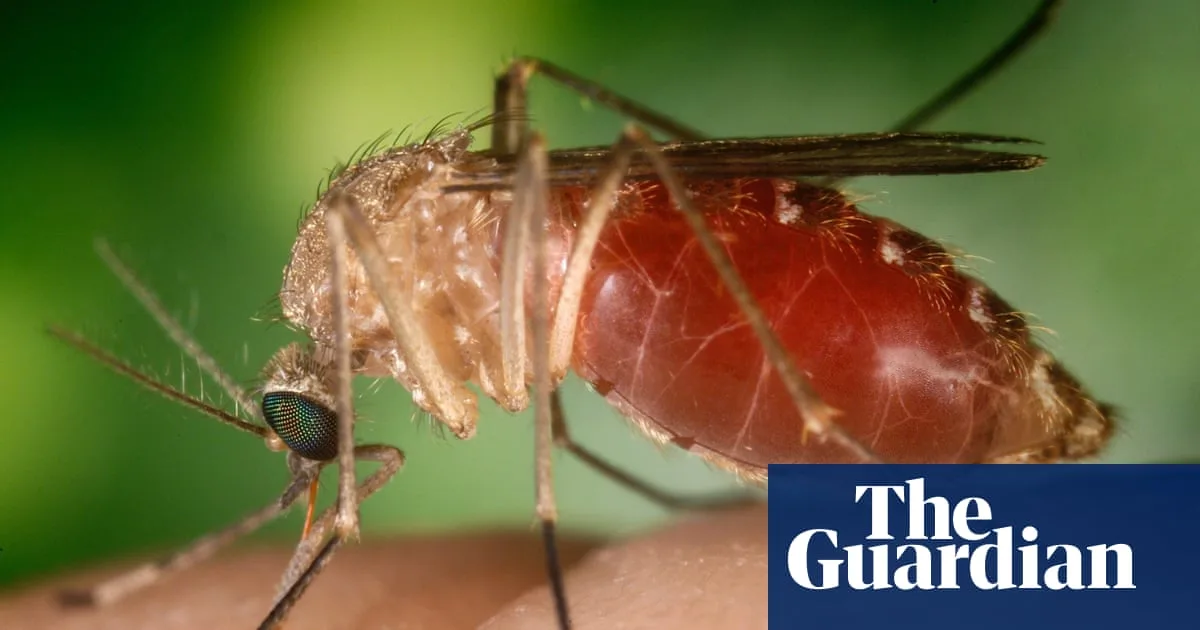
Climate change could make the UK vulnerable to insect-transmitted tropical diseases previously confined to hot countries, scientists have warned. Leading mosquito experts said the government's cuts to international aid would lead to a collapse in crucial surveillance, control and treatment programmes in endemic countries, resulting in more deaths.
This week, the UK Health Security Agency announced the discovery of West Nile virus in UK mosquitoes for the first time. The agency said there was no evidence of transmission to humans and the risk to the British public was low. West Nile virus, like dengue fever, chikungunya and zika, used to be confined to hotter regions, but global heating has expanded its reach into cooler areas, including parts of northern and western Europe. In 2024, there were more than 1,400 cases of locally acquired West Nile virus and several hundred cases of dengue, mostly in France and Italy.
Dr Robert Jones of the London School of Hygiene and Tropical Medicine said that in the most extreme scenarios, with temperatures rising by 4 to 5 degrees above pre-industrial levels, there could be a fivefold increase in dengue and chikungunya outbreaks by the 2060s in Europe. "We are unlikely to see a dramatic surge in tropical diseases," he said. "However, climate change is making the UK more hospitable to the insects that transmit some pathogens that cause tropical diseases." He added that projected increases to UK temperatures would increase the risk of West Nile virus outbreaks, potentially with epidemics by the second half of the century.
Prof Tom Solomon of the National Institute for Health and Care Research said that at present, the UK does not yet have the right mosquitoes in sufficient numbers. "At the moment, Aedes mosquitoes such as the Asian tiger mosquito are the main vectors of dengue fever and zika, whilst for West Nile, Culex species are important. These mosquitoes have been detected in the UK, but are not yet fully established in sufficient numbers to cause large outbreaks. But as the UK gets hotter, local mosquito populations are changing, which, long-term, could result in local transmission of tropical diseases, especially in southern England."
Heather Ferguson of the University of Glasgow said the "absolute number one priority" for the UK government was to invest in controlling these diseases in tropical countries where they cause the overwhelming burden of illness and death. She said that one child under five dies of malaria approximately every minute, with around 600,000 deaths and over 100 million cases in 2023 alone. "As we learned from the pandemic, infectious diseases have no borders and can spread quickly when conditions are right. The government's cuts to foreign aid will lead to a collapse in crucial surveillance, control and treatment programmes in endemic countries, causing more deaths from tropical disease."
For now, there is no need for the NHS to embark on mass vaccinations for yellow fever or prescribe anti-malarial drugs, nor for the public to routinely use insect repellent in Britain during summer. Scientists say that controlling mosquito-borne diseases overseas is also an important element of protecting the UK, and long-term policies that address the net zero challenge are needed.




