
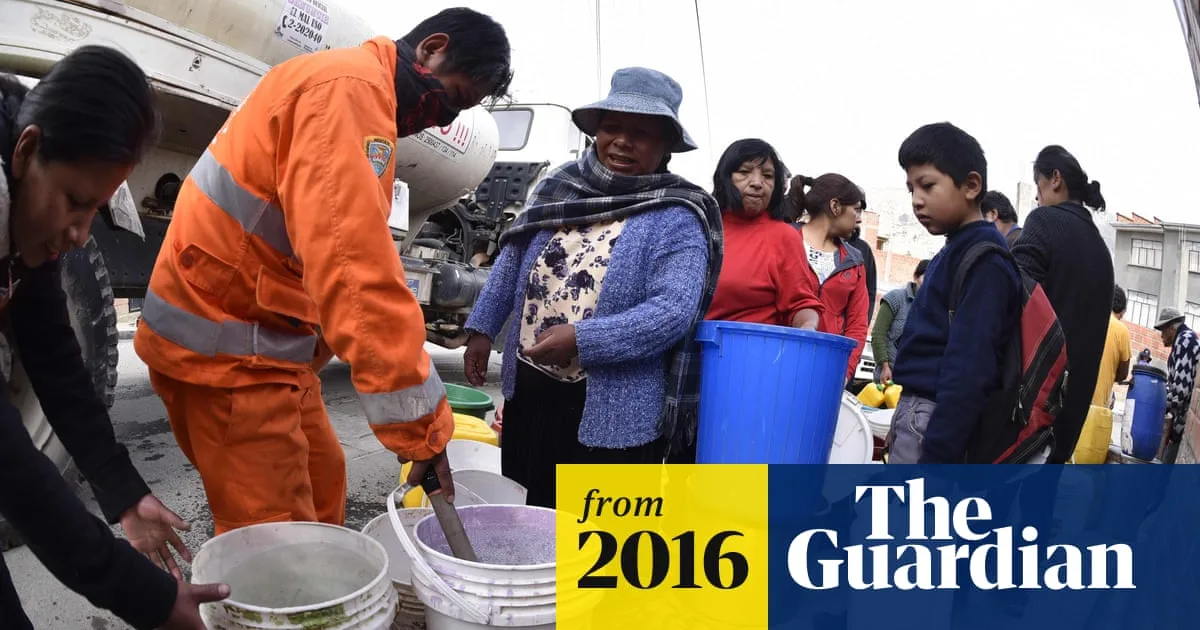
The Bolivian government has declared a state of emergency in response to the country's most severe drought in a quarter of a century, unlocking funds to address the crisis affecting families and agriculture. The vice-ministry of civil defence estimates that 125,000 families have been impacted, with 290,000 hectares of farmland and 360,000 head of cattle under threat.
President Evo Morales has called on local authorities to allocate resources and labour to drill wells and transport water from nearby sources to urban areas, with support from the armed forces. “We have to be prepared for the worst,” Morales said, adding that the crisis presents an opportunity to “plan large investments” to adapt to climate change impacts on water supplies.
The national emergency follows declarations by 172 of the country's 339 municipalities. Last week, residents of El Alto, near La Paz, briefly detained officials from a local water company to demand explanations for measures to mitigate the shortage. The drought has sparked protests in major cities and conflicts between miners and farmers over aquifer use.




