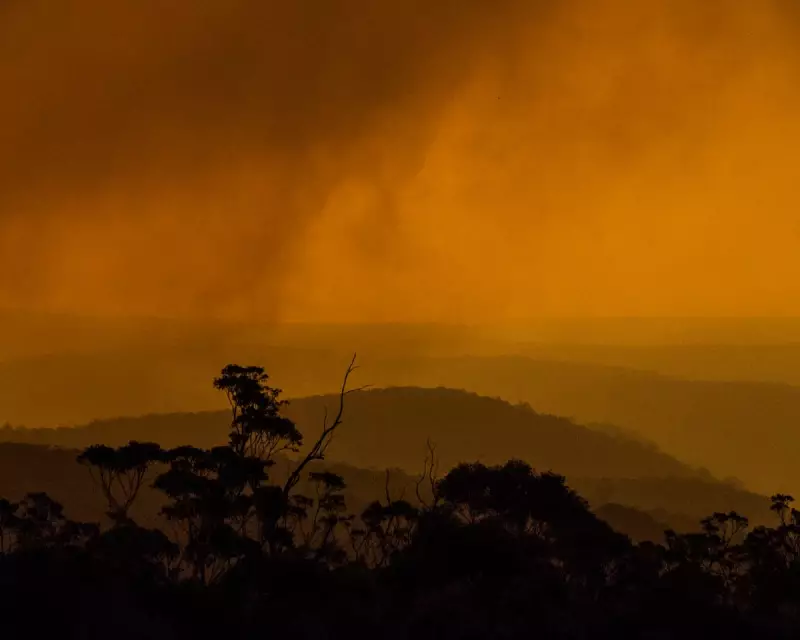
As forecasts for a severe heatwave emerged this week, my thoughts were pulled back to Australia's devastating Black Summer. The memory is vivid: taking my young daughters to a pool in western Sydney for respite, only for delicate black flakes of ash to begin falling from the sky, settling gently on their heads. It was a poetically quiet, yet chilling, omen for their future during the Gospers Mountain bushfire in the Blue Mountains in December 2019.
A Nation Gripped by Relentless Heat
Six years on, south-eastern Australia is now in the grip of its most significant heatwave since that catastrophic 2019-2020 season. Major cities are bracing for extreme temperatures, with both Melbourne and western Sydney forecast to reach the low 40s Celsius. Regional towns in Victoria and New South Wales are set to endure even higher readings, while Canberra is experiencing consecutive days in the high 30s.
The Bureau of Meteorology has declared severe to extreme heatwave conditions for large areas of South Australia, Victoria, New South Wales, and the ACT, expected to persist until Saturday. From Friday, a dangerous shift is predicted as strong winds from a cold front sweep across Victoria and New South Wales. This combination creates an exceptionally perilous scenario for fire weather, eerily reminiscent of the conditions that led to the deadly 2009 Black Saturday fires.

The Unignorable Role of Climate Change
We cannot discuss such extreme heat without confronting the central driver: climate change. The scientific link is unequivocal. As the global average temperature rises, so too will the frequency, duration, and intensity of heatwaves. This is a global phenomenon, not one confined to Australia. The physical mechanisms linking a warmer world to more extreme heat are among the most robustly understood in climate science.
While it is too early for official attribution studies on this specific event, the influence of climate change is expected to be substantial. The reprieve offered by recent La Niña years, which brought different disasters like floods, has temporarily masked the escalating pulse of extreme heat. However, drier conditions are returning to the south-east, beginning to reforge the dangerous link between drought and intense heat.
The human cost is stark and often silent. Extreme heat kills more Australians than all other natural hazards combined. It is a public health emergency that demands dramatically increased investment in healthcare systems to cope with the rising toll expected in the coming decades.
Beyond Net Zero: The Imperative for Adaptation
Reaching net zero emissions remains an imperative, but it is no longer sufficient on its own. Even if achieved, stabilising global temperatures would take a century or more. Recent research indicates Australian heatwaves will continue worsening for at least 1,000 years, with delays of just 5-10 years in reaching net zero resulting in substantially worse conditions for centuries to come.
Therefore, effective and permanent adaptation must be legislated and implemented in tandem with emission reductions. This includes enhancing public awareness, improving early warning systems, and crucially, designing our cities and communities to withstand extreme heat. We have some advantages now that we lacked in 2019, such as a national fire danger rating system and greater public awareness, but complacency is not an option.
My daughters, now older, are beginning to ask questions about the fires, the heatwaves, and the changing climate they witness. They deserve honest answers. More importantly, they deserve a society that is proactively preparing for the future we have shaped. As a climate scientist and a parent, the message is clear: we must act with far greater urgency on both mitigation and adaptation. The falling ash was an omen; our response today determines its meaning.