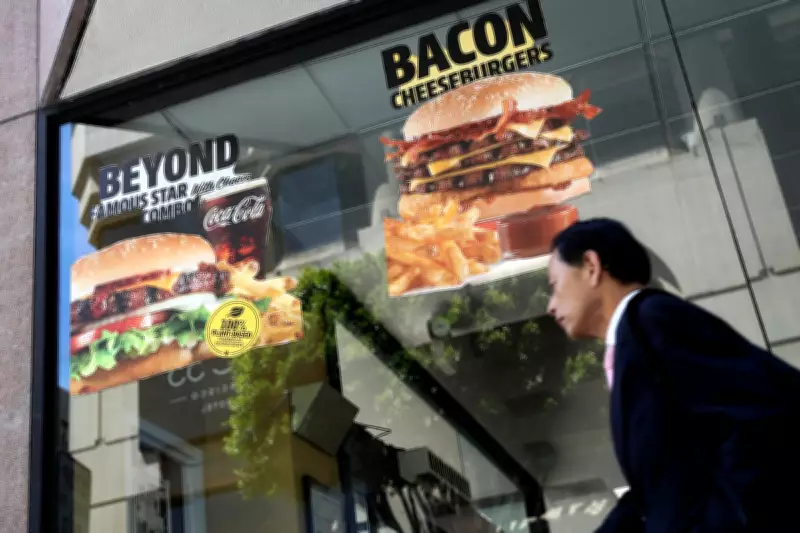
Amsterdam has become the first capital city in the world to ban public advertising for both meat and fossil fuel products. From 1 May, adverts for burgers, petrol cars, and airlines have been removed from billboards, tram shelters, and metro stations across the Dutch capital.
The ban, approved by the city council on 22 January following a proposal by the GreenLeft and Party for the Animals parties, covers advertising for air travel, cruises, petrol-powered cars, and meat products. Politicians behind the move say it aligns Amsterdam's public spaces with its own environmental targets – carbon neutrality by 2050 and halving local meat consumption over the same period.
Climate Urgency and Policy Rationale
"The climate crisis is very urgent," said Anneke Veenhoff of the GreenLeft Party. "If you want to be leading in climate policies and you rent out your walls to exactly the opposite, then what are you doing?" The city council memo justifying the decision states that fossil-based products harm the climate and that fossil fuel advertising normalises consumption conflicting with the Paris climate path. It notes that every extra litre of fuel sold translates into additional CO2 emissions and air pollution. On meat, the memo describes excessive consumption of animal products as "harmful to the environment and generally undesirable from an animal welfare perspective." The council draws an explicit parallel with tobacco regulation, calling the ban "comparable to a ban on tobacco advertising: a visible discouragement policy in public spaces."

Freedom and Corporate Influence
Anke Bakker, Amsterdam group leader for the Party for the Animals, rejected accusations of nanny state overreach. "Everybody can just make their own decisions, but actually we are trying to get the big companies not to tell us all the time what we need to eat and buy," she told the BBC. "In a way, we're giving people more freedom because they can make their own choice, right?" Ahead of the January vote, campaign groups Creatives for Climate and Reclame Fossielvrij coordinated an open letter signed by over 100 advertising and creative industry professionals urging councillors to fulfil Amsterdam's 2020 commitment. "Advertising is not neutral," the letter stated. "It operates through repetition, emotion, and social norms. With sufficient budget, it shapes desire, influences behaviour, and normalises what is seen as acceptable or aspirational. That is precisely why advertising works – and precisely why it must be governed responsibly in public space."
Industry Pushback
Industry groups have pushed back. The Dutch Meat Association called the ban "an undesirable way to influence consumer behaviour," insisting meat "delivers essential nutrients and should remain visible and accessible to consumers." The Dutch Association of Travel Agents and Tour Operators argued the prohibition on advertising holidays involving air travel was a disproportionate restriction on commercial freedom. Hannah Prins, a lawyer and co-founder of Advocates for the Future, described the meat ban as a deliberate attempt to create a "tobacco moment" for high-carbon food, drawing a parallel with Johan Cruyff, the celebrated Dutch footballer who appeared in cigarette advertisements before dying of lung cancer. "That you were allowed to smoke on the train, in restaurants – for me that feels so weird," she told the BBC. "What we see in our public space is what we find normal in our society. And I don't think it's normal to see murdered animals on billboards."

Precedents and Financial Impact
Amsterdam is not the first Dutch city to take this step. Haarlem, 18km to the west, announced a broad ban on meat advertising in public spaces in 2022 – the first city in the world to do so – which came into force in 2024 alongside a prohibition on fossil fuel adverts. Utrecht and Nijmegen have since introduced their own restrictions, and The Hague recently adopted the same local ordinance route, surviving a legal challenge from the travel industry. Amsterdam itself first committed to banning fossil fuel advertising in 2020 but took five years to implement it, navigating legal challenges and opposition from within its own administration. Beyond the Netherlands, dozens of cities including Edinburgh, Sheffield, Stockholm, and Florence have banned or are moving to ban fossil fuel advertising, and France enacted a nationwide ban in 2022 with fines of up to €100,000 for breaches.
The ban carries a financial cost. Amsterdam currently earns over €12m a year from outdoor advertising contracts, and its own council memo estimates that restricting fossil fuel advertising in a new tender could reduce bids by between 4 and 7.5 per cent – a potential revenue loss of between €456,000 and €855,000 on the main contract alone. Meat accounted for an estimated 0.1 per cent of Amsterdam's outdoor advertising market before the ban, compared with around 4 per cent for fossil fuel-related products.