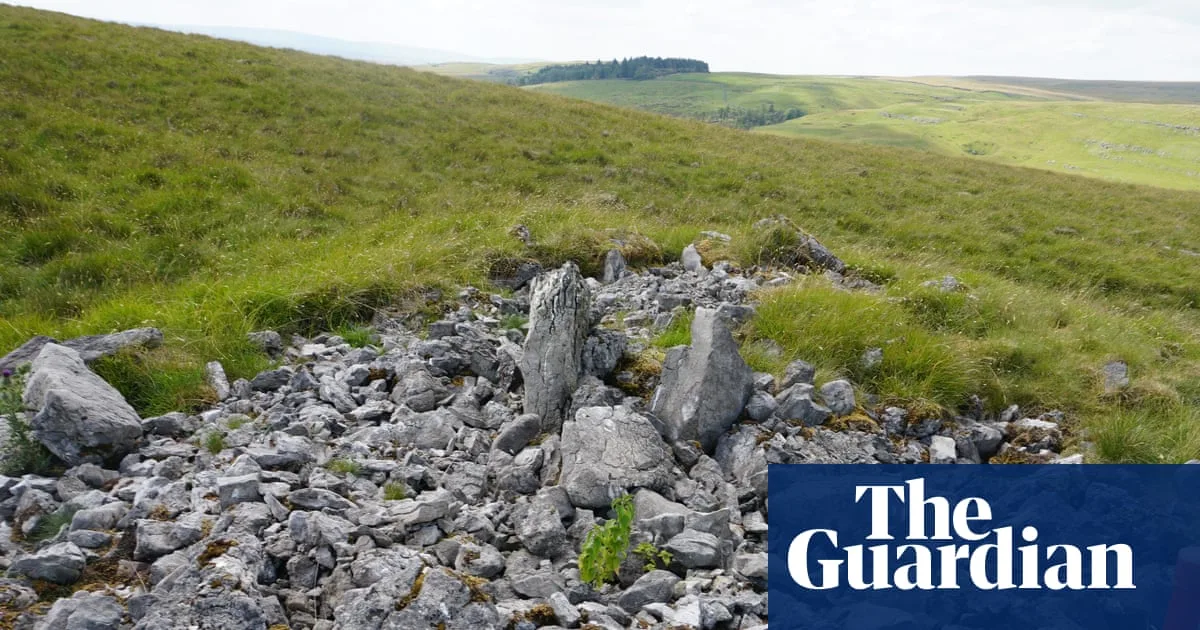
A Neolithic long cairn in the Yorkshire Dales has been granted scheduled monument status, giving it the highest level of legal protection in England. The move follows concerns that walkers, sometimes unknowingly, have been removing and moving stones from the ancient structure.
The Dudderhouse Hill long cairn, near Austwick in North Yorkshire, dates from around 3,400 to 2,400 BC. Historic England, which advised the government on the designation, describes it as one of the oldest visible structures in the country and an early example of communal construction by humans.
Paul Jeffery, national listings manager at Historic England, said the monument offered insight into the lives and beliefs of the first farming communities. He noted that to an untrained eye it may appear as a simple pile of stones, which has contributed to unintentional damage over the years.
The cairn is thought to have served several purposes, including as a funerary site where bodies were left exposed before parts were ritually buried. It may also have helped communities track seasonal changes, much like Stonehenge, and acted as a territorial statement. Evidence suggests it was later used as an animal pen in the 16th century.
Jeffery warned that even the removal of single stones could cause sustained damage, potentially destroying the monument over time. The new status allows the Yorkshire Dales National Park Authority to run educational projects highlighting the site's importance and ensure its preservation for future generations.