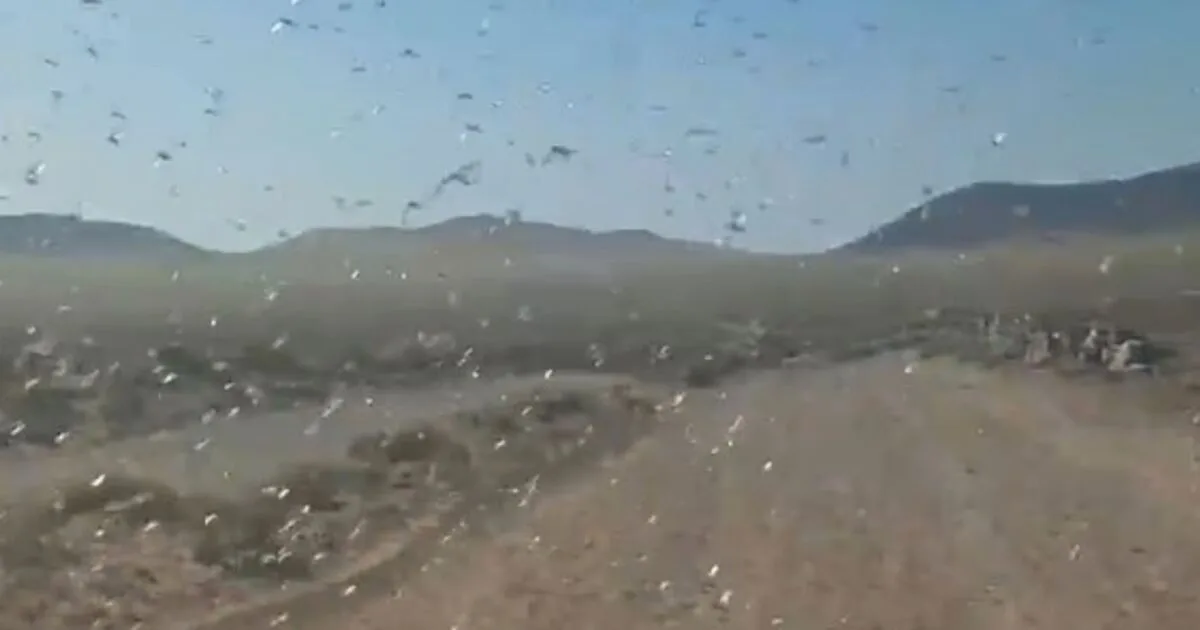
Four Spanish holiday islands in the Canary archipelago have been hit by swarms of locusts, prompting officials to urge locals and tourists to remain calm. Videos circulating online show vast clouds of the insects sweeping across the countryside on Lanzarote, Tenerife, Gran Canaria and Fuerteventura.
Authorities stress that the locusts pose no direct risk to people, but warn that a significant increase in numbers could threaten local agriculture. Francisco Fabelo, Head of Environment for Lanzarote's government, said the next two days are critical: if the insects are exhausted adults they will die off, but if they are seen mating, it could signal a full-scale infestation similar to one that hit the islands in 2004.
Theo Hernando, Secretary General of the Association of Farmers and Ranchers of the Canary Islands, reassured farmers that isolated locust arrivals are common with winds from Africa and that the insects usually arrive too weakened to settle or reproduce, often falling prey to birds.
The locusts, known locally as the Barbary cigarrón (Schistocerca gregaria), are believed to have been carried from Western Sahara by warm, humid winds. They have been spotted across Lanzarote, including tourist areas such as Arrecife, Costa Teguise, Famara, Uga and Tahíche, reviving memories of the major infestation two decades ago that devastated crops and disrupted daily life.