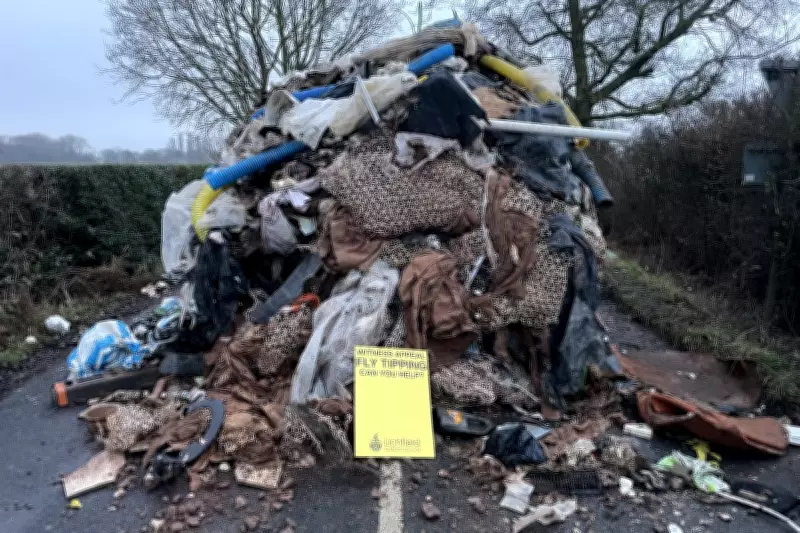
UK Government Proposes Licence Points for Fly-Tipping Drivers
The UK government is developing stringent new proposals to combat fly-tipping, which could soon have significant consequences for drivers across the nation. Under these plans, motorists caught illegally dumping waste may face penalty points on their driving licences, with repeat offenders risking the permanent loss of their licence.
Enhanced Enforcement Measures
Environment Secretary Emma Reynolds has emphasised the severity of the fly-tipping issue, stating that it damages both communities and the environment. She announced that the government is taking decisive action to stop this illegal activity. "Litter louts who repeatedly break the law will see points added to their licence and risk losing it for good if they continue to offend," Reynolds declared.
In addition to licence penalties, the proposals encourage local authorities to seize and crush vehicles used for illegal waste disposal. Reynolds added, "We are empowering local authorities to deal with fly-tipping, like seizing and crushing vehicles, and are urging them to make use of the whole range of measures available to them."

Scope of the Problem
The Department for Environment, Food and Rural Affairs (Defra) has highlighted that an average fly-tip is comparable in size to the back of a small van. The government hopes that the threat of licence penalties will act as a powerful deterrent, preventing drivers from illegally discarding waste in rural beauty spots, along roadsides, and in other public areas.
These proposals form part of a broader waste crime action plan, which is expected to be launched soon. This plan will outline a series of measures to combat various rubbish-related offences, ranging from small-scale fly-tipping to large, illicit waste sites.
Notable Cases and Funding
A notable example of such illegal activity is a 150-metre-long mountain of illegally dumped waste near the River Cherwell in Bicester, north Oxfordshire. This site garnered significant public attention last year, and government officials have previously indicated that clearing it could take until the end of 2026.
Alongside these enforcement measures, ministers are also allocating approximately £78 billion to councils in England this year. This funding, part of a multi-year settlement, is intended to assist local authorities in addressing persistent issues such as fly-tipping, providing them with the resources needed to implement these new strategies effectively.