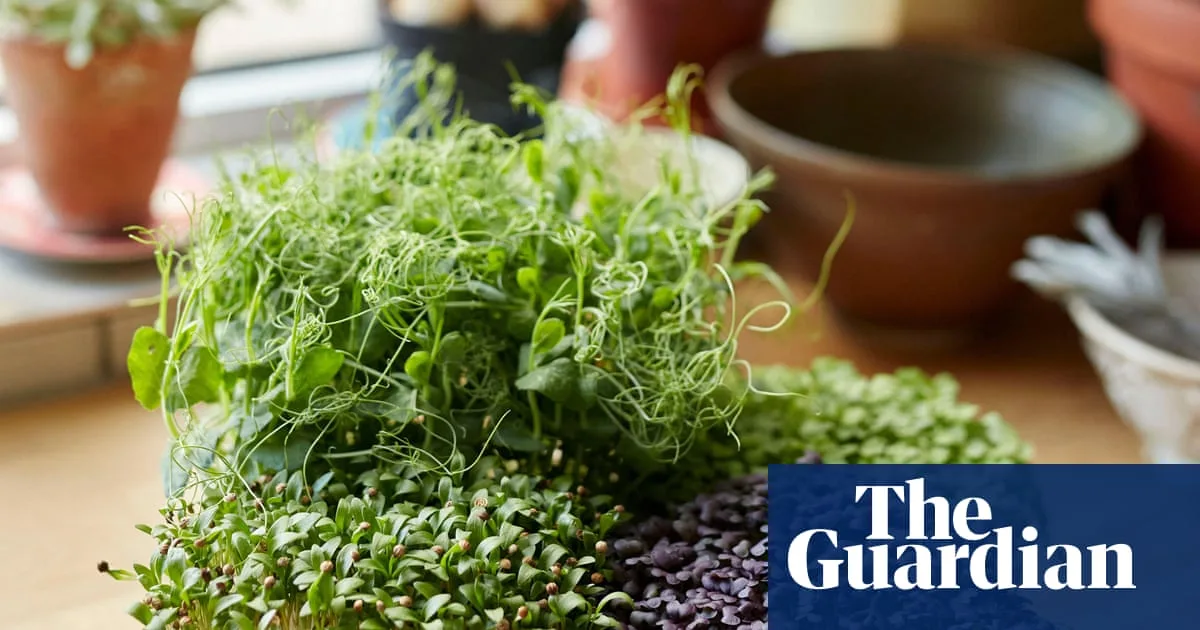
January is often a barren time for gardeners, but microgreens offer a way to keep growing indoors throughout the winter. These edible young plants are not a specific type but a method of growing leafy crops that requires little space or effort, producing a fresh burst of flavour for your plate.
Any plant that is entirely edible can be grown as a microgreen. Options include salad leaves like lettuce and sorrel, herbs such as basil, dill, coriander and fennel, and brassicas including mustard greens, rocket, broccoli and kale. Nasturtiums and sunflowers yield juicy, nutty shoots, while peas produce substantial shoots with leaves and tendrils. Amaranth, carrot and perilla are also worth trying.
To grow microgreens, use containers such as recycled punnets. Fill two-thirds full with compost, tamp down, then spread a generous single layer of seeds. Cover with a fine layer of compost no deeper than the seed size. Water gently with a fine rose or cover with wet kitchen towel. Place trays on a bright windowsill; low light is not a problem as leggy microgreens are still edible. Grow lights can be used if available.
Harvest after about two weeks using sharp snips to avoid dragging plants and adding compost to your salad or sandwich. Most plants provide a single harvest, but peas and nasturtiums can yield extra flushes if you selectively pick tips and leaves rather than cutting at the base.