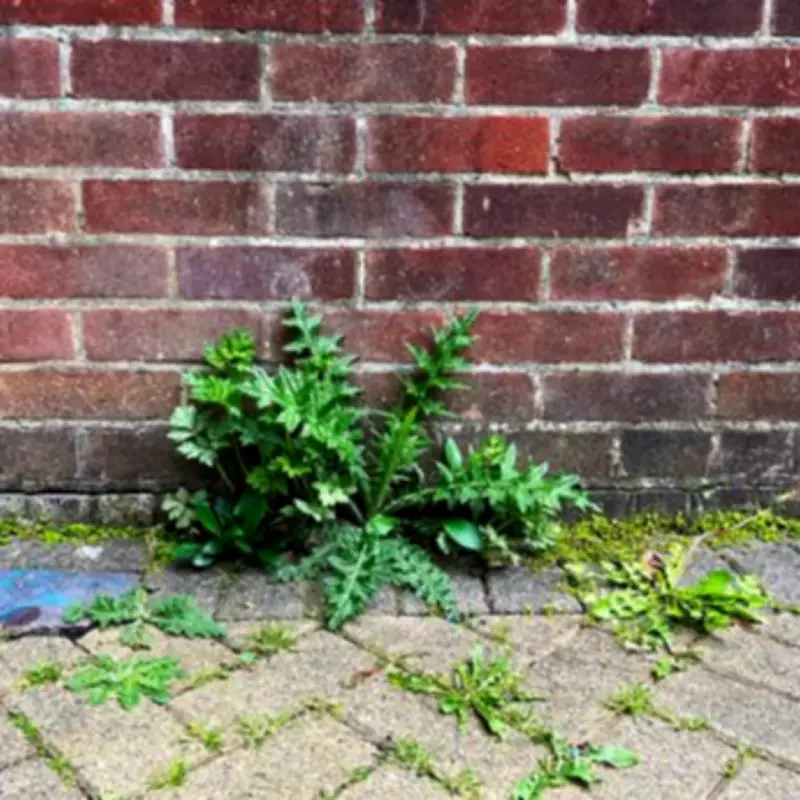
Weeds are a persistent nuisance that can transform a pristine garden into a scruffy, unkempt eyesore. Eliminating them proves notoriously difficult due to their hardy root systems, which often survive manual pulling or chemical treatments, allowing regrowth. Additionally, many weed varieties develop waxy leaves that repel conventional herbicides, rendering standard weed killers ineffective.
The 'Only Effective' Method Revealed
However, gardening enthusiasts on social media have championed a straightforward, natural solution to ensure weeds never return. This technique has been widely endorsed as the "only effective method" for permanently eradicating unwanted plants without resorting to harsh chemicals.
A Simple Kitchen Solution
The tip was shared on Instagram by a user named Alex, who demonstrated that all you need is an item already found in most kitchens: a kettle of boiling water. In her video, Alex boiled ordinary tap water, then carefully carried the kettle outdoors to pour the piping hot liquid directly onto weeds sprouting between paving slabs and pebbles, taking care to avoid scalding herself.

Pouring boiling water over weeds is a tried-and-tested extermination method. The intense heat melts the waxy protective layer on the leaves and scalds the plant, leading to rapid dehydration and death. Viewers of Alex's clip were quick to confirm its efficacy, with many reporting successful results.
Social Media Validation
One commenter affirmed, "I can also vouch for the fact that this is the only effective method I have ever found!" Another added, "Tried! Tested! Works!" This grassroots endorsement highlights a growing preference for natural, chemical-free gardening solutions.
Important Considerations and Caveats
Despite its effectiveness, this method is not without limitations. In her footage, Alex doused a dandelion with hot water, prompting viewers to note that dandelions are valuable pollinators for bees and should ideally be left undisturbed to support local ecosystems.
Furthermore, boiling water is unsuitable for use in flowerbeds or areas with desirable plants, as it will indiscriminately kill any vegetation it contacts. It should be reserved for weeds growing between rocks, on patios, or in driveways. For maximum impact, aim the boiling water directly at the base of the plant to target the roots, and be prepared to apply multiple treatments for well-established weeds.
Alternative Weed Control Methods
While boiling water offers a potent natural solution, gardeners have several other options for weed management:
Manual Removal
- Pull by Hand: Uproot weeds, ensuring the entire root system is removed, especially for perennial varieties.
- Hoeing: Use a hoe to sever weeds at the soil surface, ideally when the soil is dry to prevent regrowth.
Mulching
- Organic Mulch: Apply a 2-4 inch layer of wood chips, straw, or leaves around plants to block sunlight and suppress weed germination.
- Landscape Fabric: Place fabric under mulch for enhanced protection against weed penetration.
Chemical Control
- Selective Herbicides: Target specific weed types, such as broadleaf or grassy weeds, while sparing desired plants.
- Non-selective Herbicides: Kill all vegetation and should be used with extreme caution to avoid collateral damage.
- Pre-emergent Herbicides: Prevent weed seeds from germinating, offering a proactive approach to weed control.
Other Natural Solutions
- Vinegar: Household vinegar can burn young weeds, though stronger horticultural vinegar is more effective. Use cautiously to avoid harming surrounding plants.
- Salt: Apply sparingly only in areas where no growth is desired, as salt can degrade soil health and render it infertile.
In summary, the boiling water method stands out as a highly effective, eco-friendly alternative to chemical weed killers, particularly for targeted applications in non-vegetated areas. As gardeners increasingly seek sustainable practices, this simple hack offers a powerful tool for maintaining weed-free outdoor spaces without compromising environmental health.