
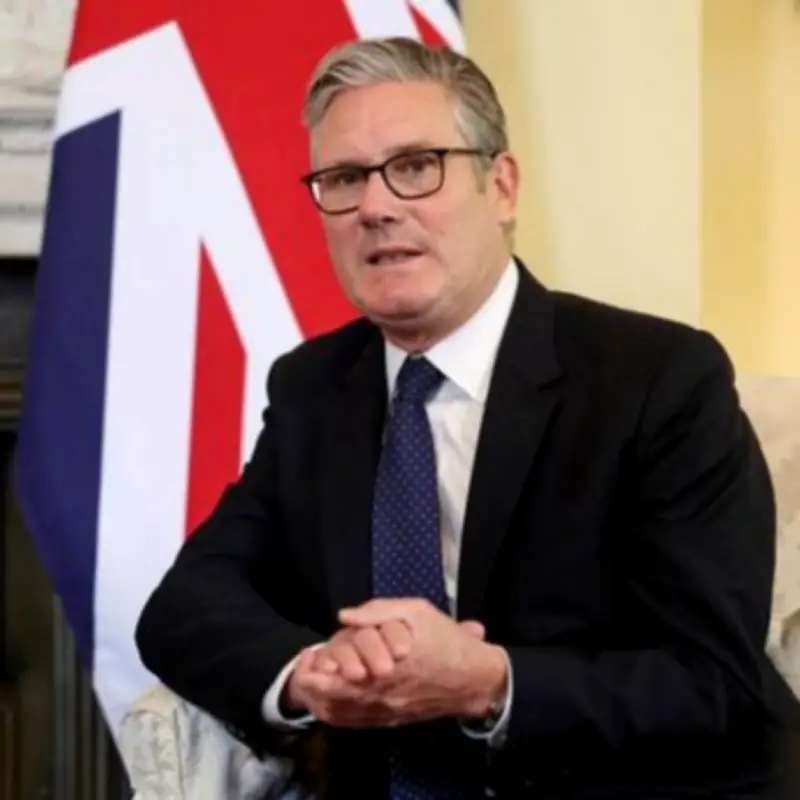
Prime Minister Sir Keir Starmer has announced a ban on social media for under-16s in the UK, affecting platforms including TikTok, Instagram, Facebook and YouTube, as part of sweeping reforms to protect children's online safety.
Speaking from Downing Street on Monday, June 15, the PM described the move as a "big moment for our country". He added that the Government will take "world leading" action on gaming and live streaming platforms to prevent strangers from being able to contact children.
Details of the Ban
The ban will compel platforms including TikTok, Instagram, Threads, Facebook, X, YouTube, Snapchat and Reddit, to raise the minimum age for access to 16. The Prime Minister has pledged to "call time on a system that's failing our kids" after confirming that children will be barred from accessing certain online platforms following an extensive Government consultation.
Despite acknowledging some of the benefits social media has brought, Starmer insisted a full ban is the correct course of action. "As a parent, all I've ever wanted is for them to be happy and safe. But I ask the question now, do we truly believe that social media creates a happy environment...where they feel safe? I don't think I need to answer that," he said.
Government Consultation Results
The move follows a Government consultation which saw an overwhelming majority support raising the minimum age to 16 for accessing social media platforms. The consultation, which concluded on May 26, attracted 116,000 responses - making it the second-largest on record - with 91% of parents supporting the age increase to 16. Additionally, 83% of responding parents indicated that social media dangers outweigh any advantages for youngsters.
Additional Measures
Starmer contends that social media has rendered children "more unsafe and harms mental health, exposing them to content which is dangerous. It's designed to be addictive. It stops children doing their homework, reading, playing with their friends outside, going to bed at a good time."
The Prime Minister also announced that daily social media usage will be limited for under-18s to prevent 'late-night scrolling'. The restrictions will extend beyond Australia's measures by encompassing romantic or sexual AI chatbots, while children may also be prevented from communicating with strangers on gaming platforms.
Nearly two thirds (62%) of youngsters surveyed indicated that limiting high-risk features would enhance their online safety. However, 72% also expressed concerns about potential social exclusion should such restrictions be introduced.
Enforcement Challenges
While acknowledging the difficulties in enforcing the ban, Starmer stated: "We looked carefully at the evidence. We're not just bringing forward a ban. We're taking world-leading action on gaming and live streaming services where strangers can speak to any child from around the world."
Starmer concedes youngsters might find ways round the restrictions but points out that we still have regulations preventing children from purchasing alcohol, despite occasional breaches. He emphasises that rules are "also an expression of our values".
Reactions and Opposition
This follows Sir Keir's ultimatum last week, giving Apple and Google three months to make it technologically impossible for children to take, share or view nude images on their smartphones. The latest proposals could trigger opposition from Donald Trump's tech-friendly US administration, which has cautioned against blanket bans for those under 16.
Responding to the consultation, the US embassy in London stated America favoured "narrowly targeted requirements", arguing that "most content should be accessible by default", while suggesting age verification measures might "impose disproportionate compliance burdens on American companies".
Tory shadow education secretary Laura Trott said: "It's shameful that it's taken the Prime Minister's job to be on the line for the Government to finally U-turn and ban social media for under 16s. Three times Labour voted against a ban, failing to stand up to Big Tech and protect children from the extreme content they are exposed to every day."
Lord Nash, a Tory former education minister who led the campaign for an under-16s social media ban in the House of Lords, said: "The Government now has an opportunity to draw a line in the sand and end tech companies' uncontrolled experiment with children's safety. They must deliver in full on their pledge to raise the age limit to 16 for harmful platforms and features, with robust age verification to ensure it is properly enforced."
Criticism from Campaigners
However, some organisations have suggested that a ban might not be the right tool to address the wide range of social media dangers. The Molly Rose Foundation, established in memory of 14-year-old Molly Russell, who took her own life in 2017 after viewing harmful content online, warned that a social media ban "will fail to tackle fundamental product safety risks issues and leaves parents with a false sense of safety".
Chief executive Andy Burrows stated: "A majority of children will continue to use high-risk sites that will have no incentive to implement robust protections. This is not what online safety experts believe will work and is necessary. Keir Starmer has chosen to abdicate responsibility for tackling harmful algorithms and his legacy will be setting back children's safety by years."
Labour's Feryal Clark, co-chairwoman of the All-Party Parliamentary Group for digital creators, maintained that youngsters shouldn't be denied access to quality content that supports their learning and helps them connect with communities. She stated: "High-quality, creator-led educational video content is a critical public resource and is not the same thing as social media. Any legislative intervention must capably address this distinction."
Leanda Barrington-Leach, executive director of the 5Rights Foundation, argued that "a ban or curfew may change who comes through the front door, but it does not change what is waiting for children inside" and that firms must be driven "to make their products safe for kids".




