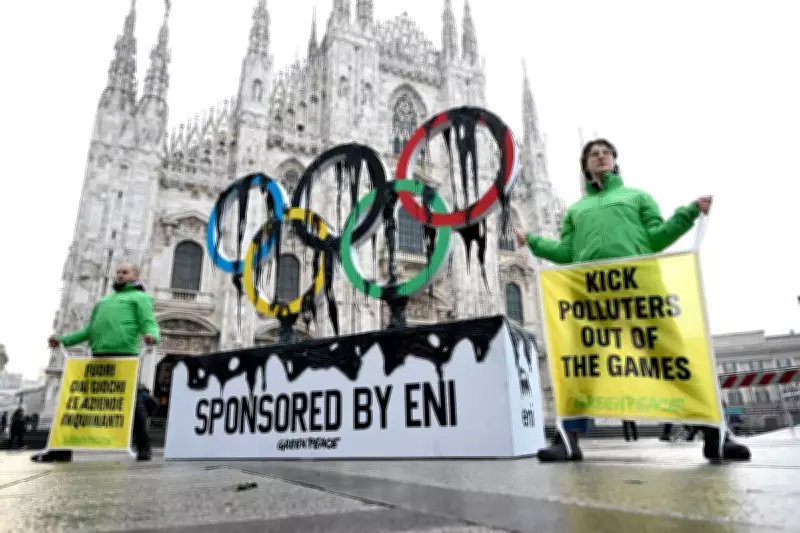
Environmental campaigners from Greenpeace have taken a bold stand in Milan, directly challenging the organisers of the upcoming Winter Olympics to sever all sponsorship agreements with major fossil fuel corporations. The protest unfolded on Thursday morning, coinciding with the arrival of the Olympic torch in the historic Italian city, creating a striking visual contrast between sporting celebration and environmental activism.
Visual Protest at Milan's Duomo Cathedral
In a highly symbolic act, protesters assembled a powerful installation featuring the iconic Olympic rings, which appeared to be dripping with thick, black oil. This dramatic display was positioned prominently in front of Milan's renowned Duomo cathedral, ensuring maximum visibility for both local residents and international observers. Accompanying the installation was a large, unfurled banner bearing the clear and direct message: “Kick polluters out of the Games”.
Targeting Premium Sponsor Eni
The demonstration specifically singled out Eni, a premium domestic sponsor for the Winter Olympics. Greenpeace has levelled serious accusations against the Italian energy giant, claiming that its extensive operations are actively contributing to global warming and, by extension, posing a direct threat to the very future of winter sports. The environmental group argues that the increasing instability of winter climates, driven by fossil fuel emissions, jeopardises the long-term viability of events like the Olympics.

Legal Action and Corporate Response
This public protest is not an isolated action. Greenpeace has previously initiated a formal climate change lawsuit against Eni, applying legal pressure alongside public demonstrations. The group's core demand is for Olympic organisers to immediately terminate their commercial relationship with the company.
In response to these allegations, Eni has issued a statement reaffirming its commitment to tackling climate change. The corporation highlighted its ongoing investments in the energy transition and reiterated its stated goal of achieving net-zero emissions by the year 2050. This corporate defence sets the stage for an ongoing debate between environmental accountability and corporate sponsorship in major international sporting events.
The timing of the protest, as the Olympic torch relay passed through Milan, was strategically chosen to amplify the message on a global stage. It underscores a growing tension between the commercial partnerships that fund large-scale sporting spectacles and increasing public demand for environmental responsibility and sustainable practices.