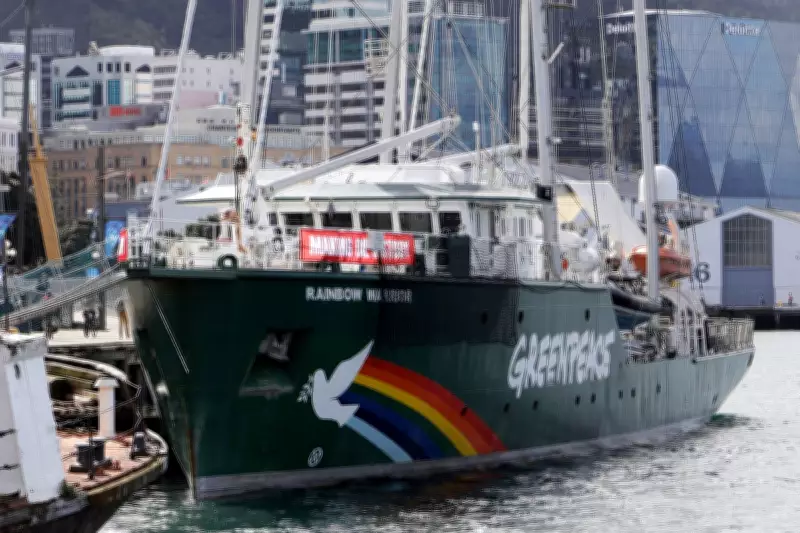
Greenpeace Confronts Existential Legal Battle Over Pipeline Protests
The environmental campaigning organization Greenpeace is engaged in a fight for its very survival within the North Dakota court system. A judge has ordered the group to pay an anticipated $345 million to Energy Transfer, the Dallas-based energy conglomerate that owns the controversial Dakota Access oil pipeline. This judgment stems from protests against the pipeline's construction nearly a decade ago, which drew international attention and support for the Standing Rock Sioux Tribe.
Substantial Damages and Impending Appeals
Last year, a jury found three Greenpeace entities liable for multiple claims, including defamation, conspiracy, and trespass, awarding Energy Transfer more than $660 million in damages. Judge James Gion subsequently reduced this award by nearly half. Once the formal order is entered, both parties are expected to appeal the decision to the North Dakota Supreme Court.
Energy Transfer, a $64 billion corporation operating thousands of miles of pipelines across 44 states, has objected to the reduction of its award. In stark contrast, Greenpeace USA has reported cash and assets that are nowhere near the scale of these substantial damages, raising serious questions about the organization's financial viability should the judgment stand.

Greenpeace's Determined Response
"We will be requesting a new trial and, failing that, will appeal the judgment to the Supreme Court of North Dakota, where Greenpeace International and the US Greenpeace entities have solid arguments for the dismissal of all legal claims against us," stated Greenpeace International General Counsel Kristin Casper.
The organizations involved—Netherlands-based Greenpeace International, Greenpeace USA, and funding arm Greenpeace Fund Inc.—have affirmed their unwavering commitment to continue working to protect the planet, regardless of the legal challenges they face.
The Core of the Legal Dispute
The lawsuit centers on the protests against the multibillion-dollar Dakota Access Pipeline, which now transports oil through four Midwestern states. The Standing Rock Sioux Tribe, whose reservation lies downstream from the pipeline's Missouri River crossing, led opposition, arguing the project threatened their water supply. This protest attracted thousands of supporters who camped in the area for months, resulting in hundreds of arrests during the sometimes-chaotic demonstrations in 2016 and 2017.
Energy Transfer's attorney, Trey Cox, accused Greenpeace of exploiting a local issue to advance its agenda, labeling the group "master manipulators" and "deceptive to the core." He alleged that Greenpeace paid professional protesters, organized training, shared intelligence on the pipeline route, and even supplied lockboxes for demonstrators to attach themselves to equipment.
Greenpeace has vehemently denied these allegations, stating there is no evidence to support them and that they had minimal involvement in the protests. The organization characterizes the litigation as "lawfare," designed to silence activists and critics through aggressive legal tactics.
Greenpeace's Historic Activism
Founded in 1971 by environmental activists seeking to stop nuclear weapons testing in Alaska's Aleutian Islands, Greenpeace has grown into a global network with a presence in over 55 countries. The organization describes itself as using "peaceful protest and creative confrontation to expose global environmental problems and promote solutions."
Throughout its history, Greenpeace activists have engaged in numerous high-profile actions, including:
- Climbing bridges to hang protest banners
- Confronting whaling boats at sea
- Scaling a chemical plant's smokestack in 1981 to protest toxic pollution
- Occupying a North Sea oil platform in 1995
- Unfurling a "Resist" banner near the White House in 2017
- Covering the country estate of then-British Prime Minister Rishi Sunak in black fabric in 2023 to protest new oil and gas drilling
However, it is the North Dakota protests in solidarity with the Standing Rock Sioux Tribe that have now entangled the organization in this potentially catastrophic legal battle, threatening its future operations and financial stability.