ICE Agents Allegedly Posed as Police in Columbia University Arrest Operation
Federal immigration agents have been accused of posing as police officers searching for a missing child to gain access to a Columbia University residential building, where they arrested an international student. The incident has sparked widespread condemnation and fears that such tactics could severely undermine public trust in legitimate law enforcement agencies.
Elaborate Operation at Columbia University
According to a statement released by Columbia University, U.S. Immigration and Customs Enforcement (ICE) agents gained entry to the building by presenting themselves as police officers investigating the disappearance of a five-year-old child. The agents reportedly showed a flyer of the "missing child" to a campus safety officer, allowing them to proceed to the apartment of Ellie Aghayeva, an international student from Azerbaijan.
New York Police Department officers were dispatched to the scene at 6:32 a.m. on Thursday after receiving a 911 call about two suspicious men in dark clothing inside the building. When they arrived, they discovered federal agents already inside Aghayeva's apartment. The NYPD officers confirmed the men were federal agents and then departed the building without interfering in what they described as an active federal investigation.
Political Fallout and Release
The arrest has prompted widespread censure from Democratic officials and calls for investigation, while also creating an unusual political dynamic. President Donald Trump personally intervened, informing New York City Mayor Zohran Mamdani that Aghayeva would be released shortly after their meeting on Thursday.
As new details continue to emerge, the operation has threatened to open a significant rift between the city's police department and federal immigration authorities. ICE agents have increasingly adopted various disguises—including utility workers and delivery drivers—to carry out Trump's sweeping deportation campaign, though posing as police represents a notable escalation of these tactics.
Erosion of Public Trust
Former police officers and criminal justice experts have expressed grave concerns about the long-term consequences of such deceptive practices. Michael Alcazar, a retired NYPD hostage negotiator, warned that this type of subterfuge could make police work significantly more difficult during genuine emergencies.
"If the police are actually looking for a child in danger, people are now going to be more hesitant to help," Alcazar said. "Almost immediately, this sort of ICE subterfuge is going to make the job of police officers more difficult."
Jeffrey Fagan, a Columbia law professor who studies policing, noted that research shows deceptive tactics by law enforcement are particularly damaging to police legitimacy when they result in arrests perceived as unjustified.
"Anybody looking at this is going to immediately think it's unjustified," Fagan said. "So that will erode trust in a relevant community the next time officers need cooperation."
Conflicting Accounts and Ongoing Proceedings
The Department of Homeland Security has disputed portions of the university's narrative. Spokesperson Tricia McLaughlin claimed federal agents "verbally identified themselves and visibly wore badges around their necks" and were allowed into the building by a property manager. However, McLaughlin did not respond to repeated questions about whether agents used the missing child guise to enter the apartment.
Claire Shipman, Columbia's acting president, stated that security cameras had "captured the agents in the hallway showing pictures of the alleged missing child," calling the situation "utterly unacceptable." The university has declined to release this footage, while the NYPD has also refused to share body camera footage of their response.
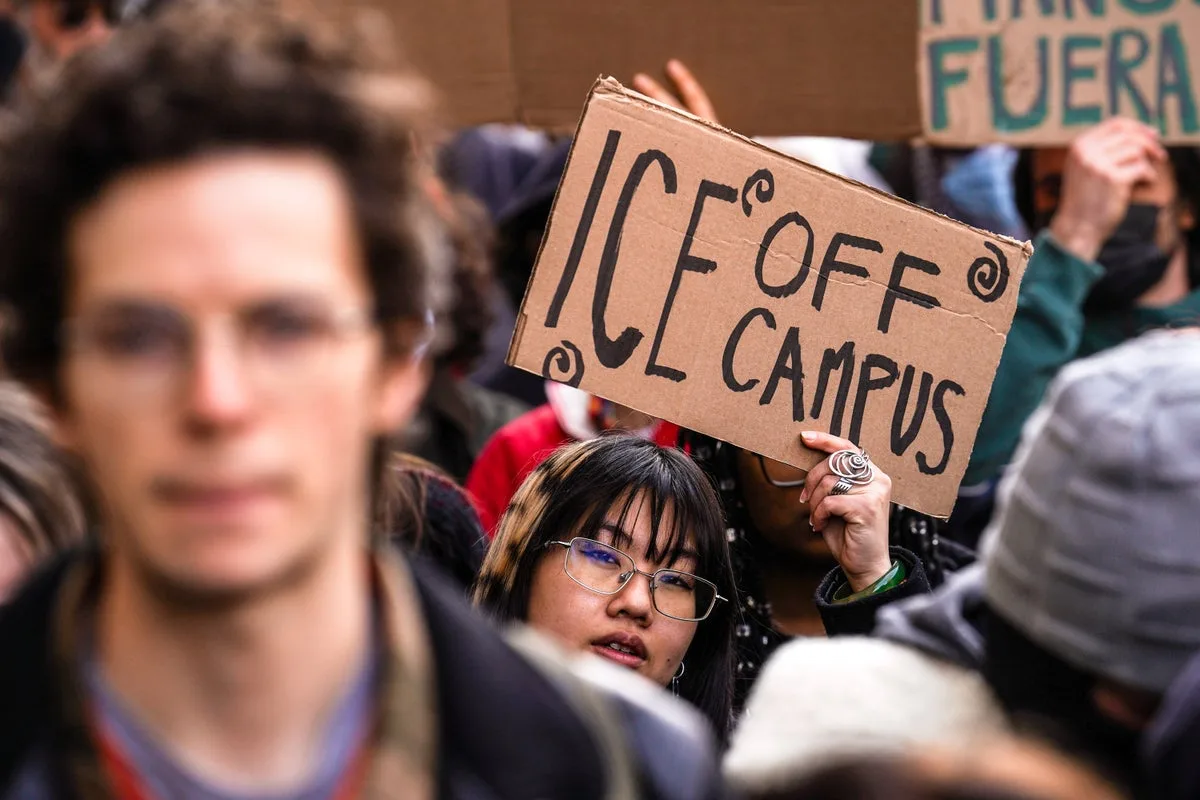
Aghayeva's arrest has prompted protests at Columbia University and created significant fear and confusion within the international student community. Friends describe her as a neuroscience and politics student in her final semester on an international student visa. Her attorneys filed an emergency petition on Thursday stating she was not given a reason for her arrest.
A DHS spokesperson said Aghayeva's visa had been terminated in 2016 for failing to attend classes. Despite her release, she remains in removal proceedings.
Broader Implications for Sanctuary Policies
Peter Moskos, a criminal justice professor at John Jay University and former Baltimore police officer, noted that sanctuary policies were originally designed to enhance public safety by building trust between immigrant communities and local police.
"The idea is that you would trust the cops and call the cops when you need them and know you wouldn't be deported," Moskos explained. "But ICE seems to be doing everything they can to break down trust."
While such deceptive tactics are not illegal, law enforcement experts warn they represent a dangerous precedent that could compromise public safety by creating suspicion toward legitimate police officers during genuine emergencies. The incident highlights growing tensions between federal immigration enforcement strategies and local law enforcement priorities in sanctuary cities.