A Powerful Stage Reunion After Three Decades
The National Theatre currently hosts an emotionally charged theatrical event that marks the triumphant stage reunion of two celebrated British actors. Clive Owen and Saskia Reeves return to share the spotlight in David Eldridge's moving play End, more than thirty years after they first appeared together in Stephen Poliakoff's controversial 1991 film Close My Eyes.
The Trilogy Concludes with Emotional Depth
David Eldridge's superlative trilogy about couples at different life stages reaches its poignant conclusion with End, which opened last week at the National Theatre in London. While each play stands powerfully on its own, the final instalment creates meaningful connections with its predecessors Beginning and Middle for those familiar with the series.
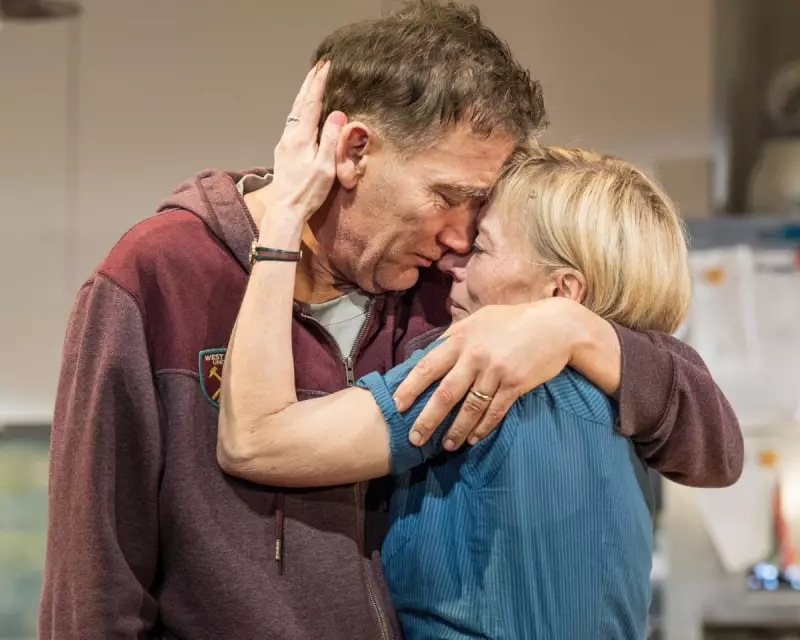
Under Rachel O'Riordan's tender direction, End presents Alfie and Julie, a couple facing the profound challenge of Alfie's cancer diagnosis after decades together. The casting choice brings extraordinary resonance to the production, as Owen and Reeves' shared screen history adds layers of emotional complexity to their performances.

Echoes of Close My Eyes Enhance Emotional Impact
The memory of Poliakoff's Close My Eyes, which depicted an incestuous relationship between Reeves' Natalie and Owen's Richard, profoundly complements Eldridge's new work. Both pieces share an elegiac tone and explore relationships shadowed by inevitable conclusions.
As Stephen Poliakoff explained when his film was released, he aimed to create "a haunting, end-of-decade, end-of-century feel" that would linger in viewers' subconscious. This quality finds powerful echoes in Eldridge's examination of a long-term relationship confronting mortality.
Physicality and Intimacy in Performance
The actors bring beautifully nuanced physicality to their roles in End, reflecting both the comfortable ease of decades together and the unavoidable distance created by illness. Alfie moves awkwardly with a crutch, while Julie dances playfully around him during a scene where he plays house music considered for his funeral playlist.
The production features what might be described as one of theatre's rarest genuine sex scenes, with intimacy direction by Bethan Clark. Unlike the artful nudity of their film work, this moment finds the couple having a quick, almost fully-dressed encounter on the sofa that expertly conveys vulnerability, care, love, and fear.
Political Backdrop and Personal Turmoil
Eldridge sets the personal drama against Britain's divisive political landscape, with the play taking place one morning in the summer of 2016, just a week before the Brexit vote. While Julie mentions the referendum in passing, Alfie remains preoccupied with West Ham's departure from Upton Park after more than a century.
This political context mirrors how Poliakoff's film set personal turmoil against the backdrop of 1980s Thatcherite individualism and the Docklands regeneration, with some critics interpreting the incestuous relationship as symbolic of moral decay during that era.
The Power of Actor Reunions
When actors reunite to play new couples rather than reprising previous roles, they inevitably bring the ghosts of their earlier collaborations. This phenomenon enhances End considerably, with Owen's portrayal of the dishevelled, tracksuit-wearing Alfie gaining depth from our memory of his smoother, more confident past roles.
Similarly, Julie's success as a novelist in Eldridge's play feels like a fulfilment of Natalie's thwarted creative ambitions in Close My Eyes. The casting, while not originally conceived with these specific actors in mind, proves remarkably powerful thanks to casting director Alastair Coomer's insight.
End continues its run at the National Theatre in London until 17 January, offering audiences a profoundly moving theatrical experience that resonates with both personal and historical significance.