Wuthering Heights Adaptation Sparks Fierce Critical Divide
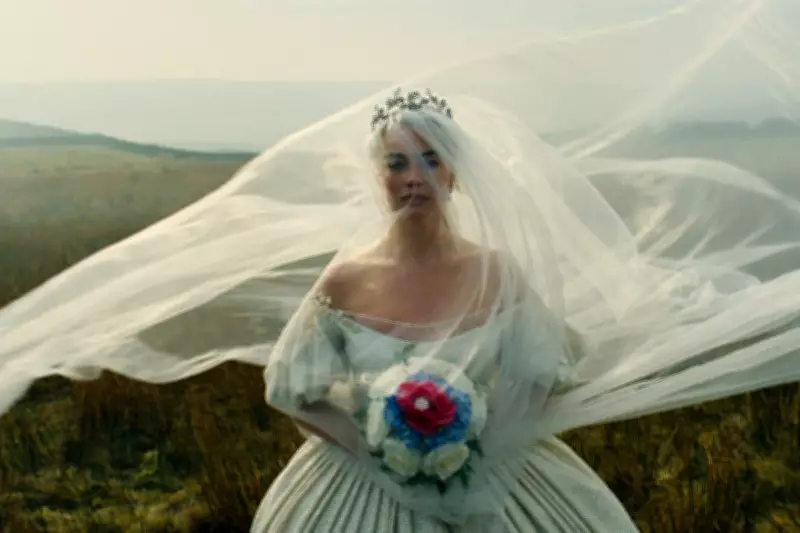
Emerald Fennell's highly anticipated new film adaptation of Emily Brontë's classic gothic novel Wuthering Heights has premiered to a dramatically split critical reception. Starring Margot Robbie as Cathy and Jacob Elordi as Heathcliff, the movie has been described by some reviewers as "resplendently lurid, oozy and wild" while others have dismissed it as "emotionally hollow" and "astonishingly hollow."
Praise for Bold Reinvention
Among the positive appraisals, the BBC awarded the film four stars, noting that Fennell successfully channels "the corrosive behaviour that can result from thwarted desire" from the original text. The review emphasised that jealousy, anger, and vengeance remain as natural to Cathy and Heathcliff as their endless passion, suggesting viewers should embrace the film's audacious style as a reinvention rather than a strict adaptation.
Similarly, Robbie Collin of The Telegraph bestowed a five-star rating, praising the production as "resplendently lurid, oozy and wild." He described it as "an obsessive film about obsession" that "hungrily embroils the viewer in its own mad compulsions." Collin noted the film's lewdness, comparing it favorably to Fennell's previous work Saltburn, while acknowledging its traditional bodice-ripper elements with heaving bosoms and trickling sweat.

Scathing Criticisms of Emotional Depth
However, other prominent critics delivered substantially harsher assessments. The Guardian's Peter Bradshaw awarded just two stars, contending the film "doesn't have the live-ammo impact" of Fennell's previous works like Saltburn and the Oscar-winning Promising Young Woman. He elaborated that the adaptation feels like "a luxurious pose of unserious abandon" that is "quasi-erotic, pseudo-romantic and then ersatz-sad."
The Times critic Kevin Maher also gave two stars, specifically criticising the "chemistry-free central romance between the bizarrely uninteresting Heathcliff and Cathy." He noted "conspicuous longueurs and characterisations that barely reflect the complexity of an Instagram reel let alone the greatest gothic novel in English literature." Maher further described Robbie's Cathy as living "entirely on the surface like Bronte Barbie" while Elordi's Heathcliff represented a "fatally shallow characterisation" with "a shaky Yorkshire accent."
Most Damning Assessment
The most severe criticism came from The Independent's Clarisse Loughrey, who awarded the film a single star and called it "an astonishingly hollow work." She argued that the adaptation "uses the guise of interpretation to gut one of the most impassioned, emotionally violent novels ever written, and then toss its flayed skin over whatever romance tropes seem most marketable."
Loughrey observed that Heathcliff has been transformed into "a wet-eyed, Mills & Boon mirage created entirely to induce swooning" rather than the complicated, challenging figure from Brontë's original text. While acknowledging that Robbie and Elordi "don't entirely lack chemistry," she concluded their characters feel "so thinned out that their performances are pushed almost to the border of pantomime."
Director's Vision and Release Details
Fennell has described her adaptation as a very loose interpretation of the classic novel, aiming to recall her own experience of reading the text as a teenager. The film represents a significant departure from traditional adaptations, embracing a more stylized and audacious approach to the source material.
This polarising cinematic interpretation of Wuthering Heights is scheduled for release in UK cinemas on 13 February, promising to continue generating debate among audiences and critics alike about the boundaries of literary adaptation and cinematic reinvention.