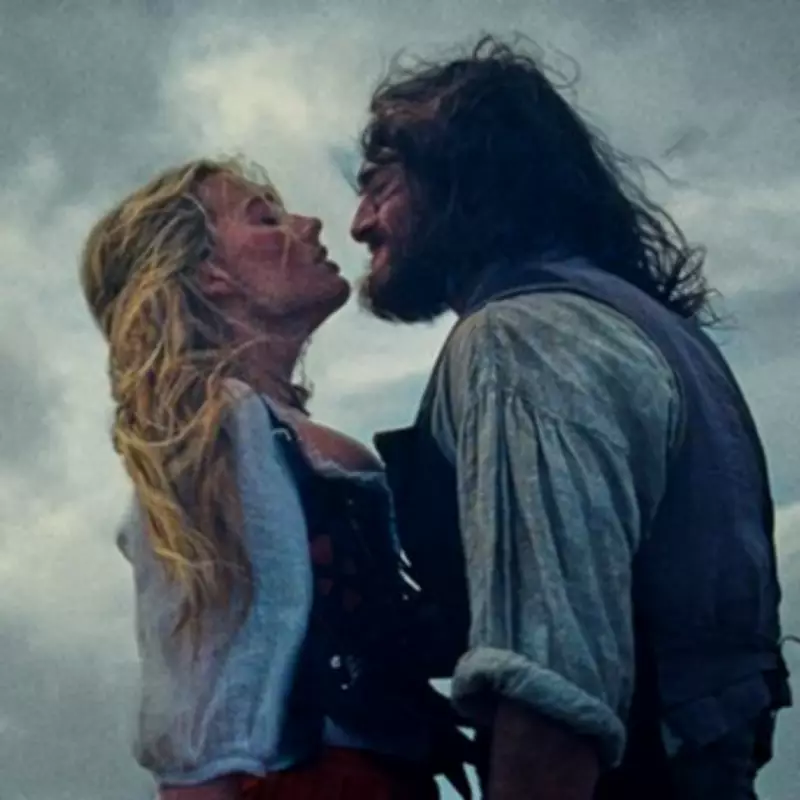
Wuthering Heights Film Adaptation Faces Scathing Critical Reception
The highly anticipated cinematic adaptation of Emily Brontë's literary classic, Wuthering Heights, directed by Emerald Fennell and featuring Margot Robbie alongside Jacob Elordi, has encountered a barrage of harsh criticism from reviewers ahead of its official UK release this Friday. Early screenings have prompted a wave of negative assessments, with several prominent critics delivering particularly damning verdicts on the film's creative direction and execution.
Critics Decry 'Exhausting' Scenes and 'Pantomime' Performances
Multiple reviews have taken aim at the film's explicit content and perceived tonal missteps. The Times awarded the production a mere two stars, criticising Jacob Elordi's portrayal of the brooding Heathcliff as being 'plonked in front of the camera'. The publication also described certain risque sequences as "exhausting sex scenes that overstay their welcome". This sentiment was echoed by other reviewers, with one noting the intimate scenes seemed to "all outstay their welcome" and another characterising them as a peculiar blend of 'Barbie and BDSM'.
The Independent's critic, Clarisse Loughrey, was even more severe, bestowing a solitary star. Loughrey argued that the performances by Robbie and Elordi were "almost pushed to the border of pantomime" and dismissed Elordi's Heathcliff as a "wet-eyed, Mills & Boon mirage". Similarly, The Guardian's Peter Bradshaw labelled Fennell's interpretation an "emotionally hollow, bodice-ripping misfire that misuses" its lead actors.

Director's Departure from Source Material Sparks Controversy
A central point of contention among critics is Fennell's deliberate departure from Brontë's original narrative. Director Emerald Fennell, known for Saltburn and Promising Young Woman, has openly stated her adaptation is not a faithful retelling. The Daily Mail's Brian Viner observed that Fennell has "pared back the story, either tinkering with characters and sub-plots or removing them altogether."
This creative liberty extended to a controversial opening scene, which one reviewer from Empire magazine described with incredulity: "This is the first time Emerald Fennell is not working from her own script, although a faithful retelling this certainly ain’t — unless there’s an earlier edition of Brontë’s novel which begins with a hanging man’s member ironically springing to life in front of a crowd of feral spectators."
Casting Decisions and Defensive Responses
The film has also faced scrutiny over its casting choices. Critics have noted the whitewashing of the character Heathcliff, who in the novel is described as having a dark complexion and possible Romani heritage, by casting Jacob Elordi. Additionally, Margot Robbie, at 35, is significantly older than the teenage Catherine Earnshaw she portrays.
Casting director Karmel Cochrane defended these decisions earlier this year, responding to intense online backlash. "There was one Instagram comment that said the casting director should be shot," Cochrane revealed. "But just wait till you see it, and then you can decide whether you want to shoot me or not. But you really don’t need to be accurate. It’s just a book. That is not based on real life. It’s all art."
Mixed Reactions and Glimmers of Praise
Despite the overwhelming negativity, the critical reception has not been uniformly hostile. Some reviewers offered more favourable perspectives. The BBC praised the film for being "resplendently lurid, oozy and wild," while other critics found elements to be "swoonily romantic." These contrasting views highlight the divisive nature of Fennell's bold reinterpretation.
Nevertheless, the most stinging critique suggests a profound disconnect from the source material's spirit. One reviewer concluded damningly that the film was "astonishingly bad" and asserted its author, Emily Brontë, would be "rolling in her grave" if she could witness this modern cinematic take on her enduring Gothic masterpiece.