From Manchester Council Estate to Hollywood Stardom: Wunmi Mosaku's Remarkable Journey
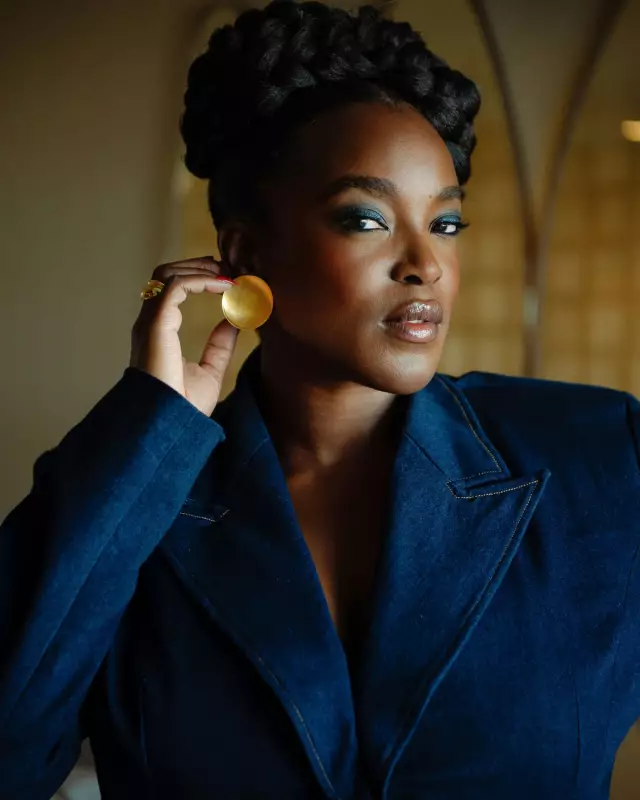
Wunmi Mosaku settles into a London hotel sofa with a familiar craving. "I do love a Greggs," she confesses, her Manchester accent undimmed by nearly a decade in Los Angeles. The conversation turns to regional bakery specialties - Tottenham cakes in London, Eccles cakes in Manchester, scouse pies in Liverpool - a culinary education she acquired touring her first professional play nationwide after graduating from Rada in 2007.
The Breakthrough Role That Changed Everything
Now 39, Mosaku finds herself at the centre of awards season frenzy for her pivotal performance in Ryan Coogler's critically acclaimed vampire thriller Sinners. Her portrayal of Annie, a Hoodoo priestess providing the film's emotional core in 1930s America's deep south, has transformed her career trajectory and generated serious Oscar buzz for Best Supporting Actress.
"This is where I'm from. This is who I am," Mosaku reflects about connecting with her Yoruba heritage through researching the role. The experience proved revelatory for the actress, who began learning Yoruba five years ago but found it finally clicking during her preparation. She describes the process as archaeological excavation, gradually uncovering cultural roots that had become obscured during her British upbringing.

Navigating Fame and Personal Boundaries
The heightened attention accompanying her Sinners success has brought unwelcome intrusions. Mosaku recently announced her second pregnancy in Vogue, explaining this went against her Nigerian cultural traditions of protecting such news. "Everything in me resists sharing it publicly," she wrote, "because this feels like one of the few things that truly belongs to me."
She managed to conceal her first pregnancy while starring in ITV's supernatural drama Passengers, but the Sinners spotlight made privacy impossible this time. "I was really against it," Mosaku admits, "but then I thought, if I'm gonna do it, I want to do it with the caveat that I say, 'I don't want to do this, but I feel like I have to because you all comment on our bodies.'"
The £30 Bus Trip That Launched a Career
Mosaku's path to acting nearly took a completely different direction. Her academic parents moved from Nigeria to Manchester when she was one, and she initially planned to follow their scholarly example by studying mathematics at Durham University. A last-minute decision to audition for Rada changed everything.
"No one thought I'd get in," she recalls, but her mother supported the gamble with £30 for Megabus fare to London and food. They made a pact: if Rada rejected her, she'd pursue mathematics. Her audition pieces - including Helena from A Midsummer Night's Dream and Queen Margaret from Richard III - impressed the panel enough to secure her place.
Overcoming Institutional Barriers
Moving to London presented financial and cultural challenges. Despite her parents' academic backgrounds in Nigeria, they struggled professionally in Britain, with the family living on a council estate in what's now considered Manchester's affluent Chorlton-cum-Hardy suburb. "We were definitely one of those families that, if someone rang the doorbell, the kids all hid, because you couldn't say mum was out at work," Mosaku remembers.
At Rada, she was the only Black student in her year, an experience she describes as difficult at an institution that later acknowledged institutional racism in 2020. "I never got a lead role," she says of her training years, recalling being cast as a 50-year-old ship captain while never playing an ingénue. "Why restrict how I imagined my career? I think teachers are the most important people in a person's life. They make you either bloom or shrivel away."
Finding Creative Kindred Spirits
Director Ryan Coogler recognized something special in Mosaku after seeing her performance in We Own This City. Their initial 30-minute Zoom consultation stretched to ninety minutes of deep conversation about motivations and inspirational figures. "We bonded on our first Zoom about those teachers, the ones who really put you on the path and the ones who nearly got you off it," Mosaku reveals.

This connection translated powerfully to screen, with Mosaku approaching her Sinners role with almost religious dedication. She immersed herself in Hoodoo traditions and Yoruba spirituality, discovering profound connections to her heritage that had been attenuated by assimilation pressures her parents faced in Britain.
The Cost of Cultural Assimilation
Mosaku reflects thoughtfully on the price immigrants pay to fit into British society. Her parents were discouraged from teaching their children Yoruba to avoid giving them "funny accents," a decision that created cultural distance she's only recently bridging. "You don't appreciate the cost to people, the tax on a person's spirit in order to assimilate into your country," she observes emotionally. "It's superiority. It's ego. It's brutal. It's a cultural genocide."
Future Prospects and UK Return
Despite her Hollywood success, Mosaku maintains strong connections to British creative talent, mentioning director Akinola Davies Jr, Joan Iyiola's Apatan Productions, and writer Bolu Babalola as exciting collaborators. "I never take my eye off the UK for work," she insists, though she acknowledges finding American projects more artistically satisfying recently.
"I just want to make sure that in the UK I'm not always playing a police officer, you know?" she says, referencing her breakthrough Bafta-winning role as Damilola Taylor's mother and subsequent parts in police procedurals. Upcoming projects include Apple's This Is How It Goes alongside Idris Elba and Aaron Sorkin's The Social Reckoning.
Whether she returns permanently remains uncertain, but if she does, there's comfort in knowing some British institutions remain constant. As Mosaku herself notes with characteristic warmth, Greggs will always be waiting.