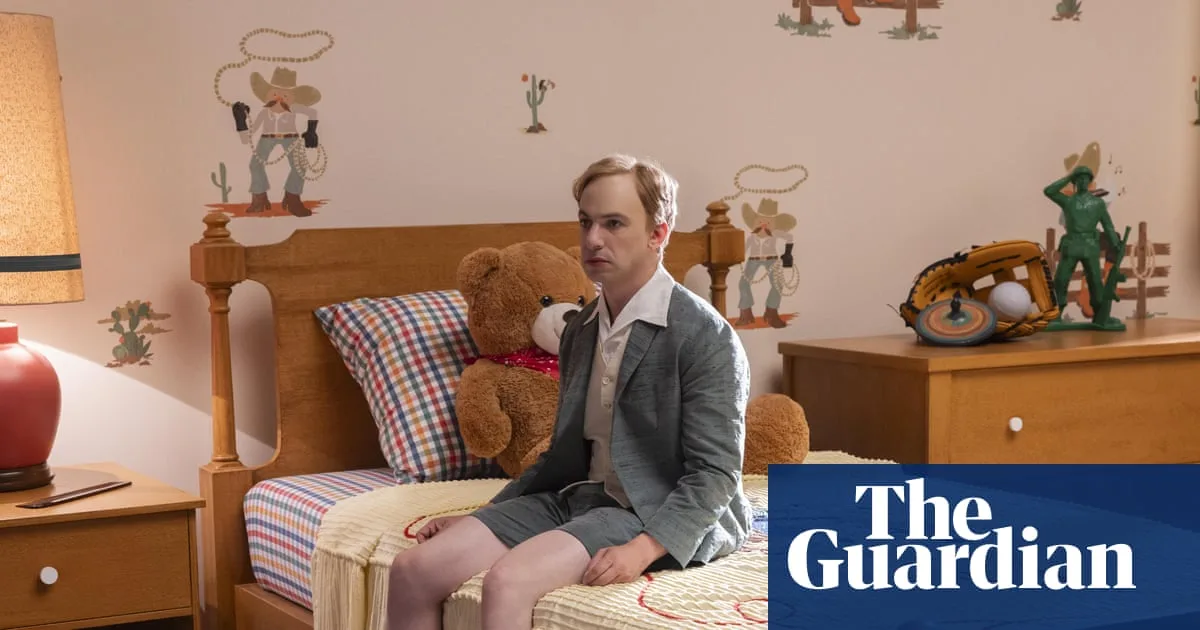
From David Bowie being reincarnated as a kettle to Reese Witherspoon in space, our writers list the TV head-scratchers they can’t get enough of. With a gun to my head, I couldn’t tell you with any degree of accuracy what Tim Robinson’s The Chair Company is actually about. In terms of straight plot, it’s the story of a man who is drawn into a conspiracy after a chair breaks when he sits on it. But beyond that, it’s honestly anyone’s guess.
So much of it defies logical explanation. Why does that one guy only listen to recordings of men screaming at each other? Why was there a vampire in it, and why did it lure people in by inventing a brand new shape? Why did the show’s big antagonist end up having a baby’s head? None of these questions will ever be answered properly, because The Chair Company would clearly prefer to splash around in its Lynchian weirdness. This is by far the most baffling television show I have ever loved, and I say that as someone who has watched Lost all the way through four times.
The finance jargon of Industry is impenetrable to the likes of poor me. I could not tell you a single financial transaction that took place on the trading floors. When I naively recapped the first season for another outlet, I apologised more than once for having “no idea what Harper does”. Even when they’re not talking shop, I need the subtitles on for this verbose lot. Does it make me feel like an idiot? Yes. But maybe that’s the point: this is an exclusive world in which only the wicked and wealthy whose first language is money get to play. Even co-creator Konrad Kay, who worked in the City, admitted that a term like “DV01” is “financial gibberish” that he doesn’t fully know the meaning of.

I’m not sure anyone, even David Lynch himself, could coherently explain what was going on Twin Peaks, a show where characters getting trapped for eternity in doorknobs and David Bowie’s reincarnation as a giant kettle apparently seemed par for the course. While I managed to just about cling on to the coattails of the plot of its more conventional (though still pretty damned unconventional) early 90s seasons, my grip had entirely loosened by the time of the far loopier mid 2010s revival. Not that that was a turn-off. The befuddlement you felt was much of the fun in watching Lynch and Mark Frost’s misshapen murder mystery, as a succession of wonderful, impossible images and ideas flew at you from out of the screen.
I’ll admit it: I found the first season of Game of Thrones hard going. Largely because trying to decipher the various family connections between the 7,000 characters felt like a GCSE history lesson with added bum-flashing. But at least they got one thing right: they didn’t give everyone nigh-on identical names, and create entire families whose offspring are indistinguishable from one another. Not so House of the Dragon, where the future of the seven kingdoms seems to rest on whether the next ruler comes from the brunette family or the one whose hairdresser has a job lot of ice-blond dye they’re trying to shift. Maybe some of them are related to the mad king? Or was Paddy Considine the mad king? Or has the mad king not happened yet? Oh God, the amount of questions each scene throws up.