The Beauty Review – Bella Hadid Stars in Ryan Murphy's Excessive Body Horror
The co-creator of Glee and American Horror Story appears to be declining in quality over time, as this lurid and superficially glamorous comic-book adaptation clearly demonstrates. Ryan Murphy's latest venture, The Beauty, delivers a propulsive yet ultimately hollow spectacle that prioritises style over substance.
A Violent and Visceral Opening
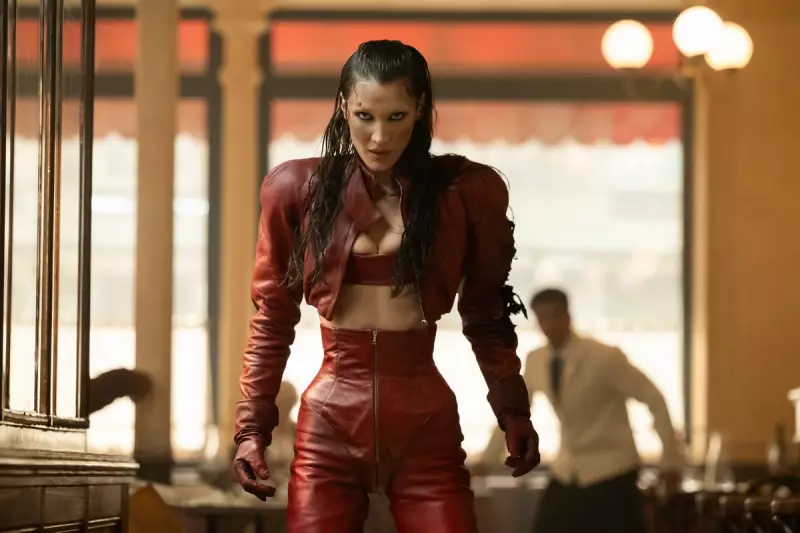
The series announces itself with a Grand Guignol flourish. The Prodigy's "Firestarter" blares as a supermodel, played by Bella Hadid in striking red leather, wreaks havoc on a Parisian runway. She snaps necks, batters paparazzi, and mounts a motorbike only to be T-boned by oncoming traffic. In a grotesque display, her own bone juts through her skin before miraculously healing, culminating in her literally exploding in a shower of viscera as armed gendarmes close in.
Plot and Premise: A Dangerous Drug for Beauty
Part body horror, part sci-fi conspiracy thriller, and part allegory about beauty standards, the series is based on a 2015 comic book by American artists Jeremy Haun and Jason A Hurley. It centres on a dangerous drug that guarantees beauty with the promise "one shot and you're hot." However, this supposed elixir is not without severe side-effects. Not only is it often lethal, but it also functions as a sexually transmitted contagion. Since recipients become impossibly attractive, the infection spreads with alarming rapidity.

Genetic Make-Up and Influences
The show's DNA is spliced from superior horror stock. There are clear traces of The Substance, Coralie Fargeat's scathing body horror, in the grotesque physical metamorphoses and the sharp commentary on societal beauty obsession. The contagion element is pure It Follows, the elevated 2014 horror where intimate contact passes on a deadly curse. Regrettably, The Beauty fails to measure up to either of these influences.
We enter this tawdry spectacle via FBI agents Cooper Madsen (Evan Peters) and Jordan Bennett (Rebecca Hall), who are investigating cases of extraordinarily attractive people dying violently. Behind it all lurks a dastardly tech trillionaire, played by Ashton Kutcher, who is sufficiently alarmed by his miracle injection's side-effects that he has hired an assassin, portrayed by Anthony Ramos, to manage the clean-up operation. As Byron Forst, Kutcher sacrifices genuine menace for lip-smacking, scenery-chewing cartoon villainy.
The Problem of Dumbed-Down Storytelling
More alarmingly, this Disney+ series (airing on FX in the US) stands as yet another example of a streaming service dumbing down its creative output. Every narrative beat is announced twice, seemingly for viewers who might be distracted by their phones. This approach echoes recent revelations about streaming platform notes; Matt Damon disclosed that Netflix now advises creators: "It wouldn't be terrible if you reiterated the plot three or four times in the dialogue, because people are on their phones while they're watching." It is hard not to suspect a similar directive influenced this production.
Consider an early exchange between agents Madsen and Bennett. Within minutes, the dialogue establishes that they are cosmetically enhanced, they are sleeping together (with the line "f***ing is helpful for jet lag"), they are on their own "career paths," and they want nothing "serious." Moments later, Rebecca Hall's character delivers the line "I sense a philosophical lecture coming on" – which, predictably, precedes one, complete with backstory about Madsen being "stationed in Japan a decade ago."
Context Within Murphy's Oeuvre
Nevertheless, the series represents a marginal improvement on Murphy's recent schlock-fest All's Fair, the Kim Kardashian legal drama that one critic labelled "a crime against television" upon its premiere last November. Murphy's output has been on a steady decline since the heights of The People v OJ Simpson (2016) and Feud: Bette and Joan (2017). If all television were produced in his current mould, as The Beauty clearly is, our viewing diet would be restricted to lurid premises, gorgeous casts, and heavily capitalised exposition.

Style Over Substance
As an exercise in excess, the show is flashy yet fundamentally vacant, a farrago that eschews narrative credibility for slick visuals and jet-set backdrops ranging from Paris and Venice to Rome and Croatia. The visuals are, admittedly, impressively gory. Bodies undergo horrific, bone-crunching transformations. One early scene involves a lonely incel, played by Jeremy Pope, whose teeth fall out as his face sloughs away. His entire form cocoons itself before bursting forth reborn: hotter, leaner, and more chiselled.
Final Verdict
For all its defects, The Beauty does have its fleeting moments. Unlike many of its characters, it is comfortable in its own skin, less concerned with substance than with unapologetic style. It wears its accessibility and inherent ludicrousness proudly on its sleeve. In essence, this is television designed to be glanced at from the corner of your eye while scrolling on your phone, not necessarily to be watched with full attention. Viewers seeking more substantive entertainment should remember that other, far better, beauty products are readily available on the streaming shelves.