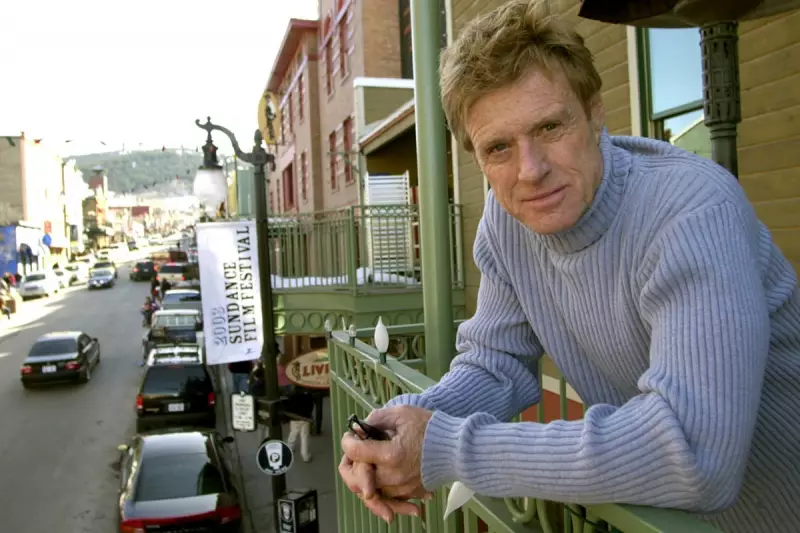
The first Sundance Film Festival since the passing of Robert Redford has become a poignant celebration of his enduring legacy as the godfather of independent cinema. At a star-studded gala held on Friday evening, filmmakers and actors whose careers were profoundly shaped by Redford and the Sundance Institute he founded gathered to reflect on his immense impact.
A Love Letter to Redford's Vision
The 2026 festival, which marks its final edition in Utah before relocating to Boulder, Colorado, serves as a heartfelt love letter to the creative haven Redford established in the state decades ago. This sanctuary was specifically designed for stories that did not fit comfortably within the mainstream Hollywood mould. Even as the festival prepares for its geographical transition, a core piece of Redford's legacy, which his daughter emphasised meant the most to him, will remain firmly rooted in Utah: the institute's renowned lab programs for writers and directors.
"When my dad could have created an empire, he created a nest," said his daughter, Amy Redford, during the emotional tributes. "The Sundance Institute was designed to support and protect and nourish and then set free." She poignantly noted that there was no place her father would rather have been than sitting with a new filmmaker at the Sundance Mountain Resort he founded, located approximately 34 miles south of Park City.

Nurturing Generations of Talent
The Sundance labs, which began their transformative work in 1981, bring emerging storytellers to the rustic resort in northern Utah. Here, their talents are nurtured under expert guidance, far removed from the relentless hustle and bustle of Hollywood. The program's success is undeniable, with three of the five best director nominees at this year's Academy Awards—Paul Thomas Anderson, Chloé Zhao, and Ryan Coogler—having emerged from these very labs.
Personal Testimonies of Mentorship
Chloé Zhao, whose film "Hamnet" received eight Oscar nominations this week, credited the screenwriting lab with jump-starting her career back in 2012. Under the direct mentorship of Redford and program director Michelle Satter, she learned to trust her own unique vision and gained an invaluable, lifelong community of fellow creatives.
Other former participants shared intimate memories of Redford's personal touch. Director Nia DaCosta recalled him riding his motorcycle along the peaceful wooded paths of the resort, often stopping to engage in deep conversations about their projects. He famously insisted that everyone call him by his nickname, Bob. "I remember once seeing him walk some of the other fellows from the directors lab, and he just looked so full of love and pride for us, for what he built," DaCosta reflected. "It was very clear to me in that moment the depth to which he cared about this place and all of us."
A Champion for Artists
Longtime Sundance attendee and actor Ethan Hawke recounted his first audition for Redford, for the 1992 period drama "A River Runs Through It." After sacrificing sleep to prepare an extensive monologue, Hawke was pulled aside by Redford, who told him he was too young for the part but would undoubtedly have a wonderful career. Redford became an early champion and one of Hawke's greatest mentors. At the gala, Hawke pledged to "keep the fire that he started burning in ourselves" and to share that inspiration with others.
Imagination Worth Protecting
Screenings throughout this year's festival were preceded by a moving short video tribute to Redford, met repeatedly with thunderous applause from audiences. Many festival volunteers wore buttons simply stating, "Thank you Bob!" A special screening of his first truly independent film, the 1969 sports drama "Downhill Racer," is also scheduled for later in the festival.

Filmmaker Ava DuVernay, who first experienced Sundance as a publicist for other artists, received her own big break at the festival in 2012 with "Middle of Nowhere." She later served as a Sundance trustee and grew close to Redford, though she admitted she never felt entirely comfortable calling him Bob. "Mr. Redford didn’t just establish a festival. He modelled a way to be, a way that matters, a way that says artists matter, that imagination is worth protecting," DuVernay stated. "The door that he built is still open, and it’s up to us to walk through and to maybe even build our own." In a rare and heartfelt moment, she concluded, "For the first and likely the only time, thank you, Bob."
The 2026 Sundance Film Festival stands as a powerful testament to Robert Redford's vision—a vision that created not just an event, but a nurturing ecosystem that continues to champion independent voices and protect the vital spark of artistic imagination for generations to come.