Hong Kong moviegoers have shown a sustained appetite for local productions in 2024, propelling Anselm Chan's funeral drama 'The Last Dance' to become the most successful local film of all time at the Hong Kong box office, grossing over $18 million. The film follows the success of Soi Cheang's 'Twilight of the Warriors: Walled In', which celebrated the now-demolished Kowloon City neighbourhood. This trend reflects a desire to preserve specific elements of Hong Kong culture as the city increasingly resembles a mainland Chinese metropolis.
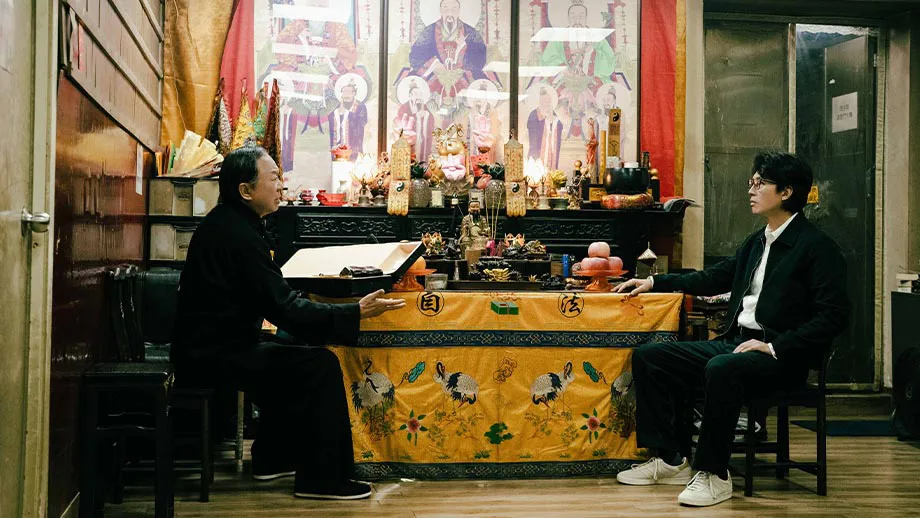
Chan, known for broad comedies like 'Ready O/R Knot' (2021) and its sequel, takes a notably somber turn with 'The Last Dance', despite casting veteran comedians Dayo Wong and Michael Hui. Wong plays Dominic, a cash-strapped wedding planner who takes over a funeral business. He clashes with his new partner, Master 'Hello' Man (Hui), a cantankerous Taoist priest focused on the fate of the departed rather than the living. The film's original Cantonese title refers to 'Breaking Hell's Gates', a ritual involving smashing clay tiles to ensure the deceased's safe passage to reincarnation.
The film's second half shifts focus to Man's dysfunctional family, buried under inherited closed-mindedness. Man has abused and neglected his children in the name of tradition. His son Ben (Tommy Chu Pak Hon) plans to emigrate to Australia, while his daughter Yuet (Michelle Wai), a paramedic, is excluded from Taoist rituals due to her gender. Yuet becomes emblematic of the deep-seated misogyny in Chinese culture, as Man forbids her from handling his ceremonial robes because menstruation is deemed 'filthy'.

Both Wong and Hui deliver grounded performances, with Hui earning a Best Actor nomination from the Asian Film Awards for his portrayal of the stubborn patriarch. The film resonates with compassion and authenticity, balancing somber moments with levity, and ultimately celebrates Hong Kong's unique cultural identity.