My Father's Shadow: A Cinematic Journey Through Memory and Nigerian History
The British-Nigerian director Akinola Davies Jr. and his brother Wale were both toddlers when their father passed away. As adults, they possessed only the faintest memories of him. Then Wale conceived an idea for a film. What if, through the magic of cinema, they could have spent one meaningful day with their father?
A Shattering Father-Son Tale
In My Father's Shadow, the Davies brothers pay tribute to their late father through a powerful father-son narrative set during a single day in Nigeria. The film, which marks Akinola's directorial debut, has emerged as one of the most critically acclaimed films of the past year. It has made history at the Cannes Film Festival and garnered numerous awards internationally.
This profoundly autobiographical work resonates deeply with themes of memory and loss. It represents the culmination of over a decade of the brothers' contemplation. Wale first sent Akinola a script in 2012. At that time, Wale had never written a movie script, and Akinola had never read one.

"With zero context, he sent it to me and I just had this real emotional reaction," Akinola Davies recalled during an interview at Cannes last year. "I actually cried when I read it because I had never conceived of the idea of spending a day with my father and what we would say to him and what he would be like."
Setting and Historical Context
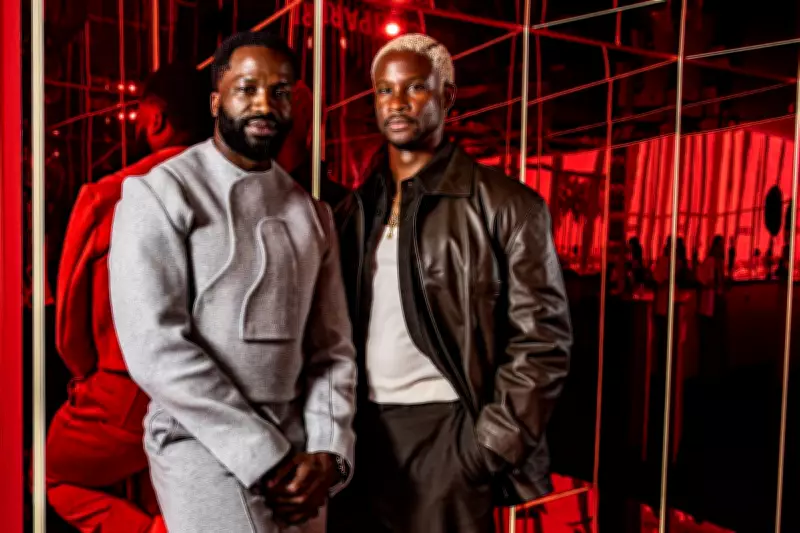
The film unfolds over one day in Lagos in 1993. Gangs of London actor Ṣọpẹ́ Dìrísù portrays the father, Folarin. At the family's home outside Lagos, the young brothers, played by Chibuike Marvellous Egbo and Godwin Egbo, return home to unexpectedly find him inside. They rarely see him due to his work in Lagos, but Folarin takes them on a revelatory trip into the city.
The story is set against a pivotal moment in Nigerian history, when democracy was hanging in the balance. General Ibrahim Badamasi Babangida, who had taken power in a coup, refused to accept the results of a democratic election. My Father's Shadow thus evolves not merely as a conjured portrait of the Davies' father, but as a depiction of a national moment of hope. In both the personal and political narratives, the dream proves fleeting.
A Historic First for Nigeria at Cannes
During its Cannes debut in May last year, My Father's Shadow achieved a historic milestone. It became the first Nigerian film ever selected for the festival's official selection. This was a significant achievement celebrated by Nigeria, a nation with its own substantial film industry popularly known as Nollywood, marking a new presence on the global cinematic stage.
"It means a lot to people back in Nigeria. It means we can exist on these platforms and our stories can exist in these spaces," said Davies. "It's a testament to talent that's around in Nigeria. It's a testament to the stories that are there. It's a testament to the industry that's flourishing."
Accolades and Industry Recognition
My Father's Shadow, which Mubi is releasing in North American theaters, is a British-Nigerian production that the United Kingdom selected as its official Oscar submission. The film received an impressive twelve nominations from the British Independent Film Awards. Davies, who resides in London, has also been nominated for best British debut by the BAFTAs.
At the Gotham Awards in New York, Davies won the breakthrough director award, while Dìrísù won for outstanding lead performance. By any measure, this represents a remarkable journey for a film made independently in Nigeria.
"The Nigerian press asks me a lot if the film is Nollywood or not Nollywood. I would say it is because all the technicians work in Nollywood," Davies explained. "You can't borrow people from that whole industry and say it's not part of it."
The Cinematic Texture of Lagos
Shot entirely in Lagos, My Father's Shadow derives a tremendous amount of its texture and atmospheric quality from its Nigerian setting. "Point a camera at anything in Lagos, and it's so cinematic," Davies remarked.

"I have this real sense of romance for Nigeria," he added. "Everyone's like, 'It's super chaotic,' but for me it's actually very still. Just driving around in the car feels really cinematic to me. I just take pictures of people all the time."
Uncovering and Reconstructing Family Memory
When Akinola was just twenty months old and Wale was four, their father rapidly developed epilepsy and died during a seizure while lying in bed next to their mother. To create the fictional version of their father, the Davies brothers endeavoured to recall what they could, attempting to separate genuine memories from imagined ones.
"It's kind of the confluence of memory, dream and hearsay," said Davies, who is named after his father. "How do you work through all of that to create a portrait?"
Realising Filmmaking Aspirations
My Father's Shadow represents the fulfilment of Davies' filmmaking ambitions. His BAFTA-nominated short film Lizard initially brought him to the attention of Britain's film industry. However, My Father's Shadow has firmly established him as a major up-and-coming director.
Yet for Davies, all the professional accolades pale in comparison to what the film has meant personally for him and his family. "Being the age I am, I've done my grieving," Davies reflected. "But just before we shot, I realized I was still grieving. Our prep started about a week after the anniversary of my dad's passing. Every year, my mum calls me or texts me. I took my brother to his grave, put flowers down and made kind of a ceremony out of it."