Lost Alistair MacLean Pirate Script Unearthed in Archive Treasure Trove
While meticulously sifting through a vast collection of documents for his new book, author and film historian Brian Hannan experienced a moment of sheer astonishment. Staring at his computer screen, he encountered a discovery that left him utterly breathless. "When I saw it, my eyes popped out of my head," Hannan recalled. "I thought, 'You've got to be kidding – how does this even exist? How does nobody know about it?' It's a Fort Knox of gold, just sitting there waiting for somebody to make something of it."
A Cinematic Goldmine Hidden in Plain Sight
For months, Hannan had been delving into the extensive archive of the late American producer Elliot Kastner, searching for insights into Scots thriller writer Alistair MacLean's remarkable Hollywood career. The archive was handed over by Kastner's son, Dillon, who hoped it might yield fresh material. Buried within an unassuming file labelled 'Pirates', which Hannan had overlooked for weeks, lay a genuine treasure: a complete, high-seas adventure screenplay written by MacLean at the height of his creative powers.
"It is a genuine lost manuscript by Alistair MacLean and, as far as I'm aware, nobody else knows it exists, which means it could be extremely valuable," Hannan stated. "MacLean died in 1987 so this could be his first work in at least 40 years. Anyone familiar with MacLean's work can see his hand. It's just unbelievable to get your hands on raw material by someone of his stature which no-one has ever seen before."

Potential Value and Modern Appeal
The financial implications of this find are staggering. Hannan estimates that if the script, titled The Swashbuckler, were novelised, it could generate £1 million for a hardback edition and another £1 million for the paperback, thanks to MacLean's enduring global popularity. Furthermore, he believes it has strong potential as a major motion picture.
"It could make a beautiful film," Hannan explained. "You would have to add some proper sword fights but the story is great and it could make a commercially viable film. It's got a light tone and a lot of humour – like the Pirates of the Caribbean franchise. The female character is terrific, someone with smarts who can deal with the man on her own terms. Sandra Bullock, in her younger days, or someone like Sydney Sweeney would be perfect for the role."
The Origins of a Pirate Tale
The backstory of how MacLean came to write a pirate screenplay is detailed in Hannan's new book, King of the Action Thriller: Films from the Mind of Alistair MacLean. It centres on producer Elliot Kastner, who was desperate to collaborate with MacLean but found the film rights to all his existing novels already sold. In October 1965, Kastner approached MacLean directly and secured a deal for an original screenplay.
MacLean agreed on one unique condition: he would be paid for the screenplay but retain the rights to novelise it afterwards, a shrewd move that circumvented traditional publisher control. Kastner agreed, offering $200,000, a half-share of profits, and the book rights. This partnership yielded the classic Where Eagles Dare, followed by several other projects, including the pirate script.
Publisher Reluctance and Industry Challenges
However, MacLean's foray into pirate and Western genres met with resistance from his publisher, Collins, who preferred his signature thriller style. Despite MacLean refining The Swashbuckler twice, neither studios nor Collins showed interest. Hannan suggests the timing was unfortunate, as Hollywood faced financial turmoil in the late-1960s, making big-budget pirate films a risky venture.
"They just couldn't get the money," Hannan noted. "This was around 1969-70 and the movie industry was in incredible trouble, and nobody was really wanting to finance a big-budget pirate picture."

A Legacy of Success and Struggle
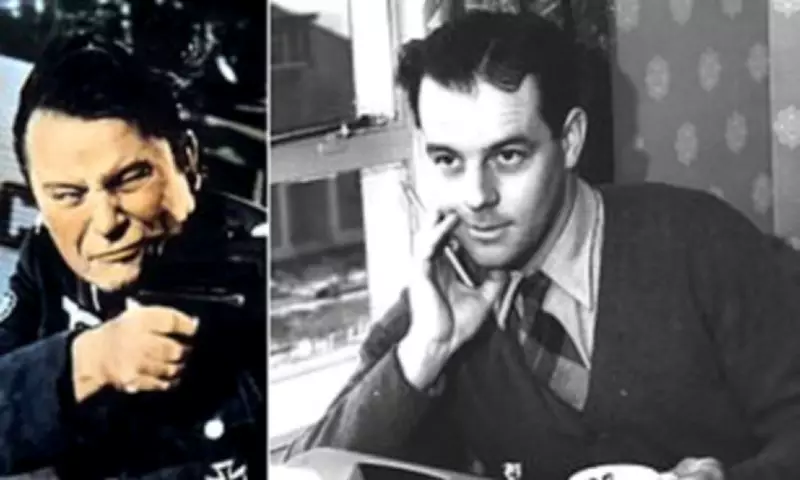
Alistair MacLean's rise to literary stardom was meteoric. Born in Glasgow in 1922, he initially worked as a teacher before winning a short story competition in 1954, leading to his first novel, HMS Ulysses. The book was a word-of-mouth sensation, selling 250,000 hardback copies in the UK alone. His subsequent works, like The Guns of Navarone, cemented his status, with sales peaking in the 1960s at a rate of one book snapped up every 18 seconds.
MacLean's cinematic appeal was unparalleled; his name was often displayed above film titles, a rare honour for a screenwriter. Yet, behind the scenes, he battled alcoholism, which contributed to his death in 1987 after a relapse led to multiple strokes.
Ownership Uncertainties and Future Prospects
The discovery of the lost manuscript raises complex questions about ownership. It is unclear whether rights belong to MacLean's family, Kastner's heirs, the publisher, or Hannan himself. "It's not really clear who has ownership of the manuscript, but someone could be sitting on a multi-million-pound bounty," Hannan remarked, hinting at potential legal disputes.
Despite limited cooperation from MacLean's family, Hannan remains hopeful that the script will eventually be adapted. "Maybe someday soon, someone will come knocking on my door and ask, 'Can you show us what you've found?' Well, what I found was a million-pound manuscript," he said. "It's like if somebody found a lost novel by Graham Greene. Similarly, this would rocket off the shelves without question."
With its blend of swashbuckling action, humour, and classic MacLean twists, The Swashbuckler represents not only a significant literary find but also a potential revival of the author's legacy for new audiences.