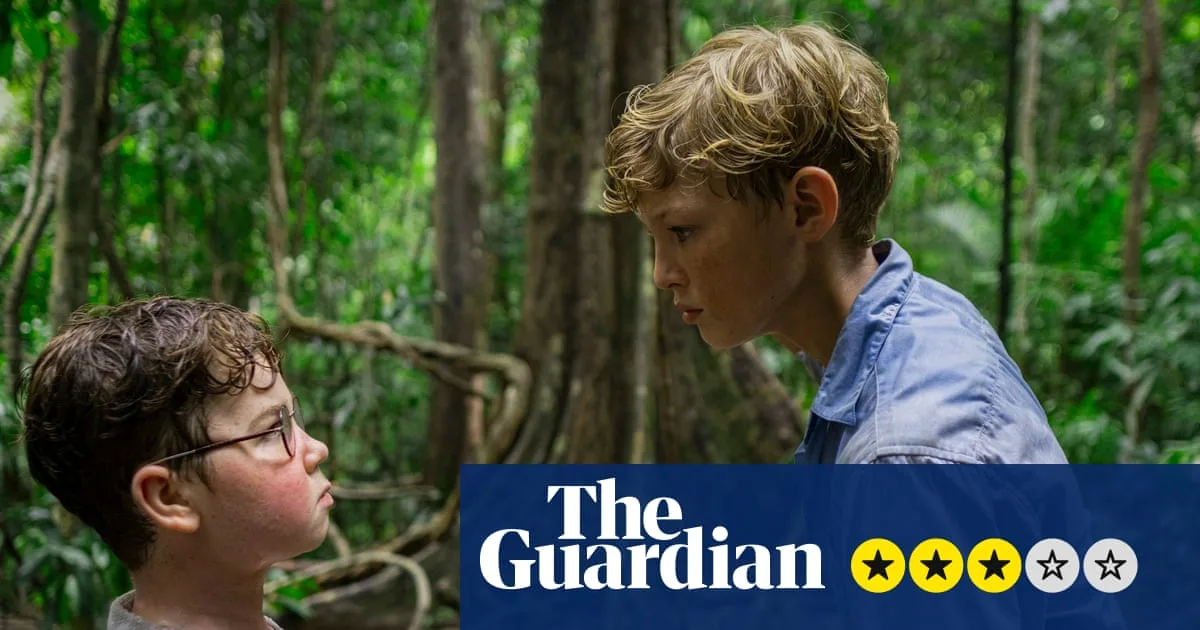
Lord of the Flies Adaptation Fails to Capture Original's Harrowing Power
Jack Thorne's four-part BBC adaptation of William Golding's seminal 1954 novel Lord of the Flies arrives with significant anticipation but ultimately disappoints, lacking the profound dread and elemental power of the original work. While the acting performances are uniformly excellent, the adaptation suffers from a weak script and unnecessary psychological explanations that dilute Golding's timeless allegory about tyranny, democracy, and the fragility of civilization.
Strong Performances Cannot Save Flawed Adaptation
The production opens with Piggy, portrayed brilliantly by David McKenna in his first screen role, awakening after the plane crash that strands a group of boys on a tropical island. McKenna's performance as the intellectual yet vulnerable Piggy stands out, as does Lox Pratt's chilling portrayal of Jack, the choirboy leader who demonstrates an innate understanding of human weakness and how to exploit it for power.
Winston Sawyers brings depth to Ralph, the elected leader who represents democratic principles, while the supporting cast including Ike Talbut as Simon and the Flemyng brothers as Sam and Eric contribute solid performances. The actors work hard to elevate material that frequently lets them down.
Script and Pacing Problems Undermine the Narrative
Where the adaptation falters most significantly is in its script and pacing. Much of the runtime features extended, wordless sequences of the boys playing in idyllic landscapes or gazing at empty horizons, with jangling musical strings attempting to create anticipatory dread. This approach relies heavily on viewers' prior knowledge of the story rather than building tension organically through the narrative.
When dialogue does occur, it often feels unconvincing and unevocative. Lines like "You're having a jolly good time, aren't you?" from Simon to Jack or Ralph's declaration that "This is a bad camp of bad people!" after the tribal split lack the weight and complexity of Golding's original text. The adaptation also employs a visual gimmick of desaturating the color palette during violent scenes, which feels like an attempt to mask the absence of genuine emotional impact.
Psychological Backstories Dilute the Allegory
A particularly problematic element is the modern tendency to provide psychological explanations for each character's behavior. Jack comes from a loveless household, Ralph's compassionate leadership stems from his secure home life despite his mother's illness, and Simon's mental fragility results from his abusive father's mind games. These neat backstories reduce the elemental power of Golding's exploration of inherent human evil.
The original novel's central question—how much evil exists within humanity and whether it can be overcome—becomes diluted into a simpler narrative about childhood trauma and therapy needs. This fundamental shift undermines the allegorical power that has made Lord of the Flies a GCSE staple for three decades and a timeless examination of civilization's thin veneer.
Historical Context and Adaptation Choices
Golding's novel emerged as a dark counterpoint to R.M. Ballantyne's Victorian adventure story The Coral Island, borrowing character names while presenting a radically different vision of human nature. Written in reaction to World War II and the Holocaust, the novel asks what happens when social constraints are removed and humanity's baser instincts are unleashed.
Thorne's adaptation, following his successful work on Adolescence, attempts to bring a fresh perspective by focusing on different characters in each episode. However, this structural choice doesn't compensate for the fundamental weaknesses in execution. The adaptation feels simultaneously bloated with unnecessary visual sequences and thin in its emotional and intellectual engagement with Golding's themes.
Lord of the Flies is currently available on BBC iPlayer in the United Kingdom and on Stan in Australia, offering viewers the opportunity to judge whether this adaptation captures any of the original novel's enduring power or serves as another example of how challenging it can be to translate literary classics to the screen.