A special edition of the Los Angeles Times, intended to celebrate leading women in Hollywood, has instead ignited a fierce online debate about digital alteration and authenticity.
Glossy Cover Sparks Digital Manipulation Debate
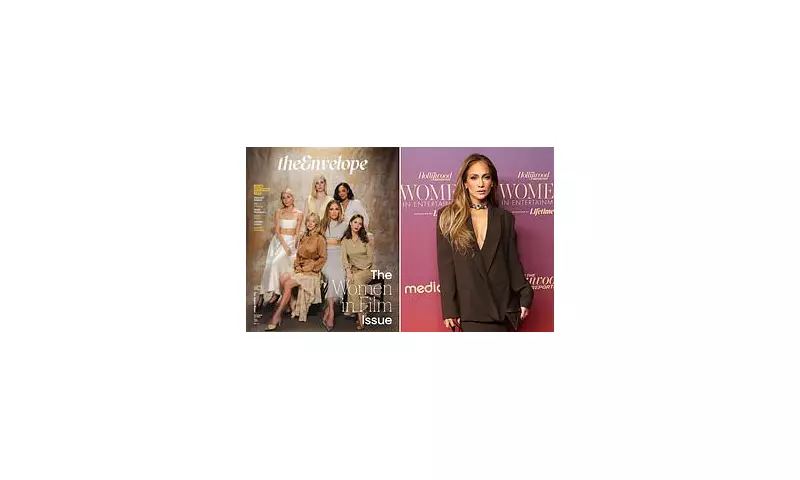
The Envelope: Women in Film issue, published on Tuesday, featured a cover with six major Hollywood stars: Jennifer Lopez, Gwyneth Paltrow, Emily Blunt, Elle Fanning, Tessa Thompson, and Sydney Sweeney. The actresses, dressed in neutral tones of white, brown, and gold, posed together against a muted marble backdrop for what was dubbed an 'Oscar roundtable' discussion.
However, readers were quick to criticise the final image, with many claiming the publication had used excessive Photoshop or even artificial intelligence, giving the stars an unnaturally smooth and artificial appearance.

Readers React: 'Why the Heavy Photoshop?'
The reaction on social media was swift and pointed. One reader directly questioned the editorial choice, asking, 'These women are all naturally gorgeous! Why the heavy photoshop?' Others joined in with sarcastic remarks, with one writing 'Photoshop has entered the chat,' and another joking, 'AI so bad it got me thinking this was fake.'
Further comments labelled the cover 'over-edited and ridiculous,' with some explicitly wondering if AI technology was responsible for the look. Amidst the criticism of the editing, other observers defended the actresses, slamming those focusing on appearance rather than the substance of their interview. One commenter pointedly asked if a men's issue would receive the same superficial scrutiny.
The Daily Mail has contacted the Los Angeles Times for comment on the allegations of heavy editing.
J.Lo Speaks Out on Career and Criticism
Inside the issue, the A-list participants spoke candidly about their careers and ambitions. In a surprising admission, global superstar Jennifer Lopez, 56, revealed she still has unfulfilled goals despite her long and successful career.
'I still want to direct. I still want to write more books,' Lopez told the publication. 'And I don't ever feel like there's somebody who can say to me, "No, you can't."' She described herself as a 'lightning rod for nice things and a lot of negativity,' and spoke of the difficulty of feeling misunderstood by the public and press.
The two-time Grammy nominee explained her method for coping, stating she focuses on her work and character: 'I'd have to block out the noise so I can put my head on the pillow at night and go, "I did good today. I was a good person. I was kind to people. I worked really hard. I'm a good mom." That has always helped me through.'
A History of Cover Controversy
This is not the first time the LA Times' The Envelope cover has faced backlash. In 2017, the publication was criticised for featuring only white actresses—including Jessica Chastain, Margot Robbie, and Kate Winslet—on a cover story about empowering women and changing narratives in Hollywood. The lack of diversity prompted hundreds of critical social media responses at the time.
The latest controversy shifts the critique from representation to representation itself, questioning how even powerful, successful women are presented to the public and whether the pursuit of a 'glossy' ideal undermines the publication's celebratory message.