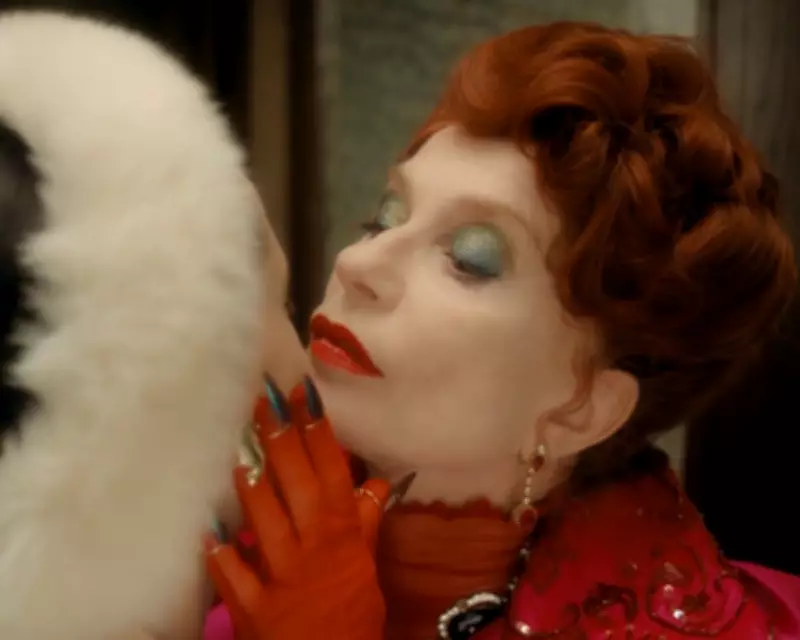
The Blood Countess Review – Isabelle Huppert Reigns Supreme in a Surreal Vampire Fantasia
From the dark heart of central Europe emerges a midnight-movie romp through the moonlit urban glades of Euro-goth and camp, masterfully directed by German filmmaker Ulrike Ottinger. The Blood Countess transforms Vienna into a playground of camp, cruelty, and aristocratic disdain, offering a blackly comic take on the legendary Báthory story. At its core, Isabelle Huppert delivers a performance so perfectly aligned with the title role that it feels as though she was born to play it.
A Role Made for Huppert's Hauteur
Isabelle Huppert embodies Countess Elizabeth Báthory, the 16th-century Hungarian noblewoman and serial killer infamous for bathing in the blood of young girls in a quest for eternal youth. While past portrayals have featured actresses like Ingrid Pitt and Julie Delpy, Huppert stands out by not modifying her habitual hauteur one iota. Her natural aristocratic mien and cool hint of elegant contempt are never so well-matched with a part, creating a mesmerizing presence on screen.
Huppert gifts audiences with her classic opaque gaze—part dreamy, part coldly assessing—and the politely bemused half-smile of concealed distaste, which often merges into a pout at the absurdity or ill manners of those around her. Unlike other characters in the film, her face is lit like that of a Golden Age Hollywood star, giving her impeccable makeup a ghostly sheen of profane sainthood. This visual treatment underscores her otherworldly dominance in the narrative.

A Vampire's Return to Modern Vienna
The film follows Countess Báthory as she returns to present-day Vienna, the historic seat of the Austro-Hungarian empire. Initially seen gliding through its sewers as if on a royal barge—far more coolly than Harry Lime in The Third Man—she soon makes her mark on the city. Accompanied by her vampire maidservant Hermine, played by Birgit Minichmayr, the countess reacquaints herself with relatives, including her timid nephew Rudi, a member of the undead Báthory clan.
Rudi, attended by his therapist Theobald, is a devotee of the fine arts who believes a painting holds evidence of a poetic text rumored to cure vampires of immortality through tears. Countess Báthory, however, has no interest in such redemption and sets out to slake her thirst, plunging Vienna into fear as news of a serial killer spreads. This setup allows for a series of bizarre and often engagingly surreal episodes that define the film's tone.
Surreal Black Humour and Satirical Undertones
The keynote of The Blood Countess is its surreal black humour, delivered through a succession of bizarre scenes. Notably, the script is partly credited to Austria's Nobel laureate Elfriede Jelinek, who is not typically known for humour. Audiences may recall her novel The Piano Teacher, chillingly filmed by Michael Haneke with Huppert in a starkly serious lead role.
Jelinek's influence is palpable in grisly scenes, such as one in a ladies' lavatory where a bourgeois Viennese woman is intimately approached by the countess with predictable, darkly comic results. The film also satirizes the Austrian ruling class, with moments like the countess making a triumphal entrance to the Radetzky March—often described as the right-wing Marseillaise—highlighting themes of eternal snobbery and vanity.
Storytelling and Mythic Portrayals
While the mysterious text and its redemptive tears add an intriguing layer, storytelling is not the primary focus of The Blood Countess. Instead, the film revels in its absurdity and stylistic flair. This raises questions about whether there is scope for a non-mythic, tongue-out-of-cheek portrayal of Countess Báthory—one that commits fully to fear or eroticism without relying on humour as an alibi.
Could a revisionist take, akin to Wicked, explore how the countess's reputation has been trashed by misogynists, suggesting she was actually misunderstood? Perhaps a future project might attract interest from stars like Ariana Grande. For now, Ottinger's film stands as a unique and gloriously surreal addition to the vampire genre, anchored by Huppert's unparalleled performance.