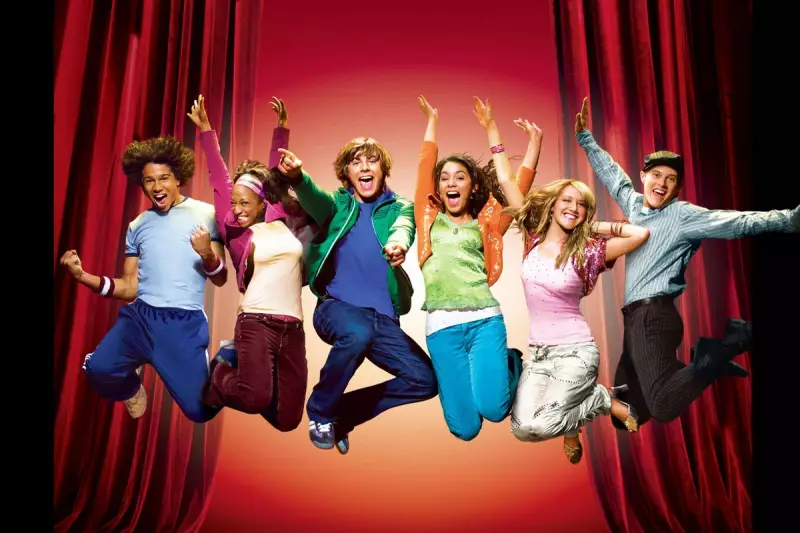
Two full decades have passed since the world first met Troy Bolton and Gabriella Montez, yet the cultural earthquake triggered by Disney Channel's 'High School Musical' in January 2006 continues to send aftershocks through Hollywood. Dismissed by many critics at the time as mere fluff, Kenny Ortega's all-singing, all-dancing tween extravaganza didn't just break ratings records—it fundamentally shifted the entertainment industry's understanding of its most powerful audience: adolescent girls.
The Birth of a Phenomenon
Arriving in what some nostalgically recall as the last "normal" year before digital algorithms dictated our tastes, High School Musical premiered in a unique media landscape. Twitter launched, Facebook opened to the public, and YouTube was bought by Google. Yet, millions still gathered for scheduled television events. It was in this environment that nearly two million viewers tuned into the film's initial Disney Channel airings, a number that swelled to 7.7 million for its US premiere, making it the most-watched Disney Channel Original Movie in history.
The story was deceptively simple: basketball captain Troy (Zac Efron) and academic whizz Gabriella (Vanessa Hudgens) defy high school cliques to star in the school musical. For a generation, it was a fantasy of being plucked from obscurity. Zac Efron, with his tanned complexion and signature side-swept fringe, became the archetypal teen idol, a pre-Justin Bieber heartthrob. The on-screen romance, mirrored by a real-life relationship between the leads, captivated fans.

A Commercial Juggernaut and Critical Divide
The film's success was meteoric and multifaceted. The soundtrack, featuring instant earworms like "Breaking Free" and "Get'cha Head in the Game", soared to number one on the Billboard 200 chart, remaining there for 61 weeks and achieving multi-platinum status. Merchandise, from T-shirts to concert tours, sold rapidly. Director Kenny Ortega, previously known for choreographing Dirty Dancing, had struck a nerve.
Critics, however, were largely unimpressed. One labelled it "a schmaltzy little piece of obvious fluff," while another doubted any musical fan would find it worthwhile. Yet, as then-president of Disney Channel Worldwide Rich Ross argued, its power lay in being "familiar" and wholesome. It was Grease for a new generation, sanitised and focused on the universal teen struggle of self-expression against peer and parental expectations.
The Lasting Hollywood Legacy
The franchise's impact extended far beyond its core trio of films. High School Musical 2 attracted 17 million viewers in 2007, setting a new record for a cable television movie. The cinematic finale, High School Musical 3: Senior Year, grossed $293 million worldwide in 2008. More significantly, it proved a blueprint.
Disney Channel immediately pivoted to using TV movies as star-making vehicles for pop acts, leading to Camp Rock for the Jonas Brothers and Demi Lovato, and films for Selena Gomez. Crucially, it demonstrated to studio executives that musicals could be both profitable and cool again, paving the way for major productions like Hairspray (also starring Efron), Les Misérables, and the TV series Glee.
The cast's trajectories varied. While Efron transitioned to major films like The Greatest Showman, Vanessa Hudgens navigated a nude photo scandal before finding success in films like Spring Breakers. For others, like Ashley Tisdale (Sharpay Evans), the franchise remained a defining credit.
Two decades later, the film's cinematic flaws may be more apparent, but its influence is indelible. It embedded its lyrics into a generation's psyche and reshaped industry strategy, proving definitively that the tastes of 12-year-old girls are a force capable of altering the pop culture horizon forever.