Beyond Seven Dials: Five Superior Agatha Christie Adaptations for Mystery Lovers
Netflix's recent release of Agatha Christie's Seven Dials Mystery has certainly captured attention, storming the streaming platform's rankings since its debut earlier this week. As a self-confessed Christie enthusiast who has devoured nearly three-quarters of her Poirot series alongside numerous standalone novels, I approached this new adaptation with keen anticipation. While Seven Dials contains all the quintessential Christie ingredients—a determined lead seeking truth, a cast of plausible suspects, and a string of final twists—it regrettably fell short on suspense and nail-biting drama for this seasoned viewer.
The adaptation, featuring Mia McKenna-Bruce's brilliant portrayal of Bundle, weaves a compelling conspiracy that suggests something far greater than our protagonist. Yet the muddled conclusion, which deviates somewhat from Christie's original text, undermines the dramatic impact. While there's nothing inherently wrong with adapting material for television, I've witnessed superior interpretations of Christie's intricate mysteries that better capture her genius.
Five Christie Tales That Will Have You Second-Guessing Everything
For those seeking Christie adaptations that truly deliver on suspense, character development, and shocking revelations, here are five superior alternatives that represent the pinnacle of mystery storytelling.
BBC's And Then There Were None (2015)
This masterpiece sparked my love affair with Christie when I first encountered the BBC Radio 4 adaptation at fourteen years old. The television mini-series, aired in 2015, maintains the story's utterly unpredictable nature while condensing the novel's conclusion for a more gratifying viewer experience. The premise follows seemingly unconnected strangers who receive invitations from enigmatic hosts to dine on a remote island off Devon's coastline.
As civility crumbles during the opening meal—when a gramophone recording accuses them of various misdeeds—each guest meets their demise in ways that echo the nursery rhyme "Ten Little Soldier Boys." The adaptation masterfully maintains suspense as viewers wonder whom to believe, with the "big reveal" delivered in the episode's final moments. And Then There Were None has been ranked amongst the world's finest mystery novels, and this adaptation does justice to that reputation.
Murder on the Orient Express
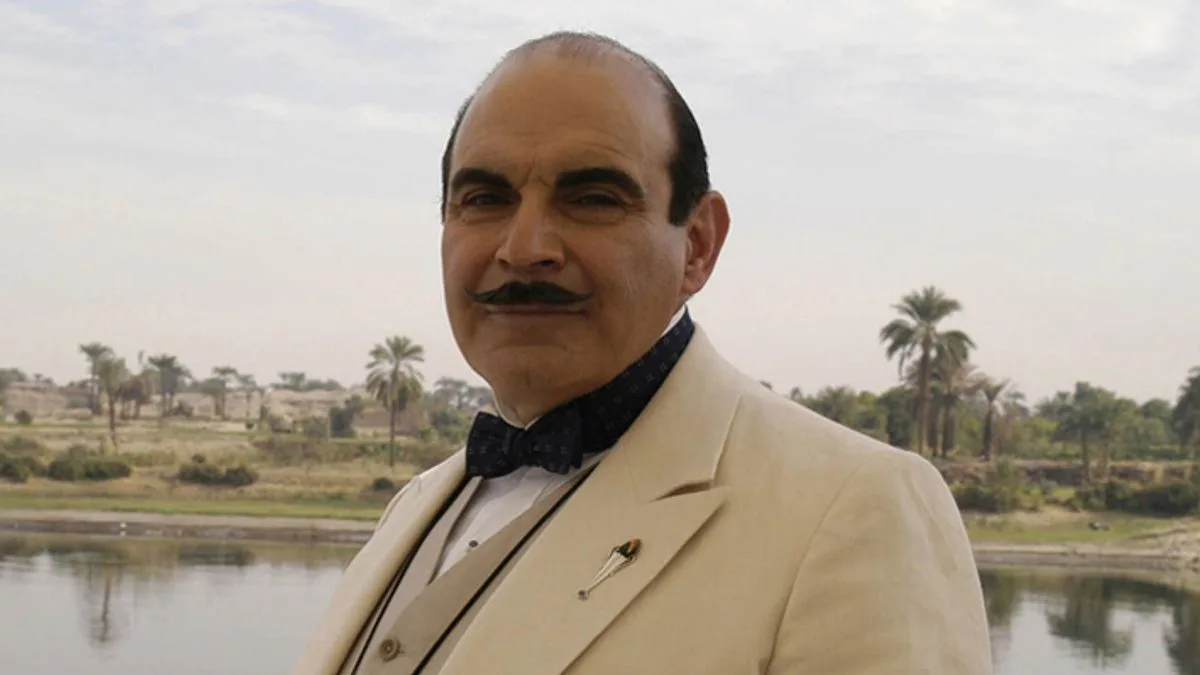
David Suchet will forever remain the definitive Hercule Poirot for many enthusiasts, and Murder on the Orient Express represents arguably Poirot's most celebrated case. This quintessential whodunnit features an entire ensemble of passengers who appear to be complete strangers aboard a train stranded in a snowdrift—though appearances prove deceiving as always.
When American businessman Samuel Ratchett is discovered brutally slain in his compartment after Poirot declines his protection request, the detective takes command of the investigation. The killing reveals the heartbreaking tale of Daisy Armstrong, whose kidnapping and murder triggered a cascade of tragedies. Christie's conclusion ranks among the most shocking literary plot twists ever written, with the narrative continuously prompting questions of who, what, when, and how right until the final moments.
Death on the Nile (1978)
While my heart lies with David Suchet's portrayal, Peter Ustinov's interpretation in the 1978 adaptation of Death on the Nile captures a genuine depiction of its era—particularly when contrasted with more modern adaptations. Ustinov's Poirot relies on charm rather than careful reasoning with his "little grey cells," providing compelling viewing that differs from Suchet's approach.
The star-studded ensemble features remarkable acting prowess including Maggie Smith as a snobbish nurse, Angela Lansbury as a perfect embodiment of an early twentieth-century romance writer, alongside Jane Birkin, Bette Davis, David Niven, and Mia Farrow. When a wealthy heiress perishes aboard the S.S. Karnak, every passenger seems to have motive, creating one of those tales where whatever you're focusing on is likely incorrect. Death on the Nile stands as one of Christie's masterpieces that maintains suspense from start to finish.
Poirot Investigates: Murder in Mesopotamia (2002)
Among the handful of Poirot tales that unfold on foreign soil, Murder in Mesopotamia injects a spirit of adventure into the charming detective series. In typical Poirot style, he appears to have stumbled upon the murder through either remarkable detective instincts or exceptionally sinister timing.
Drawn to an archaeological excavation in Iraq by an old acquaintance, Poirot encounters Swedish-American archaeologist Dr. Eric Leidner, whose apparently neurotic wife Louise has been plagued by death threats from someone she suspects to be her deceased former husband. When she's discovered dead in questionable circumstances following years of silent threats, Poirot must identify her killer despite there appearing to be no plausible method for the murder's execution. The question of whether history has returned to haunt them or if deception is at play creates compelling viewing.
BBC's Ordeal By Innocence (2018)
Another of Christie's independent mysteries, the BBC mini-series served as my initial encounter with this specific tale before I tackled the novel in 2025. The story presents a killing, a possible wrongful conviction, and a mysterious man materializing two years later from nowhere offering an alibi—ensuring nothing appears as it initially seems.
The seemingly flawless Argyll family (spelled differently in the book) are devastated when matriarch Rachel is discovered dead in the family's grand estate, where she resided with her husband, five adopted children, and live-in maid. When troubled son Jack is quickly arrested but found dead in prison before standing trial, the case appears closed—until geophysicist Arthur Calgary arrives two years later to provide an alibi. The adaptation exposes a tangled web of secrets lurking behind closed doors, with the killer still amongst them. While the novel and television series' endings differ, both are equally messy and effective in their own right.
These five adaptations demonstrate how Christie's work can be translated to screen while maintaining the suspense, character complexity, and shocking revelations that define her legacy. For true mystery enthusiasts, they offer viewing experiences that will genuinely have you second-guessing everything twice over.