Groundbreaking Chinese Spy Film Receives Official State Security Backing
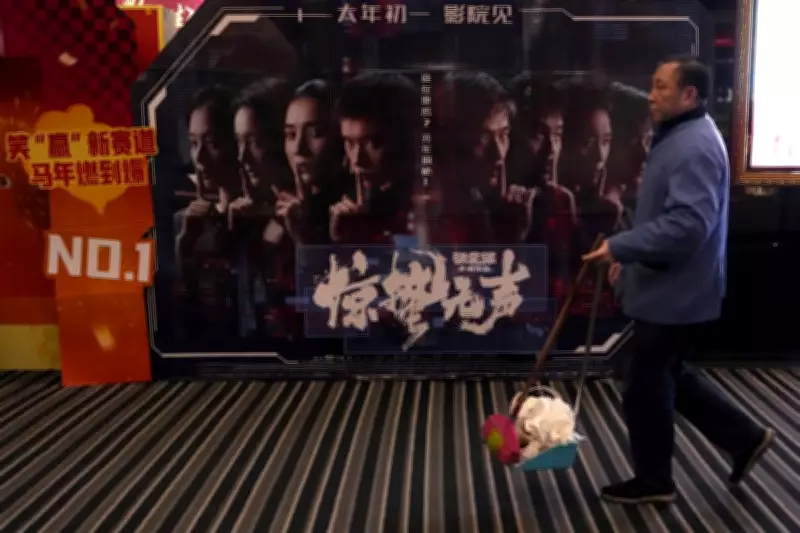
In a significant departure from traditional practices, China's secretive Ministry of State Security has officially endorsed and supported its first feature film production. The counterespionage thriller "Scare Out," directed by acclaimed filmmaker Zhang Yimou, represents an unprecedented collaboration between China's intelligence apparatus and the entertainment industry.
Unprecedented Government Involvement in Filmmaking
The Ministry of State Security, typically known for its covert operations and strict information control, has taken the remarkable step of publicly backing "Scare Out" as part of its expanding public engagement strategy. According to official statements, state security officers were present throughout the entire filming process to ensure authenticity and accuracy in depicting intelligence operations.
"State security officers accompanied us throughout the whole filming process to make sure the film is close to reality," Zhang Yimou wrote in an op-ed for the People's Daily, the Chinese Communist Party's flagship newspaper.

Plot and Production Details
The film follows the hunt for a mole within China's intelligence service who is leaking classified information about a new fighter jet. Starring acclaimed actors Jackson Yee and Zhu Yilong, "Scare Out" features dramatic action sequences including drone chases through Shenzhen's glass-walled skyscrapers that have captured audience attention both domestically and internationally.
Released on February 17 during Chinese New Year celebrations, the film has already achieved significant commercial success, reaching 1.1 billion yuan ($160 million) in box office revenue within just two weeks of its premiere. The movie is also playing in international markets including the United States, Canada, and Australia.
Strategic Public Engagement Campaign
The Ministry of State Security has been gradually increasing its public visibility over the past two years, beginning with its first WeChat post that declared "counterespionage requires the mobilization of the entire society." Since that initial foray into social media, the ministry has maintained an almost daily posting schedule, sharing information about real cases, publishing educational comics, and releasing short videos.
Security experts interpret this film collaboration as part of a broader strategy to encourage public participation in national security efforts. "It wants to build public and popular support to encourage people to share information," explained Sheena Greitens, an associate professor at the University of Texas at Austin.
International Context and Audience Reception
The release of "Scare Out" coincides with increased intelligence recruitment efforts between global powers. The CIA has recently shared Mandarin-language recruitment videos on social media targeting Chinese officials, while China's Ministry of Foreign Affairs has condemned these attempts at espionage recruitment.
Audience reactions have been generally positive, with viewers appreciating the film's entertainment value alongside its educational purpose. "I love watching movies, so a movie on patriotism education definitely works better on me," said Wang Lehang, a 25-year-old student. "It's better than a lecture."
Alice Jin, a 28-year-old e-commerce professional in Washington who saw the film, admitted she "had no idea what the MSS was before" watching but found the movie "better than I expected."
Historical Significance and Industry Impact
While Western intelligence agencies like the CIA have long collaborated with Hollywood productions, this marks China's first official venture into similar territory. The film represents a sophisticated effort to make national security concepts accessible and engaging to the general public through popular entertainment.
Director Zhang Yimou, known for Oscar-nominated films including "Ju Dou," "Raise The Red Lantern," and "Hero," brings considerable artistic credibility to this government-backed project. Social media rumors suggest the film's plot may be based on a real case involving alleged leaks about China's J-35 fighter, though the Ministry of State Security declined to comment on these speculations when contacted by The Associated Press.