Bridgerton's Costume Designers Reveal How They Reinvent Period Romance for Season Four
As Bridgerton makes its highly anticipated return to Netflix screens, the lavish fashion of the ton continues to captivate audiences just as much as Lady Whistledown's scandalous gossip. The show's costume designers have masterfully blended historical inspiration with contemporary flair, creating a visual spectacle that defines the series.
The Iconic Mr Darcy Influence
For the upcoming fourth season, which premieres in two parts on January 29 and February 26, the design team drew direct inspiration from one of period drama's most memorable moments: Colin Firth's wet shirt scene from the 1995 BBC adaptation of Pride and Prejudice.
"I think Colin Firth made the men's period full-sleeve shirt iconic for the Mr Darcy moment," reveals Dougie Hawkes, Bridgerton's men's associate designer. "I was involved in that production many years ago, but ever since then, I've always wanted to better it personally."

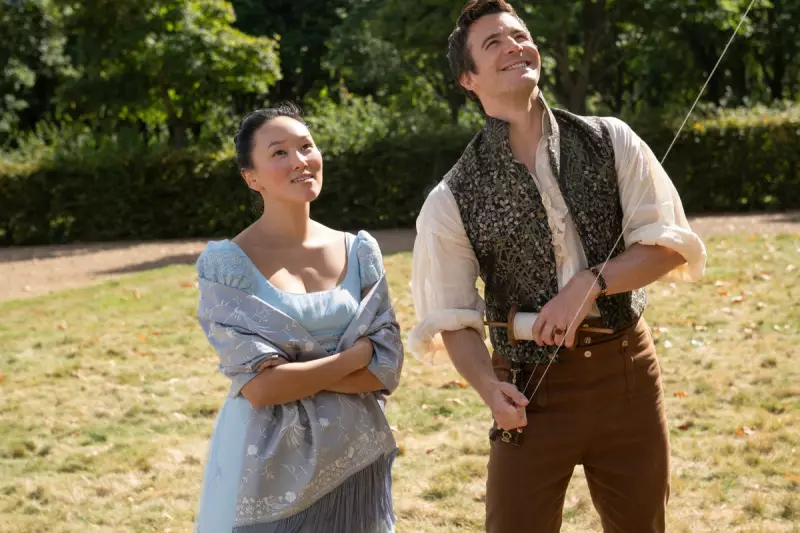
That ambition reaches its peak in season four through protagonist Benedict Bridgerton, portrayed by Luke Thompson. "We've been trying to perfect the men's shirt since season one," Hawkes explains, "and I think we finally got there this season. Luke Thompson's lake sequence really showcases it - the shirt looks fabulous."
Blending Fantasy with Reality
This attention to detail exemplifies Bridgerton's signature approach: taking period drama foundations and reimagining them through a modern, fantastical lens. Lead costume designer John Glaser emphasises that pure historical accuracy is "not what the show is." Instead, as Hawkes notes, Glaser has brought the word "spectacular" to Bridgerton's design philosophy.
Season four introduces a significant new dynamic as the series properly ventures below stairs for the first time, exploring kitchens, corridors and servants' quarters. This presented the costume team with the challenge of making two distinct worlds coexist visually.
"When we received the scripts, it was obvious there was a new dynamic compared to previous seasons," Hawkes explains. "There was much more contrast between the glamorous pools upstairs and what happens below stairs. We had to present this as something fresh for viewers."
The Downstairs Challenge
For Glaser, this shift represented an exciting opportunity: "We had to make the downstairs as interesting as the upstairs has always been, which was a nice challenge. The difficulty lay in blending the fantasy of upstairs with the reality of downstairs."
The designers were careful to maintain balance between these worlds. "They couldn't be so extreme that they didn't work together," Glaser continues, "but they still had to look and appear differently."
Contrary to expectations, the downstairs costumes maintain Bridgerton's signature glamour. "Not at all," Glaser insists when asked about toning down the flair. "We set boundaries about how far we could go with downstairs, but it still had to be glamorous."
Hawkes agrees, noting that "the apron bows were all very designed and precise, whereas in reality it might just be a string. But that's the fun of it." As Glaser summarises, "A lot of things that would have just been functional were functional, but at the same time they were pretty."
Character Transformations and Colour Symbolism
Transformation remains central to Bridgerton's appeal, with season four featuring significant changes for both male and female characters. While Glaser teases "the introduction to other Penwood girls," the men experience particularly radical shifts.
"This was one season where the men, especially Benedict, got to make that transformation," Glaser reveals, praising Hawkes' miraculous work in "freeing them up."
Hawkes approached Benedict's wardrobe through romanticism: "Because he's the artist, the romantic, I tried to push him to the limits of being Pre-Raphaelite, softening him right up. I wanted less is more - romantic without being overthought."
Another pivotal journey belongs to Sophie, the illegitimate daughter of Richard Gunningworth, Earl of Penwood, who moves between different households and employment situations. "She had to travel back and forth between the two worlds," Glaser explains, creating unique costume challenges.

Evolving Colour Palettes and Modern Details
Colour continues to symbolise power, personality and social standing throughout different households. "We still use the original colour palette from season one," Glaser explains, "but as characters have matured and developed, our colour palette has matured and developed too."
The signals are more subtle than Penelope Featherington's dramatic transformation from yellow to emerald green. When characters enter the Penwood house, Glaser notes, "they'll add pink to aprons and hair pieces - but it's not blatant."
Season four also introduces a seasonal shift, with richer, darker golden leaf colours reflecting autumn filming. "That's very, very evident in the costumes," Hawkes confirms.
Modernity seeps in through carefully chosen details. "With the guys, I've really picked on pop culture, art culture and fashion culture," Hawkes explains, particularly through men's jewellery. While the designers don't intentionally create Easter Eggs, Glaser reveals one to watch for: "Benedict has a bracelet in the first episode's masked ball - we've never used a bracelet on any man before."
The Relentless Pursuit of Perfection
What unites every design decision is a refusal to settle for anything less than spectacular. "We never give up," Hawkes declares, "and we're always looking for the better option." Whether refining fastenings, trousers or collars, the process of improvement is constant.
The series format allows for continuous evolution. "We never like to rest on our laurels," Glaser notes. "We're always looking at everything and trying to perfect it, to make it look better."
This relentless pursuit leads inevitably back to that most fundamental garment: the shirt. "We've stopped using white because it doesn't film well enough for us," Glaser reveals. "It doesn't fit into the Bridgerton look anymore, so we've taken shirts into more pastel colours."
In Bridgerton's world, even a simple shirt carries the weight of romance and reinvention. Season four promises to extend this philosophy throughout the ton - transforming upstairs elegance, downstairs reality, and every space in between into a spectacular visual feast that continues to redefine period drama for modern audiences.