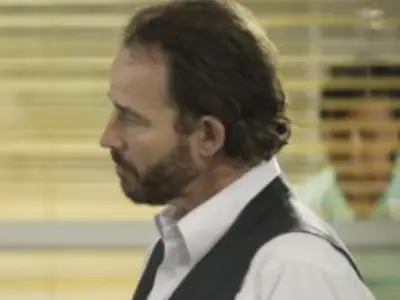
Betrayal, a new four-part espionage thriller on ITV, struggles to balance its dual identity as a spy caper and a relationship drama, resulting in a drab and downbeat series that feels more like a crime drama. The show follows John Hughes (Shaun Evans), a veteran MI5 officer with 20 years of service, whose maverick tendencies and complicated personal life are at odds with the bureaucratic demands of his job.
The series opens with John lying injured outside a motorway service station, two corpses beside him. He faces a reprimand at MI5 HQ for conducting an unauthorised operation, and is assigned a new partner, Mehreen (Zahra Ahmadi), from MI6. His bosses want him out, but John continues investigating a potential Iranian terror plot, positioning himself as the only one who can stop it.
John's home life is equally fraught. He shares a Victorian semi with his wife Claire (Romola Garai), a GP who bears the brunt of domestic responsibilities. Their relationship is strained, with John frequently absent and dismissive of her concerns. Garai's portrayal of Claire captures deep fatigue rather than anger, but the domestic drama feels like it belongs to a different show entirely.

The thriller elements are similarly lackluster, set in grimy locations like dirty car parks and musty B&Bs. The plot lacks speed and complexity, relying on exposition and sudden reveals to drive the story forward. The first two episodes end with cliffhangers that reveal key information to the audience but not to John, undermining the tension.
While Evans and Garai deliver strong performances, Betrayal fails to energise either its spy plot or its relationship drama. The series is so downbeat that it barely has enough energy for the MI5-based parts, let alone the emotional weight of John and Claire's marriage.